Each year, the Association for Unmanned Vehicle Systems International (AUVSI) reviews the United States (U.S.) defense budget to determine funding that will support the research, development, testing, and evaluation (RDT&E) and procurement of unmanned vehicles (UxV) and associated technologies. For Fiscal Year (FY) 2021, over 1,000 unique efforts were identified as having past, present, or future support of UxV systems accounting for estimated appropriations of $7.5 billion. Similar research is underway for FY 2022 and some preliminary analysis will be discussed in this report.
Air
Air

Why You Can’t Miss the FAA UAS Symposium – Episode III
Are you a drone operator? Does your business revolve around unmanned aerial systems (UAS)? Do you care about the future of drone regulations, both domestically and abroad? Do you fly UAS as a hobby? Do you write about the latest and greatest in the world of drones?
If you answered ‘yes’ to any of those questions, you can’t miss the FAA UAS Symposium scheduled for later this week - Wednesday, June 9 and Thursday, June 10. This first installment of 2021 will occur virtually, so feel free to tune in on the beach, in the mountains, while walking your dog, or sitting at home with coffee in hand.
The agenda includes:
Millenia Smart Park: The beginning of San Diego’s Autonomous Alley
With three connected campuses totaling 1.5 million square feet dedicated to everything autonomous, Millenia Smart Park in the San Diego region makes an ideal location for tech-forward companies in search of a new headquarters or office.

Avigation Easements Will Hurt Drone Operations, Say CTA and AUVSI
Media Contact: Jackie Beckwith, jbeckwith@auvsi.org
For Immediate Release: April 26, 2021
UNMANNED SYSTEMS DEFENSE PHASE I: AIR
AUVSI today hosted Day Two of the 2021 Unmanned Systems Defense (USD) Conference with a focus on systems and technologies within the air domain. Attendees heard insights from Christopher C. O’Donnell, Acting Principal Deputy Assistant Secretary of Defense for Acquisition; Major Ryan Greenawalt, Future Unmanned Aircraft System Integrator, Future Vertical Lift Cross Functional Team; and Rear Admiral Brian Corey, Program Executive Officer for Unmanned Aviation and Strike Weapons.
Noise Pollution and Social Acceptance of UAM
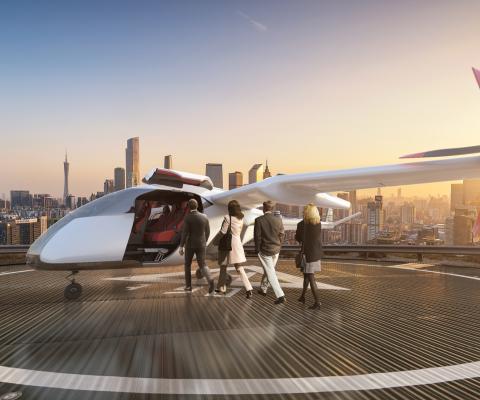
Autonomous systems are transforming business and the economy, and their impact on the future will grow with increased integration into our daily lives. Recent advancements in urban air mobility (UAM) – autonomous systems that transport cargo and passengers at low altitudes in urban and suburban areas – are moving us toward a safer and more efficient transportation future. However, the momentum of this evolving industry also brings challenges posed by increased urban noise.
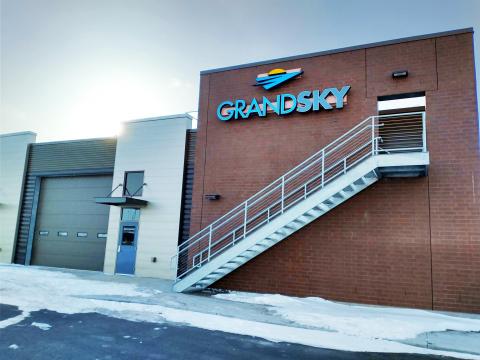
Vantis Prepares North Dakota Ops Center for BVLOS Testing
With its sights set on expanding its beyond visual line of sight (BVLOS) infrastructure across the country, Vantis recently signed a long-term agreement to house an operations center at the Grand Sky business and aviation park in western North Dakota, providing unmanned aerial system (UAS) operators and customers from across industries access to monitoring, data collection, and verification, lowering the barrier to entry for federal approval.
Early performance of hydrogen fuel cell prototype has NWUAV looking forward to new wave in drone propulsion
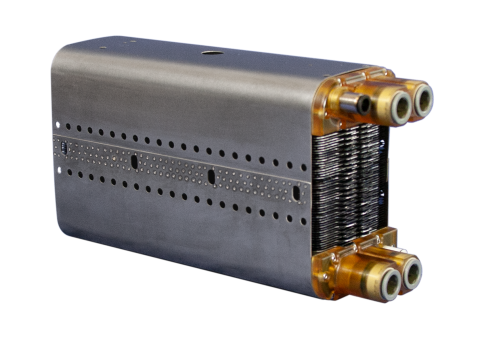
Northwest UAV leaders are excited about early test results for a hydrogen fuel cell prototype that have exceeded expectations and that they hope will herald a trend toward hydrogen-powered propulsion in unmanned flight.
NWUAV, in collaboration with the U.S. Naval Research Laboratory (NRL), is developing the proton-exchange-membrane fuel cell with an eye toward what Chief Technical Officer Jeff Ratcliffe called a growing “middle market” between long-range military drone missions that require internal combustion engines and less demanding military and commercial drone use that tends to rely on battery power.
Wibotic launches software to simplify complexity that comes with keeping large fleets charged
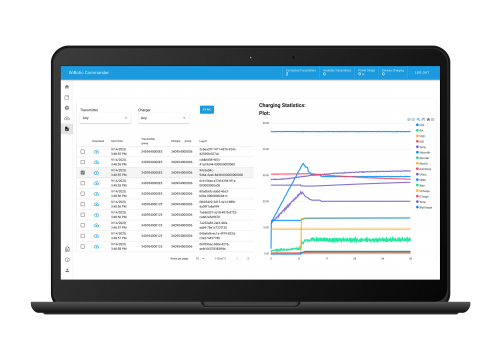
Seattle-based Wibotic last week launched a software package to help customers manage the increasingly complex array of tasks necessary to keep vehicles in growing unmanned fleets charged and ready to perform.
The software, called Commander, offers constant, at-a-glance awareness of all vehicles through a user-friendly interface, said CEO and co-founder Ben Waters. Users will be able to assess quickly how soon vehicles need to be charged, as well as to gather data on things like power usage and battery performance over time – to inform future scheduling and purchasing decisions.
“It might be used for a single vehicle on a single site, or a single vehicle on hundreds of sites, or it could be used for hundreds of vehicles on one site,” Waters said.
COVID-Fighting Collaboration Proves Potential of UAS for Test Transport
Exercise in upstate N.Y. shows how flight could replace drives through downtown traffic.
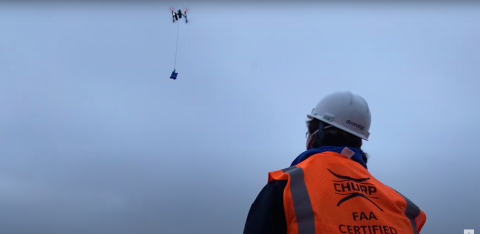
A team of more than a dozen COVID-19-motivated entities with expertise in public health, public safety and unmanned flight recently enjoyed a hard-won peek into the future of UAS in medical transport in upstate New York.