
As AUVSI President and CEO Brian Wynne introduced Tuesday’s keynote speakers at Xponential 2019, he first pointed out that the biggest challenges facing the professionals in the audience involve convincing a generally skeptical public that the new technologies they are fostering will improve their quality of life.
Wynne called for “complete agreement that the number one thing we need to work on is pubic acceptance.”
With that, speakers with divergent backgrounds expounded on how unmanned technology is fostering a cultural revolution of sorts, which is changing nearly every aspect of human existence and will continue to do so.
Artificial Intelligence
Artificial Intelligence

Researchers from MIT and Microsoft uncover "blind spots" of artificial intelligence systems
Researchers from MIT and Microsoft have developed a model that identifies instances where autonomous systems have “learned” from training examples that don’t match what’s actually happening in the real world.
The researchers say that this model could be used by engineers to improve the safety of artificial intelligence (AI) systems, such as driverless vehicles and autonomous robots.
According to the researchers, AI systems that power driverless cars are thoroughly trained in virtual simulations to prepare the vehicle for nearly every event on the road. Sometimes, though, the car makes an unexpected error in the real world because an event occurs that should, but doesn’t, change the car’s behavior.

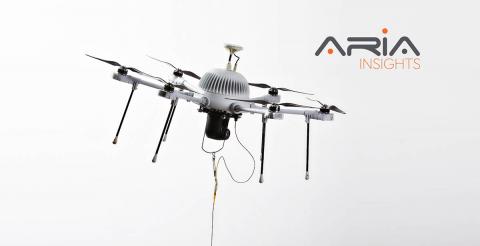
CyPhy Works becomes Aria Insights, an AI drone company
CyPhy Works has leveraged its tethered drone technology and morphed into a new company, Aria Insights, to harness the data collected by drones by integrating AI and machine learning into its hardware.
Aria Insights, or AI, will provide customers with intelligent, autonomous drones that collect and analyze data to create actionable insight, thus speeding decision time.
“After 10 years of innovating and redefining drone technology, the team at CyPhy saw the limitations facing the industry — namely the complications and risks of retrieving and analyzing data,” says Lance Vanden Brook, CEO of Aria Insights.
Xilinx and ZF Friedrichshafen partner to enable automated driving applications
With enabling automated driving applications in mind, Xilinx Inc., which specializes in adaptive and intelligent computing, has announced a new strategic collaboration with German car parts maker ZF Friedrichshafen that will result in Xilinx’s technology powering ZF's highly-advanced artificial intelligence (AI)-based automotive control unit known as ZF ProAI.
Xilinx’s Zynq UltraScale+ MPSoC platform is being used by ZF to handle real-time data aggregation, pre-processing, and distribution. The platform is also being used to provide compute acceleration for the AI processing in ZF's new AI-based electronic control unit.
AI robotic arm gets experience cooking fried chicken and tater tots
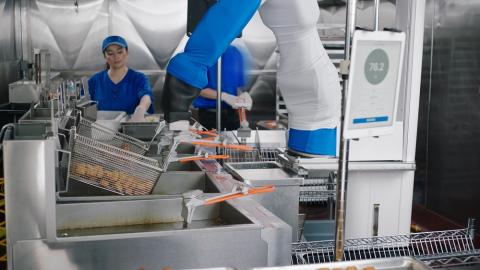
Robotics and artificial intelligence technology company Miso Robotics has announced that its cloud-connected Miso AI platform now enables its autonomous robotic kitchen assistants to perform fry cooking tasks.
Additionally, NSF International has issued full certification to Miso Robotics’ kitchen assistant product line for meeting sanitation standards for commercial kitchen equipment, and the line has also secured an ETL Listed Mark by Intertek for meeting UL electrical safety standards.
Since July 30, Miso Robotics has been piloting Flippy, the world’s first autonomous robotic kitchen assistant, as a frying assistant at the Chick ‘n Tots stand in Dodger Stadium, home to Major League Baseball’s Los Angeles Dodgers.
Brain Corp to provide 'brain' for Walmart's floor scrubbing robots
A San Diego-based software technology company called Brain Corp has announced that it will provide Walmart with artificial intelligence (AI) services, thanks to a new partnership with the world’s largest retailer.
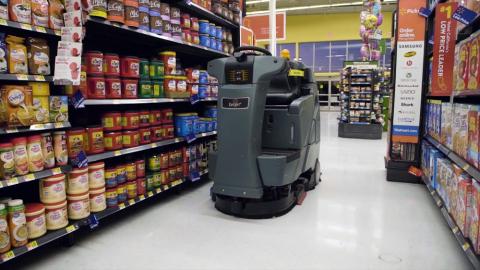
Right now, Brain Corp’s Brain Operating System (BrainOS) platform automates more than a hundred of Walmart's fleet of commercial floor scrubbers across the U.S.
With BrainOS, the machines have autonomous navigation and data collection capabilities, which are all tied into a cloud-based reporting system.
By the end of its fiscal year, Jan. 31, 2019, Walmart expects to have 360 robots powered by BrainOS in its stores.
SkyGrid to develop platform that allows customers to safely perform wide range of UAS operations
Boeing and SparkCognition recently announced plans to launch an Austin, Texas-based company called SkyGrid, which will “enable the future of urban aerial mobility,” the companies say.
With a mind towards ensuring the safe, secure integration of autonomous cargo and passenger air vehicles in the global airspace, SkyGrid will develop a software platform utilizing blockchain technology, artificial intelligence (AI)-enabled dynamic traffic routing, data analytics and cybersecurity features.
The platform will go beyond UAS traffic management (UTM), the companies say, as it will allow SkyGrid customers to safely perform a variety of UAS operations including package delivery, industrial inspections and emergency assistance.
Lockheed Martin and Drone Racing League's innovation competition focuses on AI and drone racing
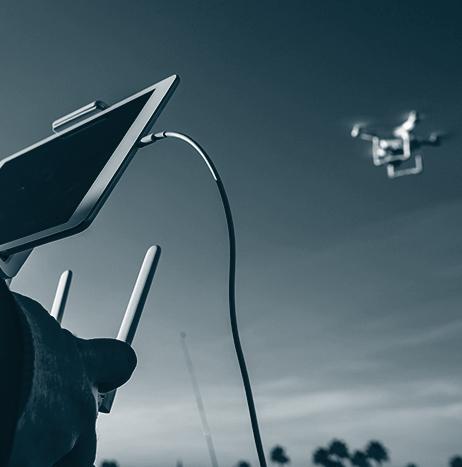
Lockheed Martin and the Drone Racing League (DRL) recently announced an innovation competition that will challenge participants to develop artificial intelligence (AI) technology that enables an autonomous UAS to not only race a pilot-operated UAS, but win.
Known as the AlphaPilot Innovation Challenge, the competition will see participating teams, made up of university students, technologists, coders and UAS enthusiasts, compete in a series of challenges for their share of over $2 million in prizes, as they seek to “push the boundaries of AI, machine learning (ML) and fully autonomous flight.”
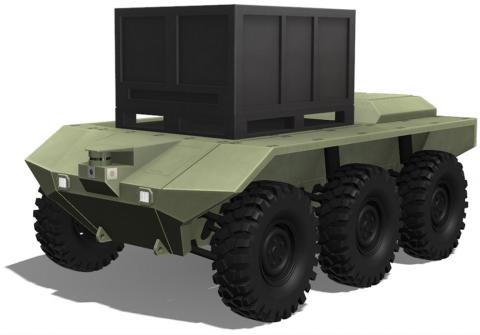
Horiba Mira to develop 'end-to-end logistics resupply capability' using its VIKING UGV
Horiba Mira has been awarded a £700,000 cross-government collaborative program contract for the second phase of the Autonomous Last Mile Resupply (ALMRS).
Through the Defence and Security Accelerator (DASA), the UK Ministry of Defence (MOD), along with the Department for International Development (DFID) and UK Research and Innovation (UKRI), are collaborating to deliver advanced designs for UAS and robots, which could cause a massive change in how humanitarian aid or supplies for front-line troops are delivered.
“Defence makes an unrivalled investment in science and technology, creating thousands of highly-skilled jobs and brilliant career opportunities, generating billions for the UK economy,” says Gavin Williamson, Secretary of State for Defence.
Asahi Power Service Co. develops drone-powered flying umbrella
A Japanese company called Asahi Power Service Co. has developed a drone-powered flying umbrella called “Free Parasol.” The umbrella is meant to free people’s hands, and protect them from the sun in the future.
Equipped with an artificial intelligence (AI) camera, the UAS can hover above the user’s head, and by tracking the real-time position of the user, it can follow their steps as they walk or move.
The umbrella is based on the idea that “it's bothersome to open an umbrella when your hands are full,” the company says. It is expected to enter the market by next year at a retail price of $273 dollars. Additionally, the umbrella could be put into use as early as the 2020 Tokyo Olympics and Paralympics.