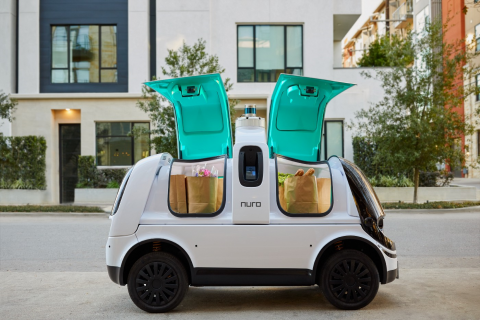
The State of California has granted Nuro the first permit ever to test a self-driving vehicle on public roads that is both driverless and passengerless.
Only the second driverless testing permit California has granted to any company—Waymo received the first in 2018—the permit allows Nuro to begin testing its R2 vehicle in service with its partners, starting in the Silicon Valley region.
“California is Nuro’s home, and we are excited to bring our neighborhood-friendly R2 vehicle into our communities, in close cooperation with the DMV, local leaders, and law enforcement,” Nuro says.
Autonomous Vehicles
Autonomous Vehicles
Weekend Roundup: April 3, 2020
This Week in the Unmanned Systems and Robotics World
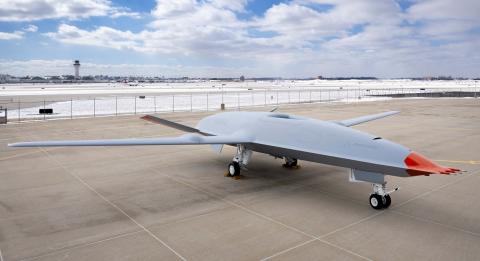
As part of a modification to a previously awarded contract, the Navy has exercised contract options with Boeing worth $84.7 million to buy three MQ-25A Stingray unmanned aerial refueling tankers. According to the contract announcement released by the Pentagon on Thursday, April 2, the three MQ-25s covered by the contract options are to be completed by August 2024. (USNI News)
Autonomous driving platform developer Phantom AI raises $22 million
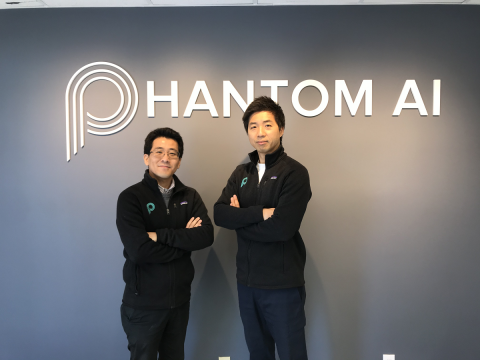
Autonomous driving platform developer Phantom AI has raised $22 million in Series A financing, bringing its total capital raised to date to $27 million.
With a goal of democratizing the use of driver assistance and safety technologies to reduce crashes, save lives and make driving more enjoyable, Phantom AI, which was founded in 2016 by lead engineers from Tesla’s and Hyundai’s Advanced Driver Assistance Systems (ADAS) teams, will use this latest round of funding to accelerate product development while scaling operations in Europe and Asia.
The company is working with several automakers, a truck OEM and multiple European and Asian tier 1 suppliers.
Seegrid closes $25 million growth equity investment
A company that develops self-driving industrial vehicles for material handling called Seegrid has closed a $25 million growth equity investment from venture capital firm G2VP.
According to Seegrid, the investment, which reflects a multi-hundred million dollar valuation, will help the company further capitalize on its position as a market leader in the automated guided vehicle (AGV) and autonomous mobile robots (AMRs) industry.

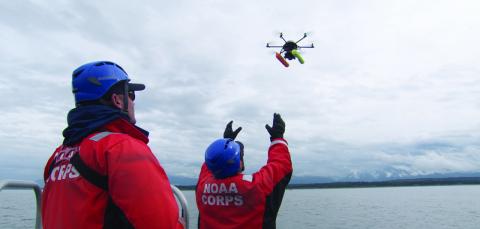
NOAA establishes Unmanned Systems Operations Program to support growing use of UxS across agency
To support the growing use of unmanned systems across the agency, the National Oceanic and Atmospheric Administration (NOAA) is establishing a new Unmanned Systems Operations Program.
According to NOAA, the program will support the “safe, efficient and economical operation” of unmanned systems (UxS) that it uses to collect high-quality environmental data for its science, products and services.
“Unmanned airborne and maritime systems are transforming how we conduct earth science at NOAA,” says retired Navy Rear Adm. Timothy Gallaudet, Ph.D., deputy NOAA administrator.
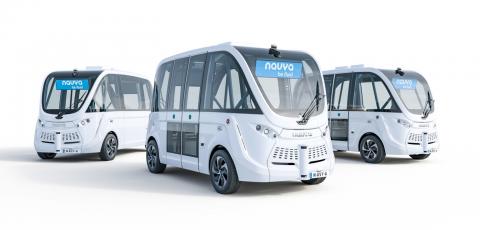
NAVYA to continue equipping its autonomous vehicles with Velodyne lidar sensors
Velodyne Lidar Inc. recently announced a multi-year sales agreement with autonomous vehicle developer NAVYA.
Since 2015, NAVYA has been equipping its autonomous shuttles with Velodyne lidar sensors. Featuring optimized navigation and safety features, NAVYA’s autonomous shuttles offer first and last mile transportation options in cities and at private sites.
“NAVYA is at the forefront of inventing and growing the autonomous shuttle business, providing an innovative, clean mobility solution,” says Anand Gopalan, CEO, Velodyne Lidar.
MIT researchers invent simulation system to train driverless cars to navigate worse-case scenarios
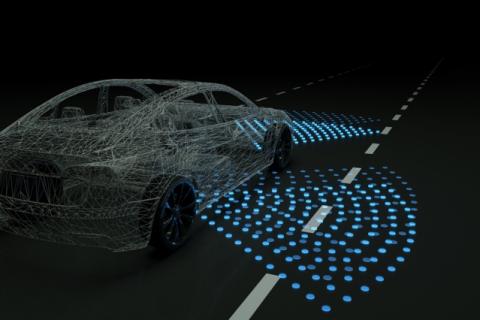
To help driverless cars learn to navigate a variety of worse-case scenarios before they begin operating on real roads, researchers at MIT have invented a simulation system to train driverless cars that creates a photorealistic world with “infinite” steering possibilities.
According to the researchers, control systems—also known as “controllers” —for autonomous vehicles largely rely on real-world datasets of driving trajectories from human drivers. The vehicles use this data to learn how to emulate safe steering controls in different situations. Researchers note, though, that real-world data from hazardous “edge cases,” such as nearly crashing or being forced off the road or into other lanes, are rare.
Autonomous Solutions, Phantom Auto help develop fully unmanned yard truck
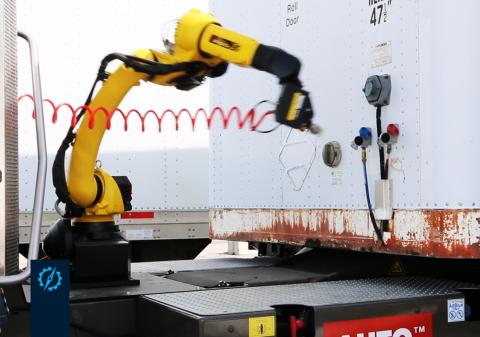
Autonomous Solutions Inc. (ASI), Phantom Auto, FANUC America Corporation, and Terberg have collaborated to develop a new fully unmanned yard truck platform.
“The combination of these four leading companies brings an autonomy solution that has never been more needed in the logistics sector to lower costs and increase safety and efficiency,” says Mel Torrie, founder and CEO of ASI.
With ASI’s Mobius software, operators have real-time awareness and control of a fleet of unmanned trucks. Both of these capabilities are driven by ASI’s autonomous vehicle technology.