This Week in the Unmanned Systems and Robotics World
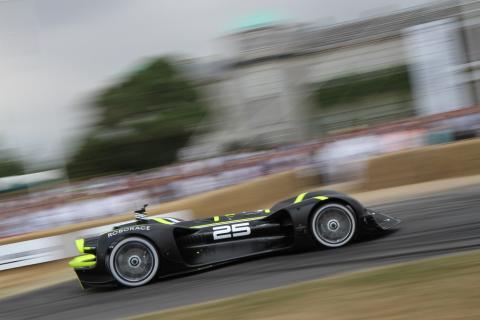
On July 13, Roborace’s Robocar became the first fully driverless race car to successfully complete the Hillclimb at the Goodwood Festival of Speed. Robocar’s run was the first in the history of Goodwood to be completed by a race car that didn’t have a human driver in the car. (Goodwood Festival of Speed)
Autonomous Vehicles
Autonomous Vehicles
Coast Autonomous demonstrates self-driving vehicle in Times Square
A company called Coast Autonomous has developed a self-driving vehicle that could ease traffic woes in places such as New York.
The company demonstrated its concept in Times Square on July 17.
“Driverless vehicles, once they get fully deployed, are gonna be a lower coast because you don’t have the expense of a driver,” explains Rick Baker, head of urban development for Coast Autonomous, via CBS New York.
Coast Autonomous’ vehicles are considered ideal for short distance shuttle trips at a variety of locations including airports, college campuses, theme parks and low speed, highly congested areas in New York City.

ASV Global-led consortium develops 'long endurance, multi-vehicle, autonomous survey solution'
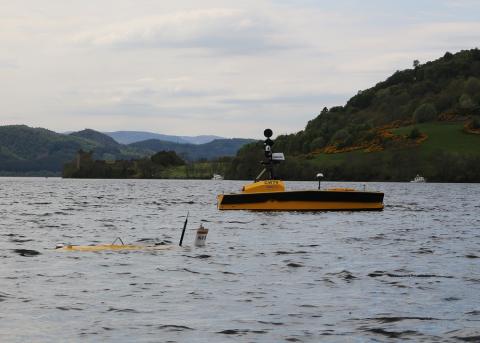
A consortium made up of ASV Global (ASV), Sonardyne International Ltd., the National Oceanography Centre (NOC) and SeeByte has developed what it describes as a “long endurance, multi-vehicle, autonomous survey solution.”
The entities worked together on the three-year ‘Autonomous Surface and Sub-surface Survey System’ collaborative project, with a goal of delivering an integrated system to perform “low cost, full water column marine surveys using multiple autonomous systems.” The project recently culminated with a two-week trial in Scotland’s Loch Ness.
Weekend Roundup
This Week in the Unmanned Systems and Robotics World
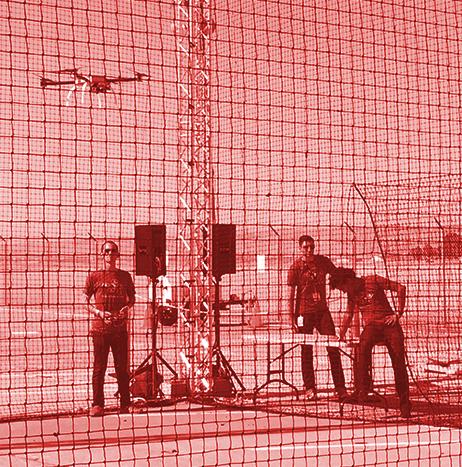
The second annual Drone-Con event recently took place at Palomar College in San Marcos, California on July 6. The event featured more than 30 guest speakers that presented on a variety of topics, as well as breakout sessions covering topics such as starting a UAS program at a school, mapping and surveying with UAS, and UAS career pathways for military veterans. (Palomar News)
An automated future requires industry to be proactive, speakers say
Automated car developers and regulators need to be proactive to deal with the issues facing the industry, from public education to safety to employment dislocations to city planning, said speakers at the second full day of the Automated Vehicles Symposium in San Francisco.
The arrival of automated vehicles will inevitably lead to changes in employment, said Erica L. Groshen, a visiting senior scholar at Cornell University’s School of Industrial Labor Relations.
“Innovation is not new,” she said. “Let’s learn from the past.”
Her team has studied past technology-driven dislocations dating back to the industrial revolution and found that even when jobs are lost, eventually full employment returns.
Ohio leaders break ground on autonomous vehicle testing center
On July 9, Ohio Governor John Kasich and leaders from The Ohio State University, the Ohio Department of Transportation (ODOT), JobsOhio and other organizations came together to break ground on the Transportation Research Center’s (TRC) new SMART Center in East Liberty, Ohio.
The SMART Center will serve as a testing ground for autonomous and connected vehicles.
“What this is going to do is give people the opportunity all over the world to be going 24/7, to test in all conditions and to have multiple cars on the road,” Kasich explains. “This is going to be the coolest place to go with your kids.”
Suning Logistics and Baidu Apollo partnering on self-driving technology
In an effort to “accelerate the commercial application of self-driving technology,” Suning Logistics, which is a subsidiary of Suning Holdings group, has signed a strategic partnership with Baidu Apollo.
The partnership between the entities was announced at the “Baidu Create 2018” event in Beijing, China.
“By combining the rich smart community scenarios built by Suning, and the advanced unmanned self-driving technology developed by Baidu in its Apollo program, we are now significantly closer to realizing the commercialization of fully autonomous, self-driving technology,” says Lu Junfeng, Vice President of Suning Logistics.

DOT chief Chao urges AV community to educate the public
The “quite brilliant” engineers and technologists who are developing automated vehicles need to “step up and educate the public about this new technology” to boost confidence, U.S. Department of Transportation Secretary Elaine Chao said Tuesday.
“Without public acceptance, automated technology will never reach its full potential,” Chao said in her keynote address at the Automated Vehicles Symposium’s first full day. “Consumer acceptance will frame the limitations to growth of this technology, so we all need to work together to get it right.”
The DOT held a “listening session” in March to get input on the autonomous revolution, covering topics including accessibility, public safety, insurance and liability, jobs, cybersecurity and public outreach.

From Unmanned Systems magazine: Military objectives could advance driving systems to full autonomy
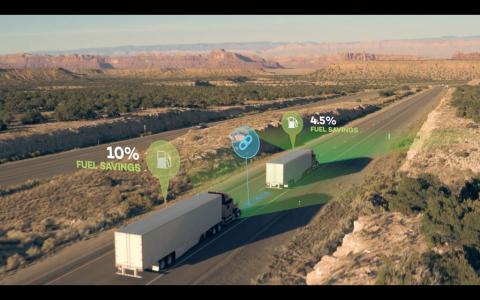
Semi-autonomous vehicles traveling in convoys, or platoons, have the potential to save lives and transport material more efficiently and safely than manned vehicles, but the technology has a way to go before it can be touted as fully autonomous.
In the commercial sector, the rush to full autonomy is limited by fuel cost efficiencies already achievable with semi-autonomous systems, but the need to protect soldiers on the ground and in war zones may drive the U.S. military to advance the technology into full automation sooner rather than later.
Daimler obtains road test license for highly automated driving research vehicles in Beijing
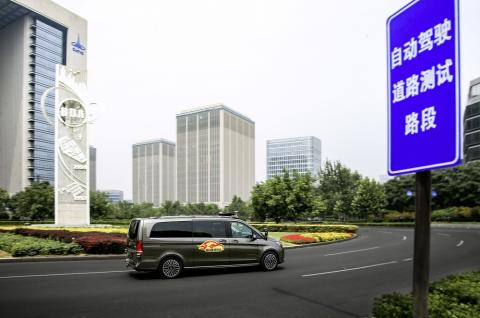
Daimler has become the first international automaker to receive a road test license for “highly automated driving research vehicles (level 4)” in Beijing, China.
With this road test license, Mercedes-Benz test vehicles will now undergo real road tests to “further perfect the technology” in Beijing, which Daimler describes as a “metropolis with unique and complex urban traffic situations.”