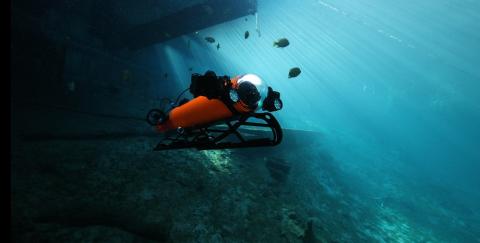
Aquabotix, which is a U.S. manufacturer of commercial-grade UUVs and underwater cameras for commercial and military applications, has introduced the Integra AUV/ROV, the company’s second-generation hybrid underwater vehicle.
Designed for use across several sectors, the Integra AUV/ROV has a variety of features, including Live Remote Control and data sharing, five pounds of payload capability, and up to eight hours of battery life, just to name a few.
Thanks to these features, users can conduct multiple underwater missions using the Integra AUV/ROV, while providing a “cost-efficient alternative to deploying separate AUVs and ROVs for individualized tasks.”
AUV
AUV
GEBCO-NF Alumni Team completes Technology Readiness Tests of its AUV-USV concept
On Nov. 23, the GEBCO-NF Alumni Team completed Technology Readiness Tests of its AUV-USV concept and “associated combination of communications hardware and software” to process and transmit data remotely.
One of 19 semi-finalist teams competing in the $7 Million Shell Ocean Discovery XPRIZE competition, the GEBCO-NF Alumni Team received support from KONGSBERG experts and technology during the test event, which was held on the fjord outside KONGSBERG's factory in Horten, Norway.

University of Washington, Columbia University to use AUVs to study Antarctica's ice shelves
Researchers from the University of Washington (UW) and Columbia University are preparing to study Antarctica’s ice shelves from the ocean below, using battery-powered Seaglider AUVs.
According to GeekWire, the results of the study are expected to provide a better understanding of how ice retreats, and how climate change could “affect the loss of polar ice sheets and the resulting rise in sea levels.”
This study, which is being funded by billionaire philanthropist Paul Allen, could go a long way in proving that the devices from UW’s Applied Physics Laboratory (APL) are capable of doing this type of work.
Kraken Robotic Systems partners with Avitas Systems to advance robotic subsea inspection technologies
During General Electric’s (GE) Mind + Machines event in San Francisco, California, it was announced that Kraken Robotics Inc.’s wholly-owned subsidiary, Kraken Robotic Systems Inc., entered a strategic partnership with Avitas Systems, which is a GE Venture that advances the inspection services industry across various sectors through predictive data analytics, robotics, and artificial intelligence (AI).
Through the partnership, the two companies will integrate AUVs, acoustic and laser sensor technology and AI-based navigation software into unique subsea inspection systems for several industries, including oil and gas, offshore renewable energy, and shipping.
Israel's first AUV to be commercialized through new BGR company
In Israel, Ben-Gurion University of the Negev’s (BGU) technology company, BGN Technologies Ltd., has announced the launch of a new entity called BGR. BGR will commercialize Israel's first AUV, the HydroCamel II.
Developed by researchers at BGU's Laboratory for Autonomous Robotics (LAR), the 2.5 meter-long AUV is built for commercial use across a variety of industries, including the military, security, and oil and gas sectors.
It can also be used for environmental applications and marine research, as well.
Weekend Roundup
This Week in the Unmanned Systems and Robotics World
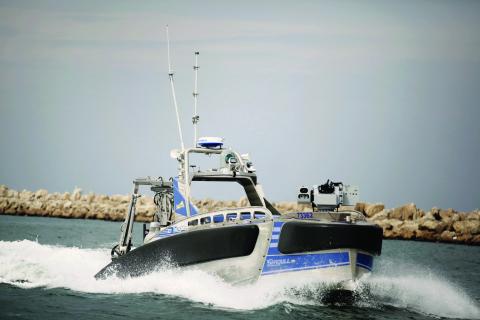
Elbit Systems’ multi mission USV, named Seagull, performed a live demonstration of a remotely operated Anti-Submarine Warfare (ASW) mission. Via Satellite Communication (SATCOM), the Seagull USV performed the operational ASW mission using control consoles located approximately 3,515 kilometers away in Elbit Systems' booth at the DSEI Exhibition in London. The Seagull USV was sailing in the Haifa Bay, Israel during the demonstration. (Elbit Systems)
Weekend Roundup
This Week in the Unmanned Systems and Robotics World
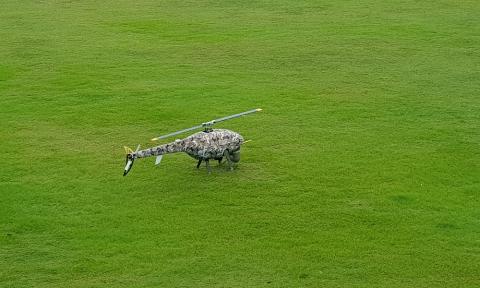
In front of representatives of the Army and the special operation forces of Indonesia, UAVOS Inc. recently demonstrated an “unmanned aerial complex” with a gasoline-powered helicopter UVH-29E. The robotized helicopter demonstrated its biggest strength—being able to operate in a tropical and humid maritime climate—as it successfully completed all of its tasks. UAVOS investor and Board member Vadim Tarasov says that the UAV helicopter has a number of potential use cases, including anti-terrorist operations, law enforcement and intelligence operations, and search and rescue operations.
UC Davis using AUV to measure climate change in Lake Tahoe
The University of California, Davis’ (UC Davis) Tahoe Environmental Research Center (TERC) has deployed an autonomous underwater vehicle (AUV) to evaluate how climate change is affecting Lake Tahoe.
Deployed earlier this month, the AUV, commonly known as a glider, will coast 150 meters under Lake Tahoe’s surface, taking measurements as it goes back and forth.
“It will continuously seesaw, or what we call yo-yo,” says UC Davis professor and researcher Alex Forrest, through KCRA.com.
Weekend Roundup
This Week in the Unmanned Systems and Robotics World
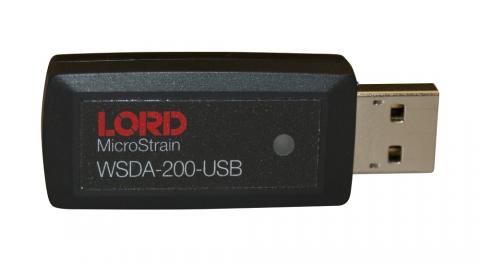
LORD Corporation, which develops wireless and embedded sensing systems, has introduced its LXRS+ wireless networking protocol, which features a bandwidth of 16,000 samples per second per channel, and an aggregate system bandwidth of 256,000 samples per second over 16 channels. According to LORD, “the wireless sensor nodes that operate using LXRS+ protocol are designed to operate at incredibly low-power,” which allows battery powered networks to operate for long periods of time, and “makes the use of energy harvesting systems a viable option for permanent installations.”