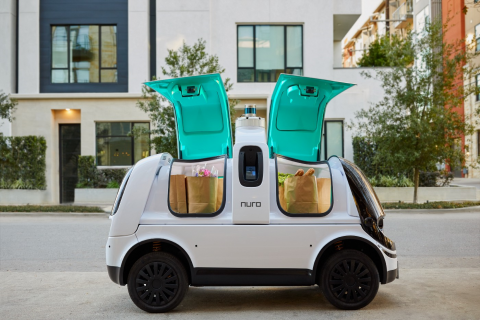
The State of California has granted Nuro the first permit ever to test a self-driving vehicle on public roads that is both driverless and passengerless.
Only the second driverless testing permit California has granted to any company—Waymo received the first in 2018—the permit allows Nuro to begin testing its R2 vehicle in service with its partners, starting in the Silicon Valley region.
“California is Nuro’s home, and we are excited to bring our neighborhood-friendly R2 vehicle into our communities, in close cooperation with the DMV, local leaders, and law enforcement,” Nuro says.
Mobility
Mobility
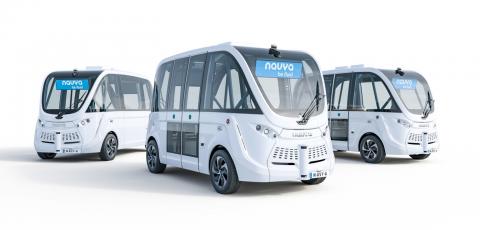
NAVYA to continue equipping its autonomous vehicles with Velodyne lidar sensors
Velodyne Lidar Inc. recently announced a multi-year sales agreement with autonomous vehicle developer NAVYA.
Since 2015, NAVYA has been equipping its autonomous shuttles with Velodyne lidar sensors. Featuring optimized navigation and safety features, NAVYA’s autonomous shuttles offer first and last mile transportation options in cities and at private sites.
“NAVYA is at the forefront of inventing and growing the autonomous shuttle business, providing an innovative, clean mobility solution,” says Anand Gopalan, CEO, Velodyne Lidar.
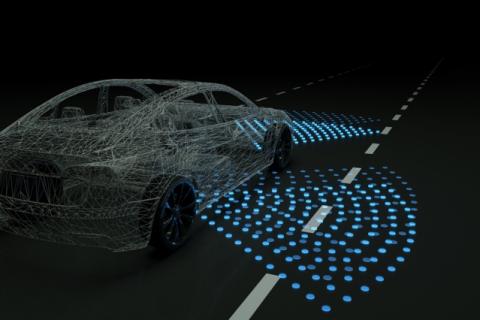
MIT researchers invent simulation system to train driverless cars to navigate worse-case scenarios
To help driverless cars learn to navigate a variety of worse-case scenarios before they begin operating on real roads, researchers at MIT have invented a simulation system to train driverless cars that creates a photorealistic world with “infinite” steering possibilities.
According to the researchers, control systems—also known as “controllers” —for autonomous vehicles largely rely on real-world datasets of driving trajectories from human drivers. The vehicles use this data to learn how to emulate safe steering controls in different situations. Researchers note, though, that real-world data from hazardous “edge cases,” such as nearly crashing or being forced off the road or into other lanes, are rare.
EHang launching UAM pilot of passenger-grade AAVs in Lliria, Spain
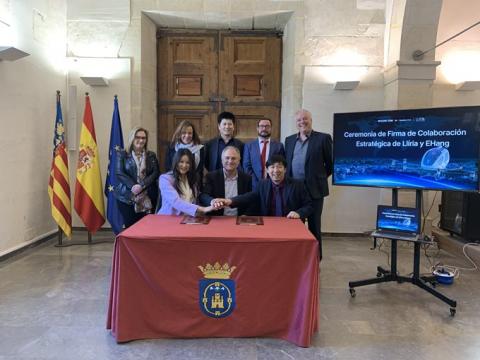
Following the recent announcement of its cooperation agreement with the city government of Seville, Spain to launch the first Urban Air Mobility (UAM) pilot program in the country, EHang has announced a strategic partnership with Llíria, Spain as its fourth UAM pilot city globally.
In collaboration with the Llíria City Council, EHang will develop a 3D air mobility solution for smart cities and launch a pilot operation program of passenger-grade autonomous aerial vehicles (AAVs), which will seek to explore different application scenarios including tourism.
EHang, city government of Seville partner to launch first UAM pilot program in Spain
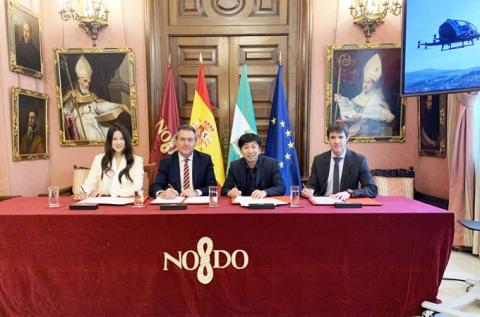
EHang and the city government of Seville, Spain have entered into a cooperation agreement to launch the first Urban Air Mobility (UAM) pilot program in Spain.
Under the agreement, EHang and the Seville government will work together to develop the urban air mobility, which includes passenger transportation, air logistics and command and control platforms in the city. In accordance with Spanish and European legislation, the city will also collaborate on applications for permission to conduct test flights, and it will coordinate with EHang to plan flight routes.
Locomation, Wilson Logistics partner for autonomous trucking pilot
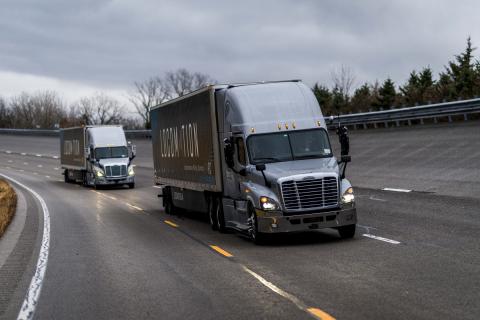
The provider of what it says is the world’s first trucking technology platform to offer human-guided autonomous convoying, a company called Locomation has announced a multi-year partnership with transportation logistics company Wilson Logistics that will result in Locomation’s autonomous technology being put on the road across several critical Wilson Logistics shipping routes.
During the three-year pilot, Locomation’s Autonomous Relay Convoy (ARC) technology will be integrated onto 11 separate Wilson Logistics ARC segments. With ARC, one driver can pilot a lead truck equipped with technology augmentation while a follower truck operates in tandem through Locomation’s fully autonomous system, allowing the follower driver to log off and rest during this time.
Australian startup developing autonomous EV that generates energy requirements from the sun
The Australian Renewable Energy Agency (ARENA)—on behalf of the Australian Government—has awarded Australian startup Applied Electric Vehicles Pty Ltd (AEV) $2 million in funding to develop an autonomous electric vehicle (EV) that will utilize a solar photovoltaic (PV) roof and lithium ion battery system.
ARENA’s funding will go towards solving energy related challenges such as selecting the most appropriate solar PV technology for the solar roof, and optimizing the mass, energy efficiency, solar gain and safety of the vehicle.

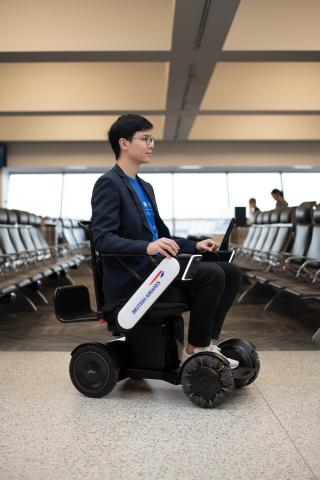
British Airways tests fully autonomous, electric mobility devices at New York's JFK Airport
As part of its journey to become the airline of choice for customers with both hidden and visible disabilities, British Airways recently became the first airline to trial fully autonomous, electric mobility devices in North America.
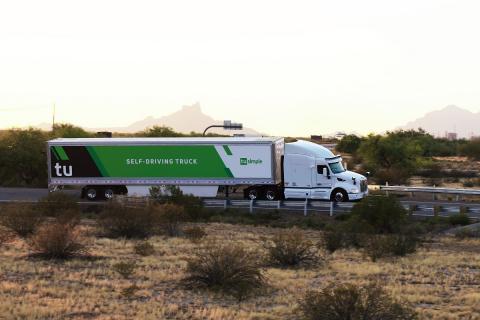
TuSimple expands autonomous service routes for UPS from Arizona to Texas
TuSimple has announced that it has not only expanded service for current customer UPS to 20 trips per week, but it has also added another route between Phoenix, Arizona, and El Paso, Texas.
Through this engagement, 10 runs per week are on the established route between Phoenix and Tucson, Arizona, while the other 10 runs are on the new route.
Boston Dynamics, OTTO Motors showcase the role of robots in warehouse automation
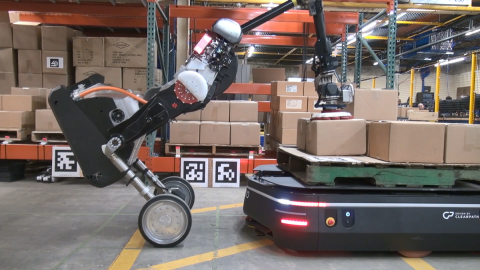
Boston Dynamics has collaborated with industrial autonomous mobile robots (AMRs) developer OTTO Motors to demonstrate the future of warehouse automation.
A video released on Tuesday, March 3, shows Handle, which is Boston Dynamics’s logistics robot, picking boxes and building pallets on top of OTTO AMRs in a distribution center testbed.
Last year, the Handle robot completed proof of concept trials with customers in their warehouses. Boston Dynamics and OTTO Motors are working together to further automate the logistics space.