
In the time since AUVSI last convinced the unmanned systems industry for XPONENTIAL in-person in 2019, the environments and use cases in which these systems operate worldwide has significantly changed.
As AUVSI President and CEO Brian Wynne stated during his Community Address kicking off this week’s XPONENTIAL 2021 programming in Atlanta, the Association and the broader community applied their collective resources and spirit of innovation to rise to these challenges and accelerate progress.
From autonomous aerial and ground delivery of COVID-19 vaccines, testing, and personal protective equipment to breakthroughs in unmanned maritime research, organizations in all domains have built momentum for use cases that benefit society.
Show Daily (XPO 2021)
Show Daily (XPO 2021)
The UAS Policy Landscape
Even in the absence of significant federal legislation, the policy landscape for unmanned aircraft systems (UAS) has continued to evolve. The FAA recently released its highly anticipated UAS remote identification rule, along with new frameworks for operations over people a

The Autonomous Future of UAVs
In October 2020, Skydio announced that the North Carolina Department of Transportation (NCDOT) was granted a first-of-its-kind approval by the Federal Aviation Administration (FAA) to conduct operations beyond visual line of site (BVLOS) for bridge inspections. These inspections are conducted using Skydio Autonomy, an AI-based flight engine that enables operations in obstacle-dense environments and areas without GPS.
Mayflower Autonomous Ship is loaded with future-focused technology as it prepares for historic, fully unmanned trans-Atlantic voyage
Roughly 400 years ago, 101 people known as pilgrims made a risky, historic trans-Atlantic voyage from Plymouth, UK, toward Plymouth, Mass., in a ship called the Mayflower. This month, a collaboration of maritime boundary pushers aims to launch a second Mayflower to repeat the journey – this time with no humans aboard.

Rep. Graves identifies opportunities for industry-govt collaboration
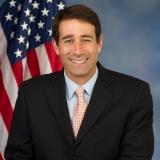
To kick off the final day of the virtual segment of XPONENTIAL 2021, Congressman Garret Graves delivered keynote remarks on the current state of of government-industry collaboration.
Rep. Graves represents Louisiana’s Sixth Congressional District in the U.S. House of Representatives, where he serves as the Ranking Member on the House Transportation and Infrastructure Committee’s Subcommittee on Aviation. In his remarks, he identified opportunities to build consensus and support innovation that advances shared priorities.
Military minds discuss ways to ensure solid integration of unmanned systems that increasingly come from different developers
Bringing unmanned systems into service for the U.S. military increasingly requires integrating complex hardware, software, algorithms and other elements from different vendors and developers. Five experts on the challenges of safe, effective integration offered their insights Wednesday in a panel discussion called, “Advancing Autonomy Through Platform Integration.”
Moderator Kevin Hagan, unmanned systems account executive for Peraton, opened the discussion with a description of its scope.
Industry Standards Supporting Assured UAS Autonomy
As autonomous technologies become more integrated into the design and operation of the next generation of aircraft, industry standards can ensure system safety and help regulators to keep pace with evolving technology.
In a panel today at XPONENTIAL 2021, leaders from the FAA and industry discussed how consensus-based standards are critical in supporting the integration of unmanned aerial systems (UAS).
Building consensus-based standards
As the UAS industry seeks to formulate standards, panelists shared several factors that will be key for building consensus:
Standards should account for both risks and benefits in implementing an autonomous system into the aircraft.
Kate Darling Discusses the Future of Human-Robot Interaction
Robotic systems are increasingly moving from behind factory walls into homes, workplaces and other where they interact with humans. What societal challenges will we face in a future with robots as a result?
Over the course of her XPONENTIAL keynote and Q&A session, Kate Darling, PhD, addressed this and other complex questions that must be faced on the pathway to assured autonomy. A leading expert in robotic ethics, Dr. Darling is a research specialist at the Massachusetts Institute of Technology (MIT) Media Lab, where she investigates social robotics and conducts experimental studies on human-robot interaction.

Assured Onboard Autonomy Architecture for AUVs
Autonomous Underwater Vehicles (AUVs) are becoming widely used in naval defense operations and commercial applications such as oil and gas surveying, environmental monitoring and search and rescue.
During a breakout session today at XPONENTIAL, Arjuna Balasuriya, Senior Scientist at Charles River Analytics presented a new whitepaper on, “Assured Onboard Autonomy Architecture for Unmanned Underwater Vehicles.” Balasuriya’s remarks and whitepaper focused on how building trust with end-users to support limited human interaction with enable AUVs to be integrated in a way that reaches their fullest potential.
A successfully integrated AUV must be adaptable to varying environmental and internal state changes, with top consideration being accuracy, bias and complexity.
Singer spotlights increasingly urgent questions for society as AI revolution picks up speed
Futurist Peter Warren Singer drew lessons from the past in Wednesday’s XPONENTIAL 2021 keynote as he challenged his audience to grapple with the overarching questions that the prospect of an unmanned revolution raises for society.
The questions, Singer noted, are increasingly urgent, given that advances toward the revolution have picked up dramatic speed during the pandemic.
He cited a statistic from Stanford University’s AI Index, global investment in artificial intelligence grew 40 percent from 2019 to 2020, compared with growth of only 12 percent from 2018 to 2019. That statistic reflects what average consumers have witnessed in the form of heightened use of remote technologies for things like distance learning, telemedicine and drone delivery.