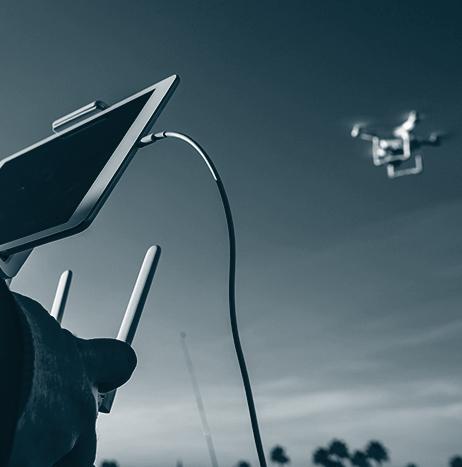
The U.S. Navy sees vast potential for unmanned systems and the capabilities they will bring, according to the service’s Strategic Roadmap for Unmanned Systems.
Use of unmanned and autonomous systems will create nothing less than "fundamental shifts" in the way the Navy operates, says an unclassified summary of the roadmap released in May. Their integration, it says, will allow reductions in manpower and risk to personnel, lower operating costs, increased persistence, faster and more accurate data processing, and a faster decision cycle.
Air
Air
Currawong Engineering's 18S ESC Velocity for UAS applications receives updates
Currawong Engineering has released its updated 18S ESC (electronic speed controller) Velocity, which features the addition of “true hardware interlock and fully isolated PWM input” to its existing design.
Featuring high power and aerospace grade reliability, the ESC Velocity is designed for UAS applications.
According to Currawong Engineering, true hardware interlock is the “ultimate in operator safety,” as it provides guaranteed motor shutdown without the need for bulky inline power switches. CAN communications operate independently of the interlock, which allows for preflight checks with absolute confidence in the safe status of the controller.

Altiscope releases 'Blueprint for the Sky: The Roadmap for the Safe Integration of Autonomous Aircraft'
Altiscope, which is the Unmanned Traffic Management (UTM) group from A³ by Airbus, has released “Blueprint for the Sky: The Roadmap for the Safe Integration of Autonomous Aircraft.”
The Blueprint represents months of careful analysis by Airbus of the future needs for the airspace, the widespread impact of the upcoming changes to the airspace, and the development of the required tools for its enablement.

From Unmanned Systems Magazine: Governments seek ways to protect against rogue or enemy UAS
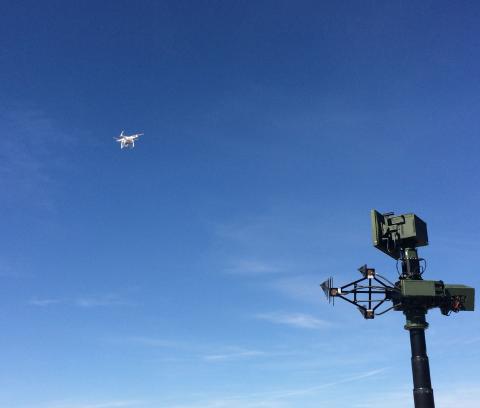
Counter-small unmanned aircraft systems technology has emerged as one of the most prominent growth areas in the defense and security markets in recent years, as governments seek to not only defend critical infrastructure from violent extremist organizations and near-peer adversaries, but also from errant hobbyists.
Threats across the contemporary operating environment stretch from the employment of airborne improvised explosive devices (ABIEDs) by the likes of the self-proclaimed Islamic State in Iraq and Syria, to the breaching of national airspace at major airports by commercially available air frames.
Boeing to build U.S. Navy's first operational carrier-based unmanned aircraft
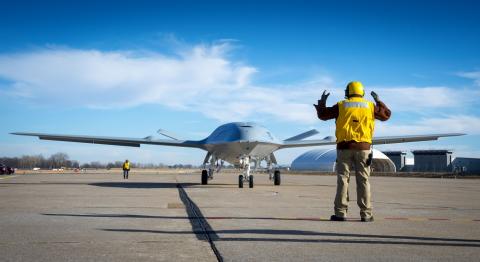
On Aug. 30, the U.S. Navy awarded Boeing an $805 million contract to build the Navy’s first operational carrier-based unmanned aircraft, the MQ-25 aerial refueler, selecting the company over bids from Lockheed Martin and General Atomics.
Boeing was awarded the engineering and manufacturing development contract to provide an initial four aircraft.
“As a company, we made an investment in both our team and in an unmanned aircraft system that meets the U.S. Navy’s refueling requirements,” says Leanne Caret, president and CEO, Boeing Defense, Space & Security.
Pollen Systems unveils 'drone-aided managed service and self-service portal'
Pollen Systems Corporation has unveiled a “drone-aided managed service and self-service portal” called Pollen Scout, which helps farms and vineyards monitor crop growth, discover irrigation issues, and investigate pests and diseases.
Every week, commercially certified UAS technologists go to subscribing farms and vineyard sites and capture detailed pictures and spectral images using UAS. These pictures and images can help farmers quickly uncover and address common issues, ultimately helping improve crop yield and quality.
Pollen Systems unveiled Pollen Scout during the Woodinville, Washington annual Auction of Washington Wines, which provided a perfect venue to launch the company, and communicate with potential customers.

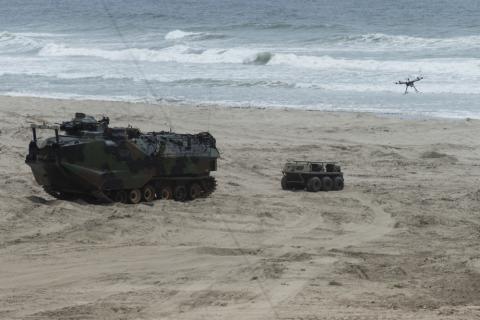
From Unmanned Systems Magazine: Interoperability efforts are changing the way robots are used in the field
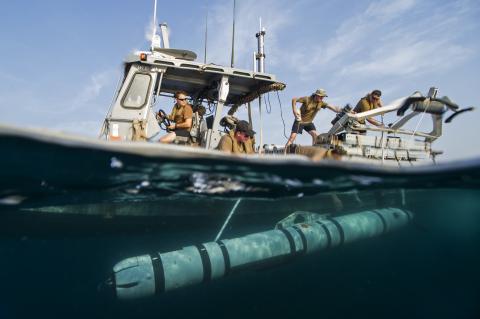
During the more than 17 years of continuous warfare in Iraq and Afghanistan, improvised explosive devices (IEDs) have proven to pose the most serious threat to service members stationed in combat theaters. Mitigating this threat, as such, has emerged as a primary mission for engineering and design teams in both industry and the U.S. Department of Defense.
Additionally, research teams are well aware of the utility UAS can provide in the intelligence, surveillance and reconnaissance (ISR) realm. Perimeters of harbors and land-based installations can be monitored and kept clear of obstacles and potential threats — without placing human lives in harm’s way.
Colorado Springs Police Department prepares to launch UAS fleet
The Colorado Springs Police Department (CSPD) in Colorado Springs, Colorado is preparing to launch its fleet of UAS.
The department has purchased eight UAS—DJI Mavics, Phantom 4s, and a larger and more expensive Inspire 2—which will be used for everything from documenting accident scenes to finding a fugitive on the run.
One of the Phantom UAS will include an infrared camera for nighttime operations, when officers are most at risk.
Danville Community College launches UAS program
Danville Community College (DCC) in Danville, Virginia recently launched a new UAS class.
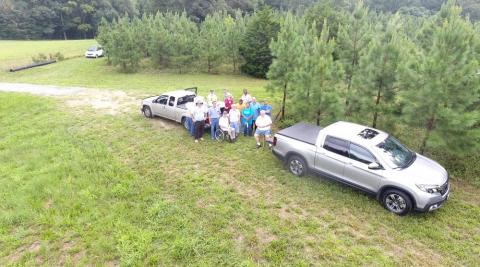
On Friday, August 10, DCC Instructor Steven Carrigan conducted a three-hour introductory training session at the college with 12 students. On Saturday, August 11, the students participated in the hands-on portion of the course at a remote site in Pittsylvania County, Virginia.
While instructing the students, Carrigan was joined by several Certified 107 Pilots volunteering their time, who helped teach students the dos and don’ts of operating UAS.
Winnipeg Fire Paramedic Service deploys new UAS for first time
The Winnipeg Fire Paramedic Service (WFPS) in the city of Winnipeg, Manitoba, Canada recently deployed its new UAS for the first time to assist with the assessment of a fire and later, the detection of hot spots.
“With the drone’s help, the commander of the scene was better able to critically assess the dangers of this fire and direct the crews to target the fire in a more efficient manner,” explains Assistant Chief Jay Shaw.
“This is a great example of how our department is using technology to increase safety for our crews and also create better outcomes for citizens.”