Autonomy
Autonomy

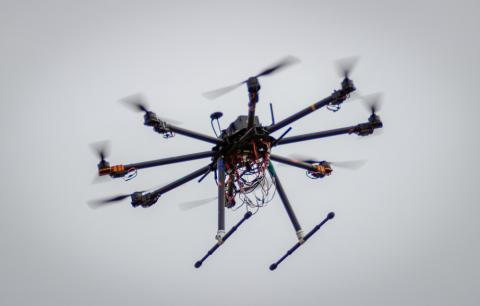
BAE Systems awarded contract to continue developing autonomy software to improve resiliency of air mission planning for military
BAE Systems has been awarded a Phase 3 contract worth $3.1 million from the Defense Advanced Research Projects Agency (DARPA) to further the development of autonomy software, in an effort to improve the resiliency of air mission planning for the military.
The goal of the Resilient Synchronized Planning and Assessment for the Contested Environment (RSPACE) program is to develop human-centered software decision aids that can help air operators better control daily operations in a complex battlespace. As part of the RSPACE program, BAE Systems has created software called the Distributed, Interactive, Command-and-Control Tool (DIRECT) to improve air battlespace awareness.

Winnipeg Richardson International Airport launches first autonomous airport snowplow in North America
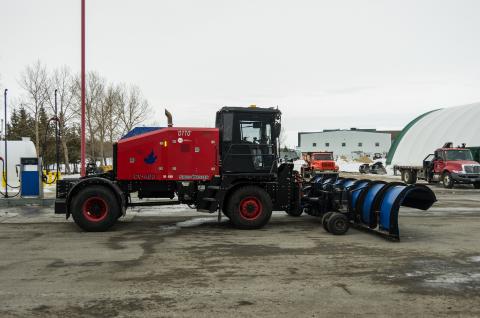
Canada’s Winnipeg Richardson International Airport recently launched the first autonomous airport snowplow in North America.
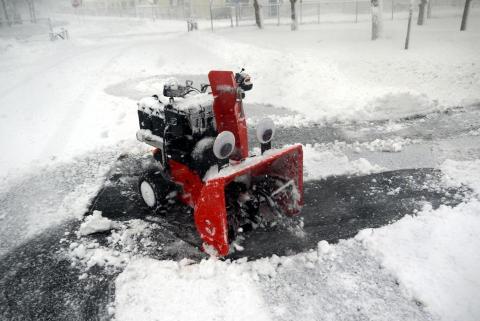
A product of Manitoba, Canada companies Northstar Robotics Inc. and Airport Technologies Inc. (ATI), the snowplow, known as Otto, is a specially designed ATI Snow Mauler built to operate autonomously using technology from Northstar Robotics. Otto follows predetermined routes and controls the plow blade at specific locations to conduct its snow clearing duties.
According to Winnipeg Richardson International Airport, Otto is now capable of operating autonomously in low-risk areas of the airport. The next step is for Otto to operate in other areas of the airport.
Cambridge Consultants unveils Mamut autonomous robot for agriculture
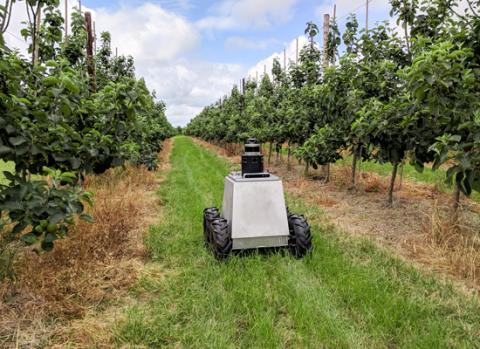
Cambridge Consultants has unveiled its autonomous robot, Mamut, which is built to explore crop fields, and capture data on health and yield at the level of individual plants on a large scale.
According to Cambridge Consultants, Mamut automates data capture, providing growers with regular, precise and actionable information on their crops, which allows them to predict and optimize yields.
Powered by artificial intelligence, Mamut is equipped with a wide range of sensors, and can map and navigate its surroundings without GPS or a fixed radio infrastructure. Its cameras capture detailed crop data at the plant level as it makes its way through rows of a field, orchard or vineyard, allowing for accurate predictions of yield and crop health.

412th Test Wing's Emerging Technologies Combined Test Force conducts first autonomy flight test
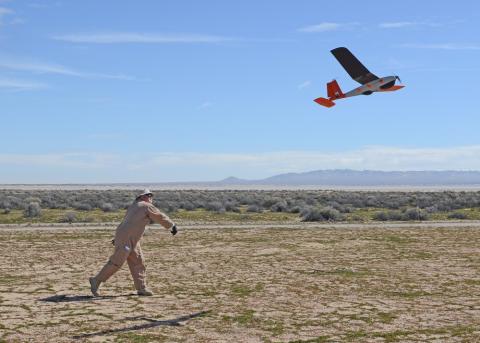
From Feb. 26 to 28, the 412th Test Wing’s Emerging Technologies Combined Test Force (ET CTF) conducted its first autonomy flight test.
During the test, the team collected data on the Testing of Autonomy in Complex Environments (TACE) system, which was developed by Johns Hopkins University.
According to Capt. Riley Livermore, 412th Test Wing ET CTF Autonomy lead, the TACE system is test middleware that sits between an autonomy/artificial intelligence computer and an aircraft’s autopilot. The system monitors the commands being sent from the autonomy to the autopilot, and then sends back the aircraft state information such as position, speed and orientation to the autonomy.
Exyn Technologies' Advanced Autonomous Aerial Robot designed for data collection in GPS-denied environments
Exyn Technologies Inc. has announced that its Advanced Autonomous Aerial Robot (A3R) is now available commercially.
Driven by the company’s exynAI proprietary software, the Exyn A3R is the first and most advanced fully autonomous aerial system for data collection in GPS-denied environments, according to Exyn.
The vehicle has already proven beneficial to customers, as a Canadian-based international mining company called Dundee Precious Metals (DPM) selected Exyn as its technology partner, in an effort to advance its initiative for digitization and automation of its underground gold mining operations.
FedEx unveils its autonomous delivery robot; plans to test it this summer
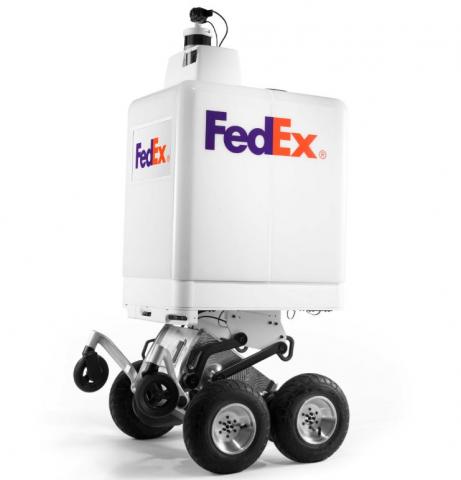
On Wednesday, Feb. 27, FedEx Corp. unveiled its FedEx SameDay Bot, which is an autonomous delivery robot designed to help retailers make same-day and last-mile deliveries to their customers.
According to FedEx, retailers will be able to accept orders from nearby customers and deliver them directly to customers’ homes or businesses the same day using the robot.
FedEx notes that on average, more than 60 percent of merchants’ customers live within three miles of a store location, which shows the potential for on-demand, hyper-local delivery. With this in mind, FedEx has also announced that it is partnering with several companies including AutoZone, Pizza Hut, and Target to help assess retailers’ autonomous delivery needs.
University of Connecticut engineering students work to build firefighting UAS
With help from mentors from Sikorsky, three University of Connecticut (UConn) engineering seniors are working to build and program an autonomous firefighting UAS to battle fires without a pilot’s guidance.
Once the UAS is complete, it will be equipped with a thermal imaging camera to identify a fire, object avoidance technology to steer clear of any obstacles, and a softball-sized fire-extinguishing ball that will be dropped over the flames.
The students will develop coding language that will tie the drone’s technology together, and it will operate based on inputted coordinates.