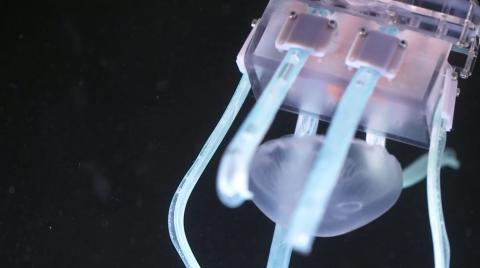
Researchers at Harvard’s Wyss Institute for Biologically Inspired Engineering, the Harvard John A. Paulson School of Engineering and Applied Sciences (SEAS), and Baruch College at City University of New York have developed an “ultra-soft, underwater gripper” that could catch and release jellyfish without harm.
According to the researchers, the gripper would help scientists collect and study an animal that has yielded impressive scientific discoveries such as green fluorescent protein that scientists now use to study gene expression, and life-cycle reversal that could play an integral role in combating aging.
Maritime
Maritime
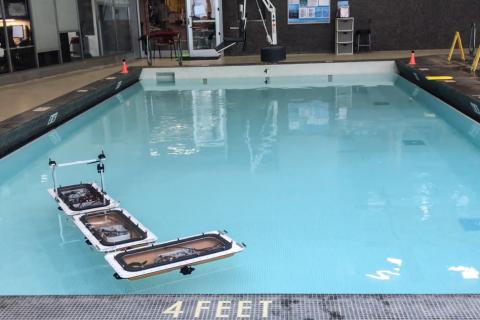
MIT says that its autonomous boats are now capable of shapeshifting
MIT has announced that its fleet of robotic boats has been updated so that it can now “shapeshift” by autonomously disconnecting and reassembling into various configurations to form floating structures in Amsterdam’s many canals.
Described as “rectangular hulls equipped with sensors, thrusters, microcontrollers, GPS modules, cameras, and other hardware,” the autonomous boats are being developed by MIT and the Amsterdam Institute for Advanced Metropolitan Solutions (AMS Institute), as part of an ongoing project known as “Roboat.”
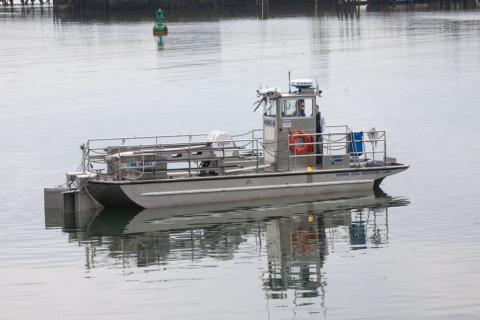
Sea Machines demonstrates how autonomous tech can increase safety of marine oil-spill response ops
Sea Machines Robotics has announced that as part of its cooperative agreement with the U.S. Department of Transportation Maritime Administration (MARAD), it successfully demonstrated its autonomous systems for use onboard a Kvichak Marco skimmer boat during events held along the Portland harbor on Aug. 21.
A Vigor/Kvichak Marine Industries-built skimmer boat was utilized during the on-water demonstrations. According to Sea Machines, the boat, which is owned by Marine Spill Response Corp. (MSRC), is the world’s first autonomous spill response vessel.
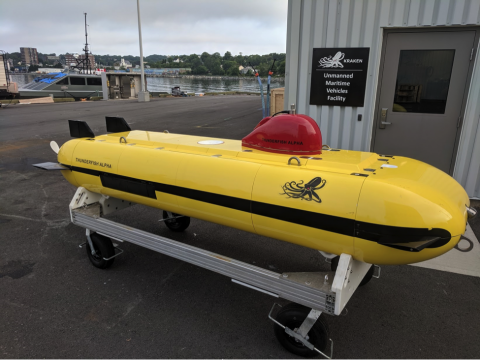
Kraken Robotics Systems delivers ThunderFish 300 AUV to test partner in Nova Scotia
Kraken Robotics Inc. has announced that its wholly owned subsidiary, Kraken Robotic Systems Inc., has delivered its ThunderFish 300 AUV to its test partner, Defense Research and Development Canada (DRDC) in Halifax, Nova Scotia.
A $1 million contract award under the Canadian government’s Build in Canada Innovation Program made this delivery to DRDC possible.
Kraken notes that final sea acceptance testing was completed on August 8th.
The Burgeoning Unmanned Maritime Industry and Its Economic Impact
In August 2018, the Pentagon awarded an $800 million contract for the development of unmanned subsurface systems. The recognition of opportunities presented by maritime systems, well known by industry experts, has spurred energetic interest from within the unmanned systems community and potential adopters from diverse industries.
Join maritime industry veterans for an update on recent changes to the industry and platforms being developed. Representatives of industries who have embraced unmanned maritime technology will discuss how these systems changed their business models, expanded capabilities, and increased efficiency.
Who Should Attend?
ecoSUB robot to perform Arctic research mission considered too dangerous for humans
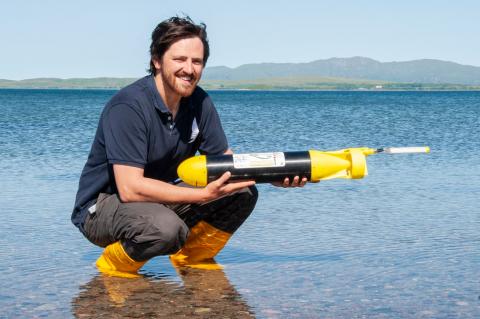
In an effort to help scientists understand the true extent of melting from Arctic glaciers, an ecoSUB underwater robotic vehicle will perform an Arctic research mission that is considered too dangerous for humans.
The ecoSUB will be deployed to the foot of a melting glacier in Arctic Norway. The goal of the mission is to learn more about the effect of meltwater on a process called ‘calving’, which causes huge chunks of ice to break off the glacier edge.
Saildrone becomes first unmanned system to circumnavigate Antarctica
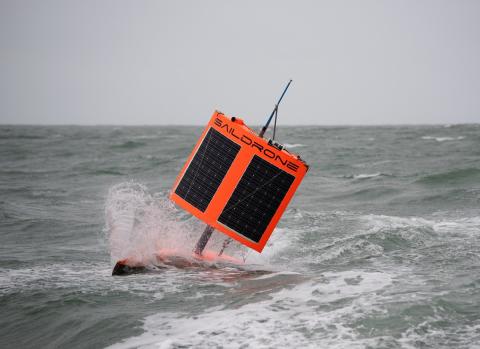
A wind-powered USV called the saildrone has become the first unmanned system to circumnavigate Antarctica.
Known as SD 1020, the vehicle, equipped with a suite of climate-grade sensors, collected data in previously unchartered waters, which will offer insights into ocean and climate processes.
SD 1020 launched on Jan. 19 of this year from Southport in Bluff, New Zealand, and returned to the same port on Aug. 3. Over the course of 196 days, the USV sailed more than 13,000 miles around Antarctica, surviving freezing temperatures, 50-foot waves, 80 mile per hour winds, and collisions with giant icebergs along the way.
ThayerMahan awarded $19.4 million contract to develop innovative autonomous systems
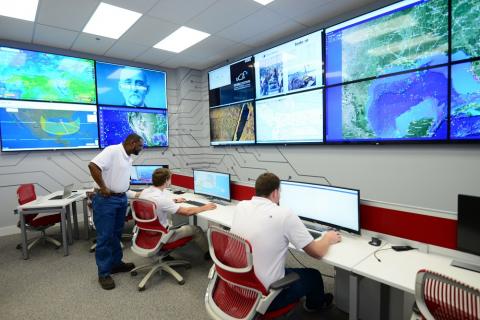
ThayerMahan Inc., a developer of autonomous maritime platforms, has been awarded a four-year, $19.4 million contract to develop innovative autonomous systems, and improve its proprietary acoustic and electronic search systems, in support of Navy and Marine Corps missions.
The Office of Naval Research (ONR) awarded ThayerMahan the contract as part of its continuing effort to promote the development and deployment of Unmanned Maritime Systems in support of US Navy missions.
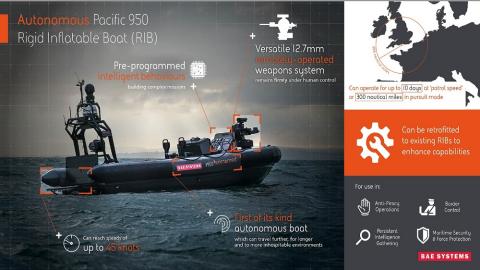
BAE Systems successfully tests 'first of its kind' autonomous boat
BAE Systems has successfully tested a ‘first of its kind’ autonomous boat that it says will give navies the ability to “go beyond the limits of human endurance with unmanned vessels that can travel further, for longer and to more inhospitable environments.”
Known as the autonomous Pacific 950 Rigid Inflatable Boat (RIB) demonstrator, the boat has been used to develop and prove a variety of technologies that could potentially make naval missions faster, easier and safer, which, according to BAE Systems, would take the relationship between human and machine to “new territories.”