This Week in the Unmanned Systems and Robotics World
According to China’s National Enterprise Credit Information Publicity System, Waymo has established a subsidiary in China. Known as Huimo Business Consulting, the subsidiary, based in Shanghai, has a business scope that includes autonomous driving parts and product design, testing and other related services, to name a few. (China Money Network)
Maritime
Maritime
Embry-Riddle alumnus turns doodle drawing into award-winning autonomous robotic fish
A recent graduate of Embry-Riddle Aeronautical University named Jefferson Talbot has turned one of his doodle drawings into an autonomous robotic fish created with 3D printing technology, which he hopes can be used in the pet fish industry, and to help researchers who need a close-up view of underwater ecosystems.
Back in 2016, Talbot started drawing a skeleton of a fish in the margins of his notebook during class. Last summer, after watching his roommate “carefully lug” around his fish and bowl whenever leaving the dorm for a few days so the fish would stay healthy, Talbot came up with the idea of a robotic fish, as he thought that a robotic fish would be a lot easier to take care of.

ASV Global and TerraSond successfully complete hydrographic survey using unmanned vessel
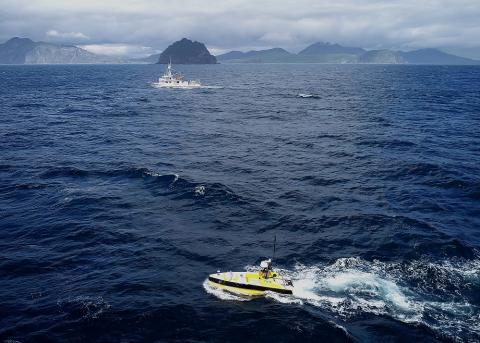
ASV Global and TerraSond have successfully completed a hydrographic survey for charting off the coast of Alaska using ASV Global’s C-Worker 5 unmanned vessel alongside the Q105 survey ship acting as the mother vessel.
Fitted with a multibeam echosounder, the C-Worker 5 unmanned vessel conducted 53% of the 10,649-kilometer survey.
This latest operation was ASV Global and TerraSond’s fourth unmanned charting survey for the National Oceanic and Atmospheric Administration (NOAA) in as many years. The total unmanned survey lines completed now stands at almost 15,000 kilometers.
From Unmanned Systems Magazine: Interoperability efforts are changing the way robots are used in the field
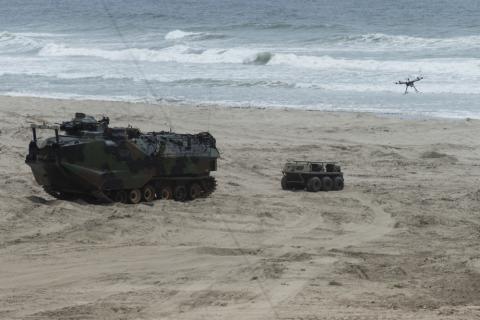
During the more than 17 years of continuous warfare in Iraq and Afghanistan, improvised explosive devices (IEDs) have proven to pose the most serious threat to service members stationed in combat theaters. Mitigating this threat, as such, has emerged as a primary mission for engineering and design teams in both industry and the U.S. Department of Defense.
Additionally, research teams are well aware of the utility UAS can provide in the intelligence, surveillance and reconnaissance (ISR) realm. Perimeters of harbors and land-based installations can be monitored and kept clear of obstacles and potential threats — without placing human lives in harm’s way.
Naval Oceanography personnel perform UUV exercises
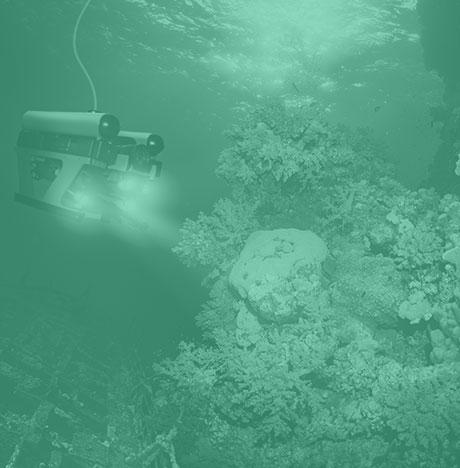
On Thursday, Aug. 16, Naval Oceanography personnel from Stennis Space Center in Hancock County, Mississippi performed maneuvers with UUVs in the Mississippi Sound.
The Navy's Fleet Survey Team (FST) prepares their UUVs — including those with sonar capability — to go up against the Naval Oceanographic Mine Warfare Center (NOMWC) and their underwater drones.
Michigan Technological University set to open Maritime Autonomy Research Site
According to the Detroit News, Michigan Technological University is opening the Maritime Autonomy Research Site, which will give researchers a space to try out new technologies that would facilitate greater use of unmanned research and survey vessels.
Located on Lake Superior’s Portage Canal in the Upper Peninsula city, the Maritime Autonomy Research Site is the first freshwater testing spot of its kind in the world, according to officials.
A launch ceremony for the site was scheduled for Friday, August 10, and on the same day, a new organization called the Smart Ships Coalition was also scheduled to be announced.
Wilhelmsen Ships Service to help develop future UAS regulatory framework for Singapore
Wilhelmsen Ships Service has been selected to help develop the future UAS regulatory framework for Singapore. The company will receive dedicated funding for its shore-to-ship delivery project.
Following a Call-For-Proposal (CFP) by the Civil Aviation Authority of Singapore (CAAS) and the Ministry of Transport, Wilhelmsen Ships Service is one of just four companies to have received the funding.
The CFP seeks to “support the development of systems and technologies to enable innovations within the wide-ranging use of UAS.”
Embry-Riddle uses UAS as part of efforts to restore and preserve living shorelines
Embry-Riddle Aeronautical University recently flew its UAS along the shorelines and above the water at Menard-May Park in Edgewater, Florida to capture high-resolution images and video of this area of Mosquito Lagoon, which is part of the Indian River Lagoon system.
Organized and flown by faculty, staff and students from Embry-Riddle’s Unmanned Aircraft Systems Science program, this aerial reconnaissance survey supports the Riverside Conservancy, which is a non-profit group dedicated to “restoring and preserving living shorelines in southeast Volusia County.”
Oceans Unmanned expands its freeFLY UAS program to Dutch Harbor, Alaska
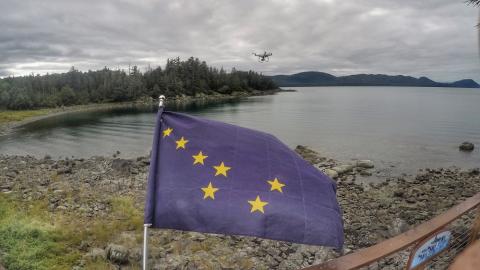
In partnership with Alaska Sea Grant and Aleutian Aerial LLC, and with additional support from DJI, Oceans Unmanned Inc. has announced the expansion of its freeFLY initiative into Dutch Harbor, Alaska, to provide UAS aerial support for marine mammal entanglement response efforts in the region.
The freeFLY program, which was launched earlier this year in Hawaii, provides training, equipment, and management oversight to networks of local volunteer UAS operators that are available to support response groups.
SeeByte renews SeeTrack and Neptune licenses currently operated by Royal Navy's MASTT AUV fleet
SeeByte has renewed all SeeTrack and Neptune licenses currently operated by the Royal Navy’s Maritime Autonomous Systems Trials Team (MASTT).
Working in collaboration with ATLAS ELEKTRONIK UK, SeeByte, which is part of the Defence Equipment and Support (DE&S) Mine Countermeasures and Hydrographic Capability program, will be offering full support and maintenance for MASTT.
The software is integrated into MASTT’s AUV fleet to coordinate the vehicles during Mine Countermeasure (MCM) missions.