AEye, which develops advanced vision hardware, software and algorithms that serve as the eyes and visual cortex of autonomous vehicles, has announced the AE100, which the company calls a “leading-edge robotic perception system for autonomous vehicle, ADAS, and mobility markets.”
The AE100 is a "solid state, cost-optimized system" that is based on AEye’s Intelligent Detection and Ranging (iDAR) technology, which is a “new form of intelligent data collection that enables rapid, dynamic perception and enhanced path planning.”
Autonomous Vehicles
Autonomous Vehicles
NVIDIA and Aurora to develop new Level 4 and Level 5 self-driving hardware platform
NVIDIA and self-driving tech company Aurora have announced that they are collaborating to develop a new Level 4 and Level 5 self-driving hardware platform that will utilize the NVIDIA DRIVE Xavier processor.
During the opening press conference of CES 2018 in Las Vegas, NVIDIA founder and CEO Jensen Huang revealed that the company’s automotive team is working with Aurora to “bring up a new modular and scalable DRIVE Xavier platform that will bring autonomous vehicles to market.”

AImotive to use new round of funding to further develop its autonomous driving technology
A full-stack autonomous vehicle technology company called AImotive has closed its $38 million USD Series C funding round, which was led by B Capital Group and Prime Ventures, and included participation from several other investors.
The new round of funding will be used to continue the development of AImotive’s proprietary autonomous driving technology, which mainly relies on affordable, off-the-shelf camera sensors and artificial intelligence-based vision processing.
According to AImotive, its technology is inherently scalable thanks to its “low cost modularity and flexibility,” and it is also open to the “fusion of non-vision based sensors” for extra safety in poor visibility conditions.
Weekend Roundup
This Week in the Unmanned Systems and Robotics World
Week of 12-25-2017
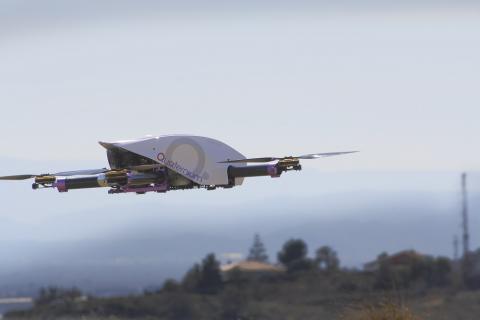
A UAS company called Quaternium is claiming a new world record for the endurance of a multi-rotor UAS. Quaternium says that on Dec. 24, 2017, its HYBRiX.20 fuel-electric quadcopter UAS flew for four hours and 40 minutes in Valencia, Spain. (Unmanned Aerial)
BlackBerry and Baidu partner to work on connected and autonomous vehicle technology
BlackBerry Limited and Baidu, Inc. have announced that they will work together to accelerate the deployment of connected and autonomous vehicle technology for automotive original equipment manufacturers (OEMs) and suppliers across the world.
The two companies have signed a statement of intent to make BlackBerry QNX’s safety operating system (OS) the foundation for Baidu’s Apollo autonomous driving open platform, which was announced in April 2017.
Aurora and Hyundai Motor Company partner to work on self-driving vehicles
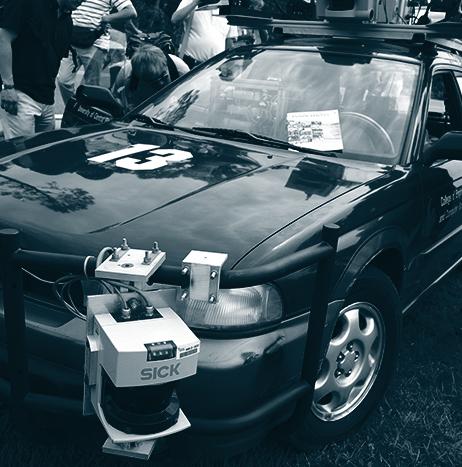
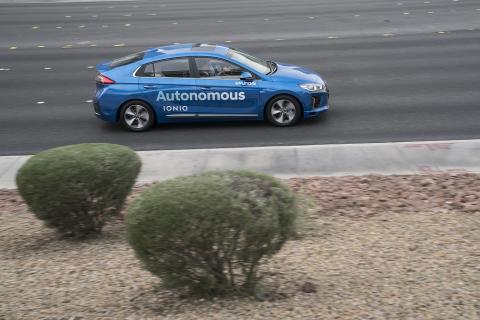
Autonomous vehicle technology company Aurora has partnered with Hyundai Motor Company to develop self-driving Hyundai vehicles, which they hope to bring to market by 2021.
Through the partnership, Aurora’s self-driving technology will be installed in Hyundai’s vehicles, beginning with models custom-developed and launched in test programs and pilot cities.
The partnership will initially focus on the ongoing development of hardware and software for automated and autonomous driving, as well as the back-end data services required for Level 4 automation. According to the Society of Automotive Engineers (SAE), Level 4 autonomous vehicles can operate without human input or oversight under certain conditions.
Weekend Roundup
A Federal Aviation Administration panel has recommended ways to track and identify flying drones, but hasn’t reached a consensus as to whether hobbyist drones should be included. The Academy of Model Aeronautics says no, but other groups say they should be. (USA Today)
Sacramento State planning for self-driving electric shuttle
Sacramento State's University Transportation and Parking Services (UTAPS) is looking into bringing a self-driving electric shuttle to campus.
Right now, the shuttle is in the planning stages by the Sacramento Area Council of Governments (SACOG), UTAPS, the City of Sacramento and Regional Transit.
UTAPS Director Tony Lucas says that the goal of the project is to “ease commute times for students who use the light rail,” as the shuttle would take commuters from the 65th Street Light Rail Station to campus. Lucas says that a dedicated track operating from the station to campus— without having to go through rush-hour traffic on Folsom Boulevard—will help accomplish that goal.

Ford moving autonomous and electric vehicle teams to Detroit
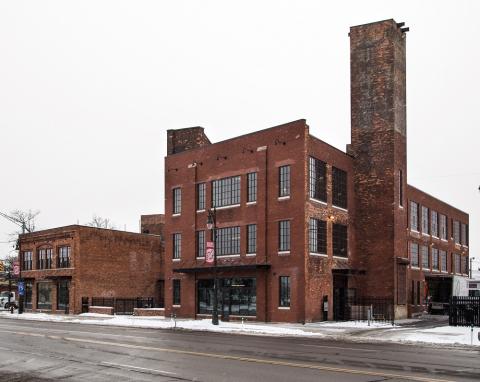
Ford Motor Company has announced plans to move its key autonomous vehicle and electric vehicle business and strategy teams to a historic building known as The Factory, in Detroit’s Corktown neighborhood.
Expected to be up and running in early 2018, The Factory will serve as a place for the teams to work on urban mobility challenges and solutions. More than 220 employees will work at The Factory.
“We’re excited to choose this inspirational location in one of Detroit’s resurgent neighborhoods to accelerate our work on electric and autonomous vehicles,” says Jim Hackett, Ford president and CEO.
Weekend Roundup
This Week in the Unmanned Systems and Robotics World
The city of Palo Alto, California plans to submit two proposals for the UAS Integration Pilot Program, which was announced back in October. Under one of the proposals, UAS would be used to deliver units of blood from Stanford Blood Center to Stanford Hospital. Under the other proposal, the city could UAS for a variety of purposes including airport operations or for law enforcement missions, depending on the city’s interest. (Palo Alto Daily Post)