This Week in the Unmanned Systems and Robotics World
UAS users in the city of Haysville, Kansas will now be able to launch and land their aircraft in all of the city’s parks, thanks to a new UAS-use policy implemented this week. According to Haysville Chief Administrative Officer Will Black, this is the first time that UAS will be permitted to fly above public property. (KMUW)
Autonomous Vehicles
Autonomous Vehicles
Nissan tests autonomous driving technology in Tokyo
Nissan has demonstrated a prototype of its most advanced autonomous driving technology, known as ProPILOT, on the roads in Tokyo, Japan.
The technology was tested on a modified INFINITI Q50 sports sedan.
A vehicle equipped with Nissan's ProPILOT technology can operate autonomously on urban roads and freeways, starting at the beginning of the vehicle’s journey when a destination is chosen by the driver using the navigation system, until the vehicle arrives at its destination.

Delphi signs agreement to acquire nuTonomy
Delphi Automotive has signed an agreement to acquire nuTonomy, Inc. for a total of $450 million.
Through the acquisition, nuTonomy will help accelerate Delphi’s commercialization of autonomous driving (AD) and Automated Mobility on-Demand (AMoD) technologies for automakers and new mobility customers across the globe.
“Our mission has always been to radically improve the safety, efficiency, and accessibility of transportation worldwide,” says nuTonomy co-founder and CEO, Karl Iagnemma.

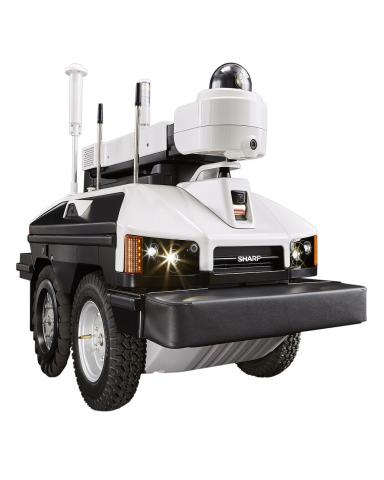
Sharp Electronics' Sharp INTELLOS A-UGV receives two industries awards
During ASIS 2017, Sharp Electronics' Sharp INTELLOS Automated Unmanned Ground Vehicle (A-UGV) was named “New Product of the Year for Outdoor Perimeter Protection” by Security Today magazine, and the A-UGV also received the “Security Solutions Award for Security Monitoring” by Security Sales & Integration.
These industry honors come a year after the Sharp INTELLOS A-UGV officially launched during ASIS International 2016.
“It is one thing for a manufacturer to claim it can satisfy security and safety needs,” says Mike Kobelin, National Sales Director for the Sharp Robotics Business Division.
Built Robotics developing autonomous excavators for construction sites
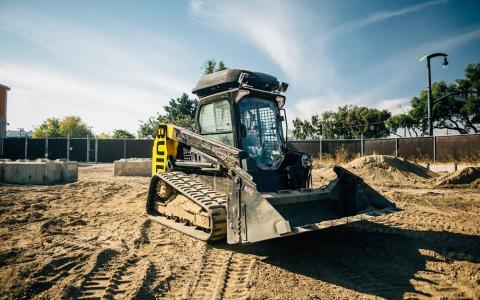
A new company called Built Robotics is developing software and sensors that can transform off-the-shelf excavators into machines that autonomously dig precise holes for hours without a break.
Founded by Noah Ready-Campbell, Built Robotics, which is headquartered in San Francisco and recently went public, has been stealthily operating a retrofitted skid steer, using a computer program to direct it and move it around dirt.
Using Built Robotics’ software, a contractor can geofence a project to ensure that the machine doesn’t go rogue. Following that, a contractor can “program in the exact parameters and where to move the dirt.”
Weekend Roundup
This Week in the Unmanned Systems and Robotics World
The Airborne Law Enforcement Association (ALEA) has announced the adoption and release of the Standards for Public Safety Small Unmanned Aircraft System (sUAS) Programs, which were developed by the Public Safety Aviation Accreditation Commission (PSAAC), “under contract to ALEA for use by the public safety aviation community.” Public safety agencies considering using small UAS as a part of their operations are encouraged to use these standards as a guiding document. Public safety agencies already using small UAS as a part of their operations are encouraged to “review these standards and perform an internal gap analysis to determine their compliance with industry best practices.” (ALEA)

Michigan State University and ZF partner to address potential cybersecurity issues surrounding autonomous vehicles
Michigan State University (MSU) College of Engineering will work with a German auto parts maker called ZF to develop new methods to address potential cybersecurity threats that autonomous vehicles might face in the future.
In an effort to deal with automotive cybersecurity and safety issues, Betty H.C. Cheng, professor of computer science and engineering, will work with ZF to develop a cybersecurity method to help “identify, mitigate and/or prevent threats to automotive systems.”
“We’ll develop a set of reusable design patterns and quality assurance techniques that are amenable to automated analysis,” Cheng says.
NVIDIA unveils world's first AI computer designed to drive fully autonomous robotaxis
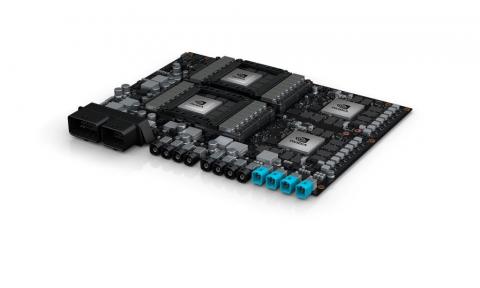
NVIDIA has unveiled the world's first artificial intelligence computer, codenamed Pegasus, which is designed to drive fully autonomous robotaxis that can transport passengers to their destinations, and provide mobility to everyone.
Designed for ASIL D certification—the industry's highest safety level—Pegasus extends the NVIDIA DRIVE PX AI computing platform to handle Level 5 driverless vehicles.
NVIDIA says that the NVIDIA DRIVE PX Pegasus will “help make possible a new class of vehicles that can operate without a driver -- fully autonomous vehicles without steering wheels, pedals or mirrors, and interiors that feel like a living room or office.”
Roboteam unveils Transportable Interoperable Ground Robot during AUSA 2017
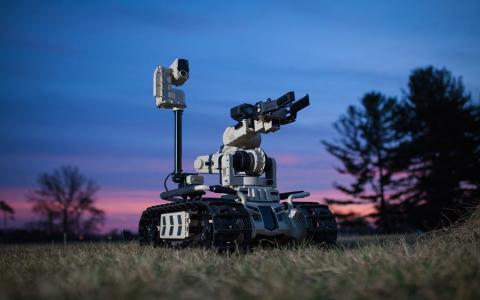
During AUSA 2017 in Washington, D.C., Roboteam, Inc., which provides tactical ground robotic systems and controllers for defense, law enforcement and public safety missions, unveiled its Transportable Interoperable Ground Robot (TIGR).
Described by Roboteam as the “most advanced, groundbreaking robotic platform ever made available to the modern warfighter,” the TIGR is a two-man carried UGV with a modular design. The modular design allows for add-ons, sensors and future technology integration.
Highly mobile and capable of operating in any terrain, the all-weather UGV is capable of a number of different functionalities that are unachievable for other mid-sized robotic platforms in the “theater of war,” according to Roboteam.
Weekend Roundup
This Week in the Unmanned Systems and Robotics World
On the same day as World Animal Day, Oct. 4, Intel announced that it successfully used its artificial intelligence (AI) and UAS technologies for two wildlife research expeditions; one which focused on polar bear exploration, and the other on whale exploration. The expeditions were conducted through two separate collaborations with a wildlife photographer and conservationist, and also with Parley for the Oceans, which addresses major threats towards the world’s oceans. (Intel)