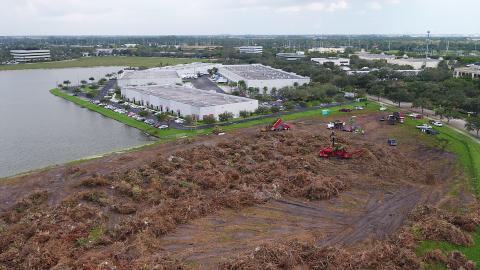
In Rowan County, North Carolina, the Rowan County Rescue Squad and the North Carolina Highway Patrol are increasingly relying on UAS to respond to various incidents.
Each N.C. Highway Patrol troop has a single UAS to map traffic collisions, while the Rescue Squad is part of a pilot program using its UAS at fires, as well as for search and rescue operations.
The Rowan Rescue Squad received its UAS as part of the pilot program in April 2017, according to Chief Eddie Cress. The squad currently has one certified pilot, a pilot-in-training, and two others who are working on obtaining certification.
First Responders
First Responders
UNICEF announces funding opportunity for drone startups
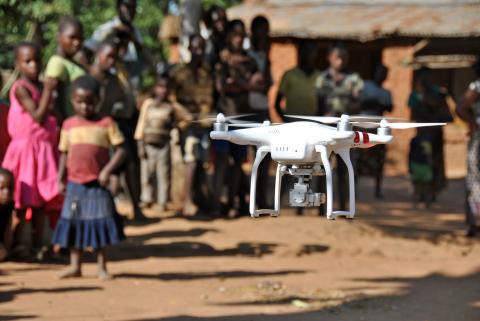
The UNICEF Innovation Fund is seeking make $100,000 equity-free investments in technology startups that plan to use drones to benefit humanity.
“If you’ve got a start-up registered in one ofUNICEF’s program countries and have a working, open-source drone prototype or service (or you are willing to make it open-source) showing promising results, the UNICEF Innovation Fund is looking for you,” the fund says on its website.
The deadline to apply is 11:59 p.m. EDT on Sunday, July 22. UNICEF is seeking software to collect and share data, manage flight and delivery operations, unmanned traffic management systems and business models for sustainable drone services, among other needs.
Weekend Roundup
This week in the unmanned systems and robotics world
The Colorado Division of Fire Prevention and Control has deployed unmanned aircraft to survey growing damage caused by several wildfires in the state. An official said the information gathered by one of the drones is crucial to providing the department an estimate of the size of one of the fires. (The Independent)
KT Corp.'s emergency network service platform features UAS for search and rescue operations
South Korea's second-largest mobile carrier, KT Corp., has unveiled an emergency network service platform that features UAS for search and rescue operations.
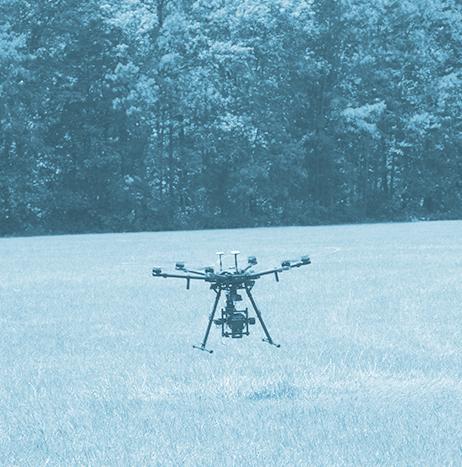
Co-developed by a local UAS maker named Metismake Inc., the Skyship platform features a helium-powered airship and a high-resolution camera that can scan for mobile signals of people who need to be rescued.
Capable of scanning for LTE or high-end fifth-generation (5G) signals, the airship can determine a person's position “to within 50 meters” before sending UAS to find their exact location.
Once the signal of a survivor is picked up by the airship, the platform will deploy smaller UAS that will deliver emergency kits and supplies before actual rescue personnel arrive at the site.
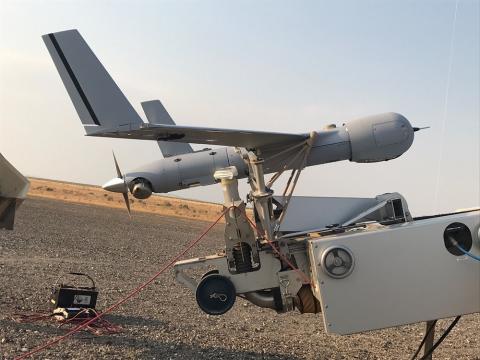
Insitu's ScanEagle UAS selected to provide fire suppression services across U.S.
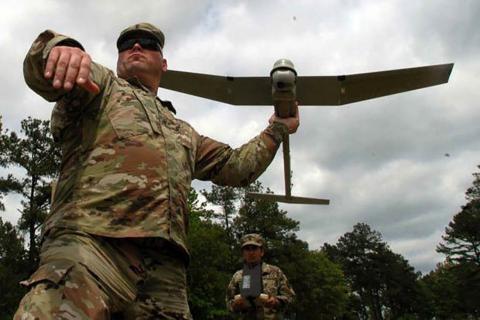
The U.S. Department of the Interior (DOI) has awarded a “first-of-its kind” contract to Insitu, so that the company can provide fire suppression services within the contiguous 48 states and Alaska using its ScanEagle UAS.
The UAS will help battle wildfires using geospatial mapping and full motion video.
Through the contract, Insitu will support manned aerial operations for a variety of scenarios, including fire suppression, search and rescue, and emergency management, as needed on a “call when needed” basis.
Syracuse Fire Department launches UAS program
In an effort to help members of its department fight fires, the Syracuse Fire Department has launched a new UAS program.
According to Fire Capt. Timothy Gleeson, the department expects to use the technology for stubborn fires or on fires in large commercial buildings.
Thanks to the drones' thermal imaging capabilities, firefighters will be able to see hotspots in stubborn fires and identify spots where roofs or parts of buildings could collapse, notes Syracuse Fire Chief Michael Monds.
“We're aggressive. ... This is a really different type of concept,” Monds says via Syracuse.com. “To step back and get a good picture.”
UAS keeping citizens safe in Hampton, Virginia
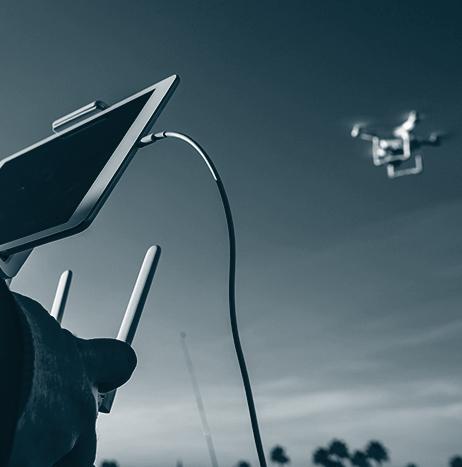
Hampton, Virginia’s police and fire departments are utilizing UAS to keep citizens safe.
The city has a Joint Police/Fire Unmanned Aerial Vehicle Unit, consisting of six firefighters and six police officers. All members of the unit are cross-trained, meaning that police officers can do what the firefighters are trained to do and vice versa.
The joint unit can use its UAS for a variety of tasks, including but not limited to, fighting fires, post-disaster assessments, and locating high-risk suspects on the run.
Embry-Riddle students use UAS Disaster Study Away trip to help recovery efforts in Oklahoma
In support of the Oklahoma Emergency Management and Dept. of Wildlife Conservation’s efforts to survey the aftermath of large rangeland fires that spread across hundreds of thousands of acres in Oklahoma back in April, Embry-Riddle Aeronautical University, Daytona Beach students embarked on a UAS Disaster Study Away trip in May.
Led by Embry-Riddle Professors Dan Macchiarella and John Robbins, the Embry–Riddle UAS Disaster Response Team started their trip in Arlington, Texas, where they underwent Predator/Reaper UAS orientation flight training.
Following that, they went to the State Emergency Operation Center in Oklahoma City, where they received an initial briefing, and prepared to help with response and recovery efforts resulting from various severe weather events.

FLIR Systems announces Black Hornet 3 nano UAS
FLIR Systems Inc. has announced the launch of its latest UAS, the Black Hornet 3 nano UAS, which is designed for use by global militaries, government agencies, and first responders.
FLIR’s Black Hornet Personal Reconnaissance System (PRS) is already the “world’s smallest combat-proven” nano-UAS. The next generation Black Hornet 3 nano UAS adds the ability to navigate in GPS-denied environments, giving the warfighter the ability to maintain situational awareness, threat detection, and surveillance no matter the location of the mission.
Airborne Response expanding its force of UAS pilots for 2018 summer storm season
Miami-based Airborne Response, which describes itself as “the nation's premier provider of high resolution aerial imagery for emergency management and disaster response operations,” is expanding its force of FAA-certified remote pilots for commercial and emergency UAS operations across the U.S.
The company is doing this as the 2018 summer storm season started a few days earlier than expected with the formation of Subtropical Storm Alberto, which made U.S. landfall on May 28.
“Our seasonal ramp-up of UAS operators was already underway,” says Christopher Todd, President, Airborne Response.