
Fire departments in Arizona are considering more and more how UAS could benefit their operations.
Division Chief Don Devendorf believes that the Prescott Fire Department could find various ways to use this technology, especially considering that the department's response area includes mountain terrain right in town, along with other “usual city” firefighting challenges.
First Responders
First Responders
Entities join forces to create statewide UAS Working Group in North Carolina
In partnership with N.C. Emergency Management, the North Carolina Department of Transportation’s (NCDOT) Division of Aviation UAS Program Office is working with the Federal Emergency Management Agency (FEMA) to create a statewide UAS Working Group that includes local, state and federal governments, and the private sector.
According to NCDOT, the goal of the UAS Working Group is to “establish a partnership where government and private sector partners can forge strong relationships by sharing best practices and training for disasters and other emergencies.”

Canada's Winnipeg Fire Paramedic Service launching UAS program in June
In an effort to provide “safer, quicker, and more efficient response” to emergency situations, the Winnipeg Fire Paramedic Service (WFPS) will launch its UAS program in June.
Equipped with a thermal imaging camera, WFPS' UAS can help first responders locate individuals and fire hot spots, and it will also be able to identify potential structural issues.
Using the UAS, incident commanders on scene will be able to see what the UAS sees in real-time, which will allow them to deploy resources “more effectively” to the emergency.
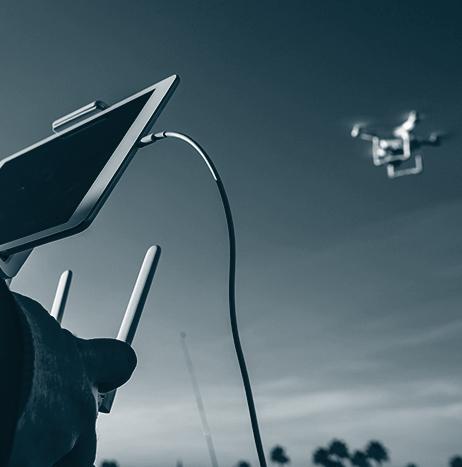
K2 Unmanned Systems releases first American made Law Enforcement tactical UAS
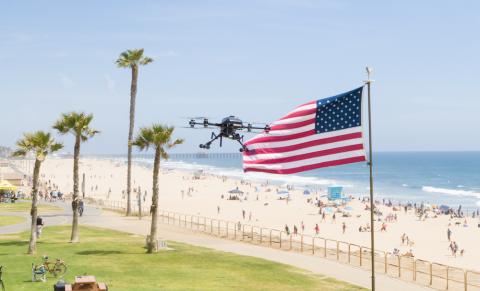
During the 29th Annual APSA Fly In Training, K2 Unmanned Systems LLC, which is a California-based commercial UAS manufacturer, flight ops and training company, unveiled its Knight Hawk UAS. The company says that the Knight Hawk is the first American made Law Enforcement tactical drone.
Designed with first responder operations and infrastructure inspection in mind, the Knight Hawk UAS is equipped with a variety of features including high pound payload capacity, infrared optics, and encrypted HD video downlink; all of which make it a useful tool in critical situations.
Keynote speakers for closing day of Xponential tout 'Unmanned for Good' stories
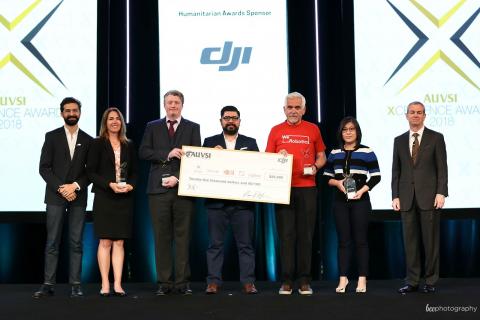
Keynote speakers at Xponential's "Unmanned for Good" session stressed the benefits of unmanned aerial systems for the humanitarian and public safety communities and the responders who risk their lives to make everyone safer.
UAS and the data they provide are becoming so effective for tasks like fighting fires that it is becoming unethical not to use them, said Robin Murphy, professor of computer science and engineering at Texas A&M University.
This, said AUVSI President and CEO Brian Wynne, is "extremely meaningful."
"We have an obligation" to provide technology, said Commander Tom Madigan of the Alameda, California, County Sheriff’s Office.
Unmanned systems bring benefits, but risks must be observed, keynotes say
Attendees of Wednesday’s keynote addresses on “The Unmanned Lifestyle” heard calls to balance enthusiasm for all that unmanned systems can bring to humanitarian causes and public safety with caution regarding the risks of turning over too much decision-making control to intelligent machines — and those who might hack them.
Opening speaker Zeynep Tufekci, a techno-sociologist based at the University of North Carolina, emphasized the importance of acknowledging the potential for discord and destabilization during times of great transition. On balance, she said, outcomes can be overwhelmingly positive, but the progress is often painful.

FLIR Systems' minority investment in DroneSense to help public safety organizations using UAS
FLIR Systems Inc. has completed a strategic investment in DroneSense, a company that makes a unique software platform that serves the growing needs of public safety organizations in using UAS to better perform their missions.
FLIR’s minority investment in DroneSense is expected to create opportunities for the companies to work together and share their respective expertise and customer relationships to “develop and bring to market advanced UAS operating, management, and reporting systems.”
Missouri man rescued with aid of UAS
On the night of March 27, a UAS was used to help rescue a man who drove on to a bridge and found himself in the flooded James River at the Crighton Access Point in Missouri.
The Logan Rogersville Fire Department called on Pilot Tom Baird to provide aerial assistance for this mission. Within seven minutes, Baird got the UAS into the air, and helped crews find the man who needed help faster than if they were to search waterways by boat or on foot.
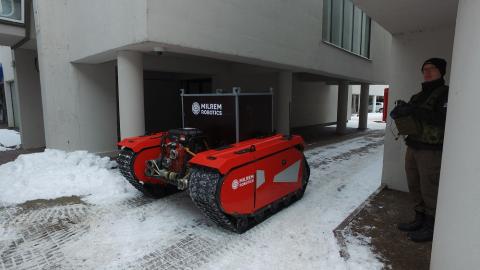
Milrem Robotics developing firefighting and search and rescue UGV
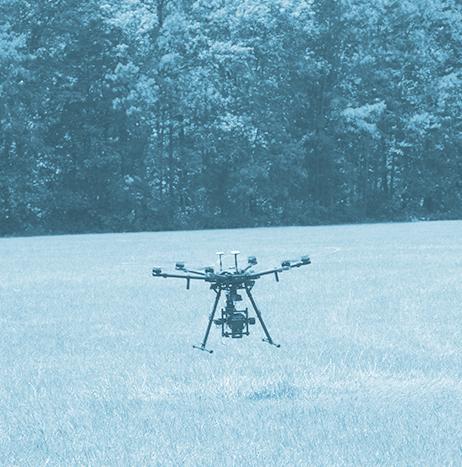
Milrem Robotics is developing a firefighting and search and rescue UGV called Multiscope Rescue.
The UGV, which is being developed together with rescue services, is built to reach areas that are unreachable by human personnel or too dangerous for firefighters to go into, such as tunnels or other structures that may collapse at any time.
The UGV can be equipped with firefighting equipment such as a water tank and a remotely controlled water cannon. It can also be equipped with thermal cameras and powerful lights to locate missing people in harsh environments or remote forested areas.
Minnesota firefighters learn how UAS can assist their operations
During the finale of the 2018 Minnesota State Fire School & Expo, a few dozen area firefighters learned about UAS and how the technology can be used in emergency situations.
As a part of their class, firefighters received a lecture about UAS, which was followed by a live demonstration of the technology in action. During that demonstration, firefighters got to see the different maneuvers and functions of the UAS in the sky, and they could also view what the camera was capturing on a TV.
The class, which was taught by Al Ebbinga, was meant to not only show how UAS can benefit first responders on scene, but it was also meant to “clarify the perception of the name "drone" and how it's been used.”