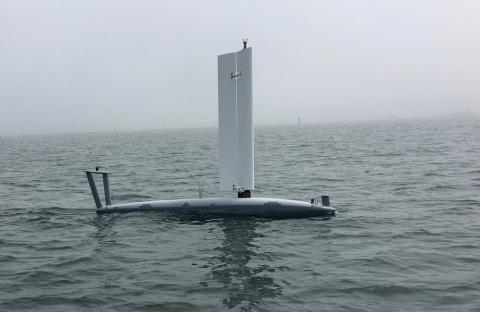
The Australian Institute of Marine Science (AIMS) and Boeing recently used the Liquid Robotics-developed Wave Glider USV to complete a seven-day open water mission, which was the “first major milestone of a five-year joint research agreement” between the two companies.
The mission, which covered 200 nautical miles including parts of North Queensland’s Great Barrier Reef, showcased how the Wave Glider could evaluate the health of the coral reefs and ecosystems.
Maritime
Maritime
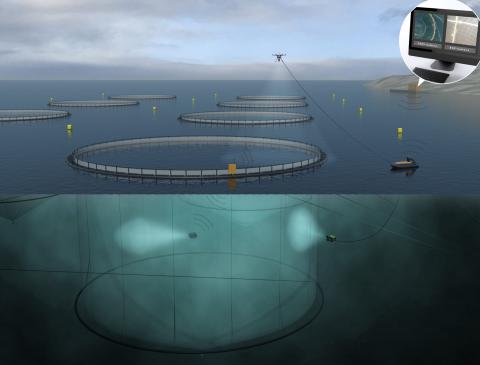
SINTEF, NTNU and others developing robotic systems that could handle tasks at fish farm facilities
In the future, autonomous and remotely operated systems could play a major role in conducting different tasks at fish farm facilities, being that the industry is “planning to locate facilities in more open waters where weather and sea conditions are harsher,” which would make certain operations more demanding.
Day-to-day tasks on fish farm facilities, such as fish welfare monitoring, facility inspections, control of feed rationing and lice counting, are currently conducted by several crew on board service vessels.
Weekend Roundup
This Week in the Unmanned Systems and Robotics World
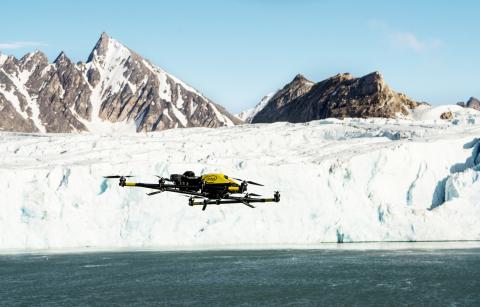
On the same day as World Animal Day, Oct. 4, Intel announced that it successfully used its artificial intelligence (AI) and UAS technologies for two wildlife research expeditions; one which focused on polar bear exploration, and the other on whale exploration. The expeditions were conducted through two separate collaborations with a wildlife photographer and conservationist, and also with Parley for the Oceans, which addresses major threats towards the world’s oceans. (Intel)

Inside the October 2017 issue of Unmanned Systems
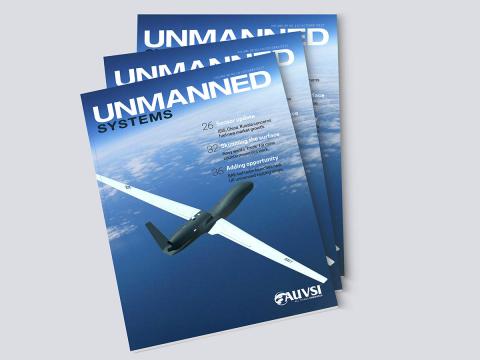
The October 2017 issue of Unmanned Systems looks at the market for UAS sensors and the factors driving new growth; the U.S. Navy’s plan to get a new maritime ‘truck’ for its mine countermeasure work; and a new U.K. testing range for unmanned systems. That and much more including our popular Viewfinder aerial photo gallery and a breakdown of the types of waivers to Part 107 being granted by the Federal Aviation Administration.
Navy establishes first UUV squadron, UUVRON 1
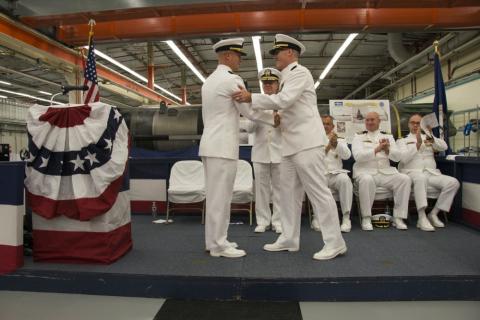
The U.S. Navy officially set up its first unmanned undersea squadron, Unmanned Undersea Vehicle Squadron 1, or UUVRON, at an event on Sept. 26 in Washington state.
Cmdr. Scott Smith, of Hartford, South Dakota, is its first command officer.
"Today we are transitioning our UUV detachment into the first UUV squadron,” said Capt. Robert Gaucher, who turned over his command of Submarine Development Squadron 5 (DEVRON 5) at the same event. “Why is this historical? It's because in standing up UUVRON 1, it shows our Navy's commitment to the future of unmanned systems and undersea combat."
Virginia Governor Terry McAuliffe operates unmanned systems in three domains
During a technology demonstration at the Mid-Atlantic Regional Unmanned Aircraft Systems (MARUAS) Airfield at NASA’s Wallops Flight Facility in coastal Virginia, Virginia Governor Terry McAuliffe operated unmanned systems in three domains—air, land, and sea.
The demonstration showcased how unmanned systems are being used by scientists to study the effects of major storms and sea-level rise on barrier-island dynamics, in an effort to form policies for coastal resilience.

Riptide receives North American Product Leadership Award in the UUV market from Frost and Sullivan
Business consulting firm Frost and Sullivan presented its North American Product Leadership Award in the UUV market to Riptide Autonomous Solutions on Sept. 18.
Riptide’s Chief Operating Officer / Chief Financial Officer John Vestri accepted the award during Frost and Sullivan’s Growth, Innovation, and Leadership Awards Gala in Lost Pines, Texas.
“It is a great honor for us to receive such high recognition from an independent market research group as well regarded as Frost & Sullivan,” says Jeff Smith, Riptide’s founder and president.
“Our team and our customers know we are doing things very differently from the established players but it’s a tremendous compliment to receive this public recognition.”
Oceans Unmanned’s ECO-Drone program to focus on possible disruption of wildlife caused by UAS
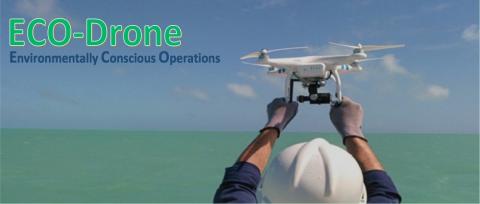
Oceans Unmanned, Inc. has launched a new program called ECO-Drone, for Environmentally Conscious Operations, to address concerns surrounding UAS possibly disrupting wildlife in a variety of remote habitats.
Acute or chronic disturbances can have a significant impact on the health and fitness of different species, by throwing off migratory patterns, breeding, feeding, or sheltering.
To address these potential issues, ECO-Drone works with federal and state agencies, industry, and education institutions to “develop and communicate “best practices” to minimize or eliminate resource disturbance issues due to scientific or recreational drone operations.”
Lockheed Martin Ventures invests in Ocean Aero, maker of the Submaran unmanned maritime vehicle
Lockheed Martin Ventures has announced that it is making a strategic investment in Ocean Aero, a company that has developed an unmanned maritime vehicle called the Submaran.
Built for ocean observation and data collection, the Submaran is a new class of unmanned underwater and surface vessel. The vehicle, which is powered by wind and solar energy, can travel for months, even in extreme conditions.
Easily deployable and recoverable, the vehicle can avoid surface traffic or conduct C4ISR operations thanks to its ability to dive to depths of 660 feet.