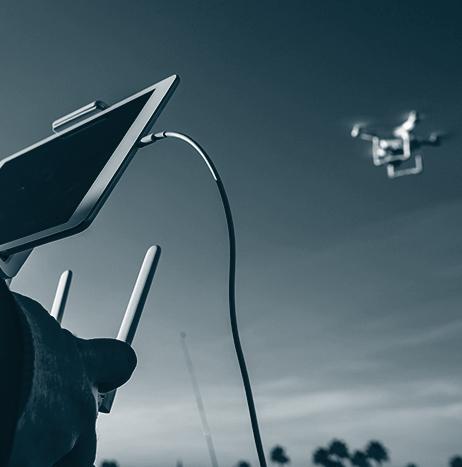
Through its School of Continuing Learning, Bow Valley College helps UAS enthusiasts and professional UAS operators alike prepare for new and updated aviation laws that will limit where and how UAS can be flown. So with this in mind, two comprehensive certification courses will be offered at Bow Valley College’s Okotoks and High River campuses in Alberta, Canada starting May 4.
The courses will provide theory and practical knowledge through a variety of measurers including in-class instruction, labs, seminars, two tests, and a certificate that requires renewal every five years.
Regulatory
Regulatory

Xponential 2018 to highlight the use of unmanned systems for good
The unmanned systems market is faster and more competitive than ever before, and this year’s Xponential conference and exhibition will be, too. The show starts and ends with a competition, with plenty of innovation featured in between.
On the weekend before the show, AUVSI will host its first XBuild, a new buildathon/hackathon, from April 28-29 at Galvanize Boulder in nearby Boulder, Colorado.
Hackathons have historically been a place where innovative ideas have been transformed into everyday things; in fact, the Facebook “like” button was created at a Facebook hackathon.
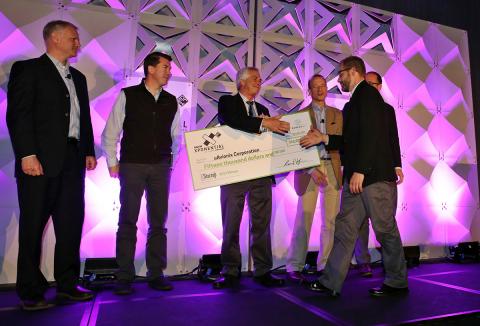
Symposium message: FAA is 'open for business'
“The message of this whole conference is, the FAA is open for business,” said Derek Kan, undersecretary for policy at the U.S. Department of Transportation, summing up the Federal Aviation Administration’s stance at the third annual FAA UAS Symposium, cosponsored by AUVSI.
FAA official said repeatedly that they want to talk to industry about ways to help companies achieve their goals, including for beyond-line-of-sight flights and package delivery.
One key element to achieve such things is an unmanned traffic management system, which NASA is working on, along with numerous industry and government partners.
“Our research will be completed by 2019,” said Parimal Kopardekar, who is leading the UTM effort for NASA.
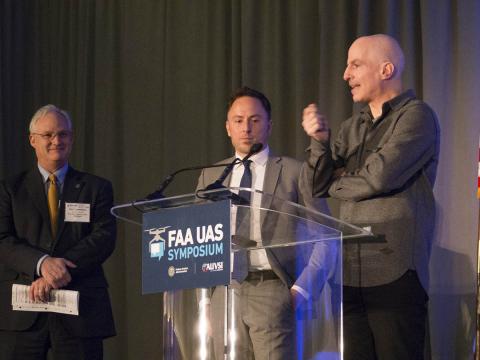
Collaboration will be key to technology, regulation for airspace integration
Government-industry collaboration will be needed going forward to integrate unmanned aircraft into the National Airspace System, both for developing technology for such critical functions as remote identification, and for establishing government regulations that will help the industry grow.
That was one of the messages repeated at the second day of the third annual FAA UAS Symposium, cosponsored by the FAA and AUVSI and held this year in Baltimore.
AUVSI President and CEO Brian Wynne kicked off the day with a panel discussion including regulators from the Department of Transportation and congressional staffers.

Speakers see appetite for UAS integration, but remote i.d. is a must
The recently created pilot program for communities wanting to expand unmanned aircraft operations will help push the technology and integration forward, said speakers at the kickoff of the third annual FAA UAS Symposium, cosponsored by the FAA and AUVSI.
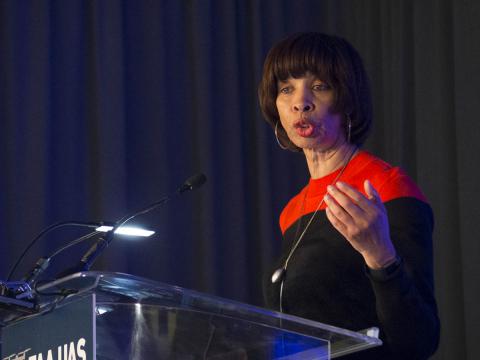
One such city might be Baltimore, where the symposium is being held. Catherine Pugh, the mayor of Charm City, noted that her campaign used drone footage for an ad promoting her candidacy.
She cited AUVSI’s economic impact numbers, which forecast 100,000 new jobs and more than $82 billion in economic impact upon full integration.
“I want you to know that Baltimore is poised to be part of this rapidly growing area,” Pugh said.
Media Advisory: Webinar on UAS Regulatory Landscape
FOR IMMEDIATE RELEASE: Feb. 21, 2018
Contact: Tom McMahon, tmcmahon@auvsi.org, (571) 255-7786
Drones and Droids: Unmanned Systems at Work
AUVSI Cascade & Big Bend Community College Present
Drones and Droids:
Unmanned Systems at Work
Please join us at Big Bend Community College for the Pacific Northwest's premier unmanned systems event "Drones and Droids: Unmanned Systems at Work" April 11th and 12th. Hear experts from industry, government and academia provide the latest updates on unmanned systems legislation, policies and technologies. You'll hear from a great lineup of experts in legislation, policy, technologies and training, including:
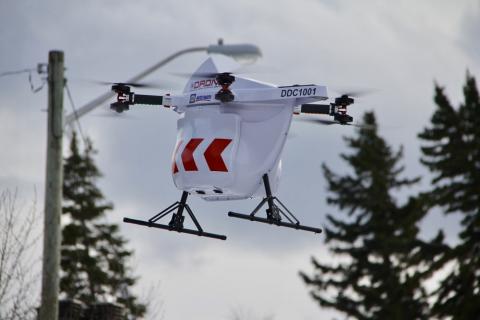
Drone Delivery Canada's cargo delivery UAS now compliant with Transport Canada UAS standard
Drone Delivery Canada (DDC) has announced that Transport Canada has accepted its Declaration of Compliance for the X1000 Sparrow cargo delivery UAS, which makes the UAS compliant with the Transport Canada UAS standard.
The Sparrow UAS, which has demonstrated a “history of safe operation in some of the harshest environmental conditions in Canada’s north” during recent research and development flights according to DDC, is the first cargo delivery UAS of its kind to be accepted under the Transport Canada, Compliant UAS program.
AUVSI Testifies on Emerging Uses for Unmanned Aircraft Systems
FOR IMMEDIATE RELEASE: Nov. 29, 2017
Contact: Tom McMahon, tmcmahon@auvsi.org, (571) 255-7786
UASTF makes recommendations on UAS regulations in Michigan
The Unmanned Aircraft Systems Task Force (UASTF) has released a report of recommendations that it presented to Michigan Governor Rick Snyder and the state Legislature regarding UAS.
The report presents a desire to have a regulatory environment that respects state and federal areas of authority, while also establishing the state of Michigan as a “welcoming location to test, develop, and deploy this technology.”