Rutherford County, Tennessee has received an FAA waiver to conduct commercial UAS operations over people, becoming the first and only county government in the U.S. with this capability.
The county will utilize Vantage Robotics’ Snap UAS for these operations in both emergency and non-emergency situations.
“We’re excited at Vantage, both to be continuing to pave new ground for safe and legal UAV use near people as well to see Snap contributing to public safety,” Vantage says.
This landmark FAA waiver comes a little over a year after the FAA granted CNN a “first-of-its-kind Part 107 waiver” that allows the media organization to fly a small UAS over people. Like Rutherford County, CNN also utilized the Snap UAS.
Regulatory
Regulatory

Meet the IPP sites: Drones join battle against mosquitos in Florida’s Lee County
Florida has a big problem. Actually, it’s a very small problem, but there are a lot of them: mosquitos.
Fighting mosquitos has long been an existential problem for the state, home to swamps and miles of coastal marshes. The land is flat, it’s warm year-round and there’s a lot of water, all things the biting insects love.
“We can grow more mosquitos here than anywhere else on Earth,” says Eric Jackson, the public information officer for the Lee County Mosquito Control District, which is enlisting new technology to join the fray: drones both big and small.
AUVSI launches Trusted Operator Program to help UAS operators demonstrate their skill, safety commitment
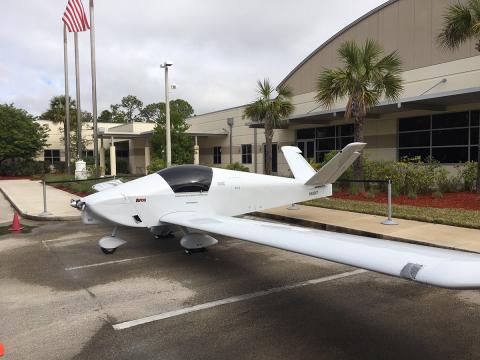
AUVSI has now given unmanned aircraft systems operators a way to increase their safety and boost their standing in the marketplace through today’s launch of the new Trusted Operator Program, or TOP.
Interest in becoming a commercial drone operator has been growing, but so far, from a regulatory perspective, there has been little available to allow an operator to stand out from the crowd and demonstrate competency or proficiency. While numerous training courses exist, there has been no industry unification for competency training or testing.
Meet the IPP Sites: Memphis airport authority looks to show how UAS can benefit airports, manned aircraft
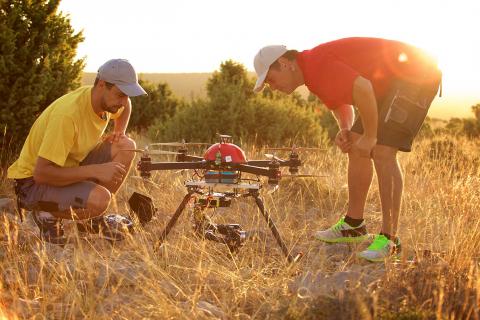
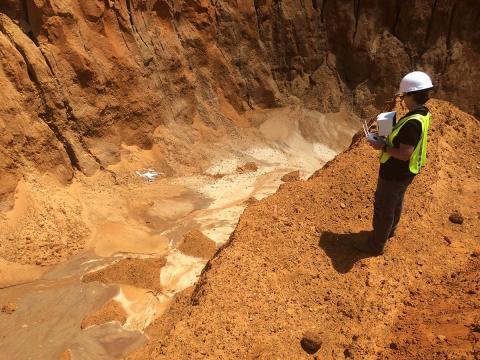
The Memphis-Shelby County Airport Authority (MSCAA) will spend the next three years conducting a variety of UAS operations across Memphis under the UAS Integration Pilot Program.
The only lead applicant selected for the program that is an airport, MSCAA is especially interested in the benefits that drones can offer airports, and ironically enough, manned aircraft.
Airports are increasingly looking to integrate UAS into their operations, which is something that MSCAA’s President and CEO, Scott Brockman, is also looking to do.
Meet the IPP Sites: City of San Diego pursues several diverse UAS applications
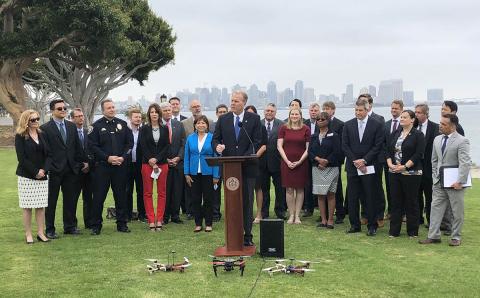
The city of San Diego is one of 10 jurisdictions selected to participate in the U.S. Department of Transportation’s UAS Integration Pilot Program, and one of two municipalities selected in the final group of 10.
The city’s Office of Homeland Security was the lead program applicant, with support from the San Diego Regional Economic Development Corporation (EDC) and approximately 20 partner organizations representing business and government throughout the region.
Meet the IPP sites: Choctaw Nation to use partners, diverse landscape to push for UAS integration
When Secretary of Transportation Elaine Chao announced the winners of the DOT’s UAS Integration Pilot Program in May, the first team announced was the Choctaw Nation of Oklahoma.
That effort involves a technology-minded Native American tribe, a multi-billion business incubator, a demonstration farm and a 45,000-acre ranch, as well as nearly a dozen partners interested in pushing the envelope for drone flights at night, package delivery and flights over people.
James Grimsley, founder of DII LLC, a family of technology companies (and a former AUVSI Member of the Year), says the Choctaw Nation contacted him about two years ago to discuss a strategy of getting into aviation, which is a strong point for Oklahoma.
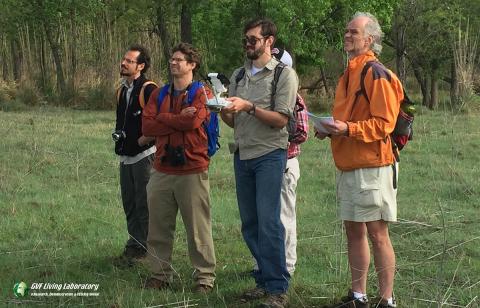
Meet the IPP Sites: Mid-Atlantic Aviation Partnership to spearhead Virginia's work for IPP project
A White House and FAA initiative, the UAS Integration Pilot Program involves 10 locations that will use unmanned aircraft in a wide variety of ways. AUVSI is writing a series of profiles on the locations.
From Unmanned Systems Magazine: Self-driving cars ‘will be a reality,’ but regulatory hurdles remain
For the automobile industry, it might be said that everything old is new again, helped along by the coming of automated vehicles.
As in the early days of the industry, many players are entering the AV space, regulators are wondering how to keep up and the public is unsure of the technology.
“Automated or “self-driving” vehicles are a future technology rather than one that you’ll find in a dealership tomorrow or in the next few years,” the National Highway Traffic Safety Administration says in an overview of its guidelines for automakers and state regulators. “A variety of technological hurdles have to be cleared, and other important issues must be addressed before these types of vehicles can be available for sale in the United States.”