In an effort to bring its Kinesis software suite to the public safety and government market, Tomahawk Robotics, a developer of robotic control technologies, has announced a partnership with FLYMOTION, which provides end to end UAS platforms and services.
According to Tomahawk Robotics, Kinesis allows robotic systems to be managed no matter their underlying hardware. Whether in the air, on the ground or in the water, users can control their robotic systems in the same way, port autonomy capabilities from one platform to another, and leverage information across these systems, using Kinesis.
Robotics
Robotics

Cobalt Robotics combines autonomous patrol robots with human specialists to keep places safe
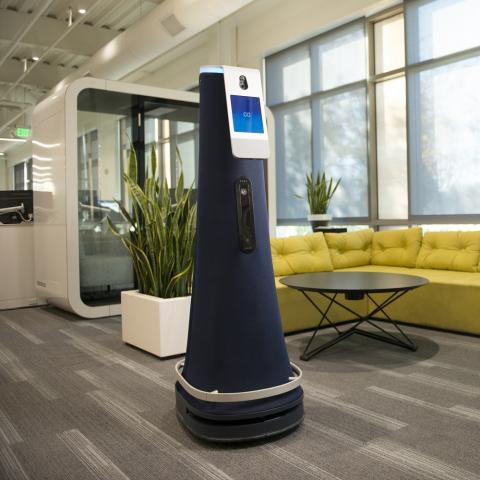
Cobalt Robotics, a developer of indoor autonomous robots, has announced that it has raised $35 million in Series B financing, which is expected to help the company expand its services throughout the domestic United States.
Combining autonomous patrolling robots with human specialists, Cobalt’s Robots-as-a-Service model allows organizations to provide a 24-hour security strategy that complements current security assets such as manned security guards and access control systems (ACS).
According to Cobalt, this comprehensive strategy results in a “highly effective” security program that not only reduces costs, but also features robots that remain up-to-date with the “latest and greatest software.”
MIT researchers develop technique for driverless cars and robots to spot objects amid clutter
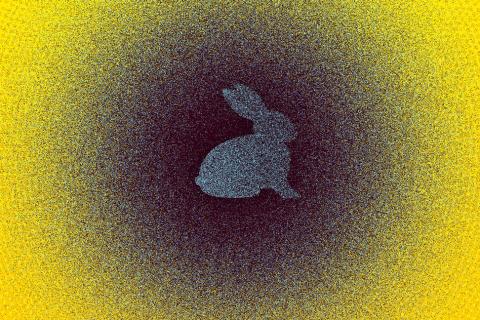
Researchers at MIT say that they have developed a technique that allows robots to quickly identify objects hidden in a three-dimensional cloud of data.
According to the researchers, sensors that collect and translate a visual scene into a matrix of dots help robots “see” their environment. The researchers note, though, that conventional techniques that try to pick out objects from such clouds of dots, or point clouds, can do so with either speed or accuracy, but not both.
iRobot Corp. acquires educational robotics developer Root Robotics
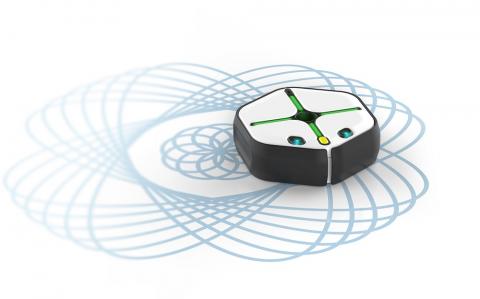
iRobot Corp. has acquired Root Robotics, the developer of an educational robot called the Root coding robot, which teaches children as young as four years old coding and 21st century problem-solving skills.
With the addition of the Root coding robot to its product lineup, iRobot says that the acquisition of Root Robotics supports its plans to diversify its educational robot product offerings, as it continues to showcase its commitment to make robotic technology more accessible to educators, students and parents.
RE2 Robotics to enhance LIFELINE system with Phase III SBIR grant award
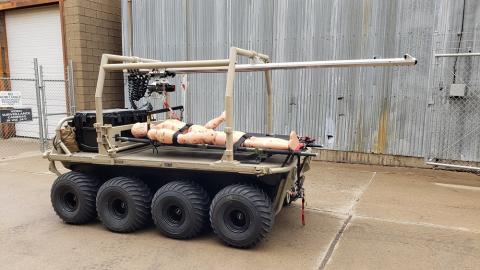
RE2 Robotics will continue developing its LIFELINE system, which is designed to help combat medics in the field, thanks to being awarded a Phase III Small Business Innovation Research (SBIR) grant from the U.S. Army SBIR office and the U.S. Army Medical Research Acquisition Activity (USAMRAA).
Described as a medical module applique kit that can easily be installed on either a manned or unmanned vehicle, the LIFELINE system allows a single person to lift and stow up to two litters (stretchers) on a vehicle to facilitate medical evacuations. According to RE2 Robotics, the system reduces the “cognitive and physical burden” on combat medics as they focus on saving lives.
Persistent Systems selected to equip U.S. Army's backpackable robot with Wave Relay MANET
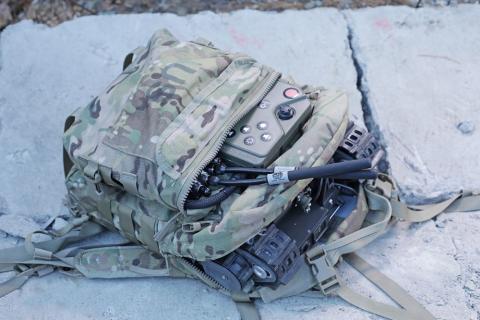
Persistent Systems has announced that it will supply the QinetiQ North America (QNA) team chosen for the U.S. Army’s Common Robotic System-Individual (CRS(I)) program of record with its Wave Relay mobile ad hoc networking technology (MANET).
Weighing less than 25 pounds, CRS(I) is a backpackable robot that dismount users can carry with sensor suites for viewing and detecting threats, which provides greater situational awareness in the field.
“We’re excited to, once again, deliver the Wave Relay MANET to the U.S. Army and help lead the drive towards networking the battlefield,” says Leslie Hulser, director of Programs for Persistent.
Draper, Harvard University building microrobots for search and rescue operations
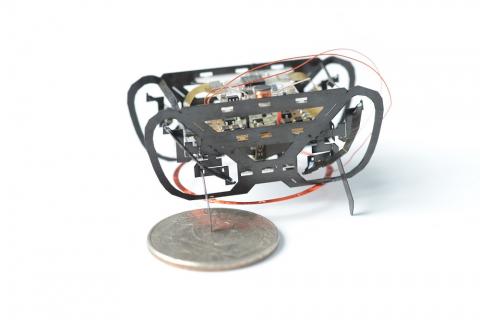
Engineers from Draper and Harvard University’s Wyss Institute for Biologically Inspired Engineering and Paulson School of Engineering and Applied Sciences (SEAS) are collaborating to create a small climbing robot that could be used for search and rescue operations in high-risk environments.

NXT Robotics Corp. launches Maverick UGV
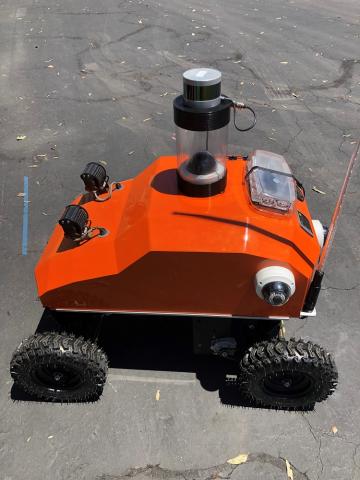
NXT Robotics Corp. recently launched “Maverick,” its Generation 5 autonomous vehicle and cognitive software platform.
The baseline model of Maverick is equipped with four high resolution PTX security cameras that can be used to conduct artificial intelligence (AI) based analysis of a physical environment, along with license plate detection and facial and object recognition.
Maverick can also open a two-way audio stream, allowing the robot to communicate with people it encounters along its patrol routes, which are largely autonomous. The audio system can also stream pre-recorded messages and noises in response to particular situations it encounters.
Phillips 66, Square Robot, Veritank successfully complete robotic inspection
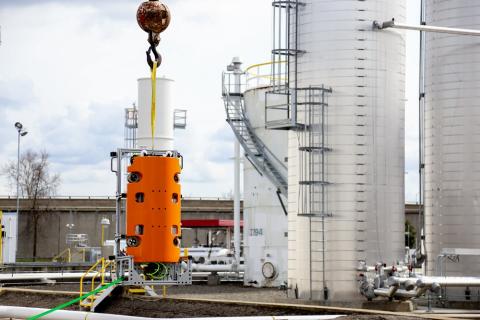
Diversified energy manufacturing and logistics company Phillips 66, Square Robot Inc. and Veritank Inc. have announced that they recently successfully deployed an autonomous robot that safely performed its first in-service inspection of the interior of an aboveground diesel storage tank.
Designed and manufactured by Square Robot, the autonomous robot is allowed to conduct inspections while the tank is in-service and filled with product, thanks to receiving National Electric Code Class 1, Division 2 (C1D2) certification.
The robot is also capable of capturing high-clarity visual images of the interior, and providing insight into the tank’s sediment levels and coating condition.