
TuSimple has developed a proprietary automotive-grade camera and vision system that will be deployed on its autonomous customer fleet by Q3 2019.
Expected to go into volume production in Q2 2019, the system offers “enhanced reliability of autonomous operation,” according to TuSimple. The company adds that the system is a necessary step in its goal of commercializing the first driverless truck.
Software
Software
Yandex and Hyundai Mobis partner on autonomous vehicle development
Tech company Yandex and automotive components manufacturer Hyundai Mobis have signed a memorandum of understanding to jointly develop control systems for Level 4 and Level 5 autonomous vehicles, by combining Yandex’s self-driving technologies with Hyundai Mobis’ experience in the automotive industry.
The agreement also provides the potential for the companies to expand into other areas of cooperation such as developing joint products that are equipped with Yandex technologies including speech, navigation, and mapping to name a few.
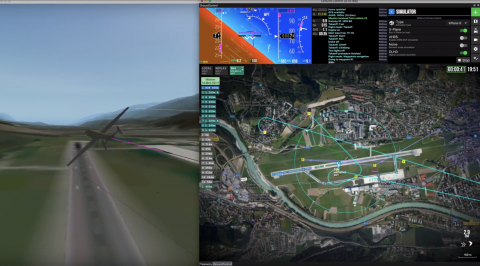
UAVOS' new simulator helps test UAVOS autopilot control capabilities of different types of unmanned vehicles
UAVOS Inc. has introduced a simulator for its customers that can be used to test UAVOS autopilot control capabilities of different types of unmanned vehicles in different weather conditions.
Equipped with special software, as well as software for the ground control station that UAVOS developed, the simulator facilitates trial flights of UAS in a virtual environment before the start of their production. The results of the virtual flight tests can inform the necessary modifications of a UAS’ design.
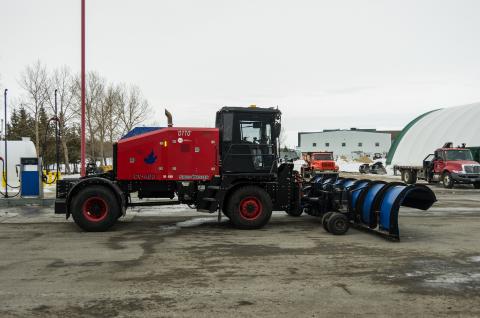
Winnipeg Richardson International Airport launches first autonomous airport snowplow in North America
Canada’s Winnipeg Richardson International Airport recently launched the first autonomous airport snowplow in North America.
A product of Manitoba, Canada companies Northstar Robotics Inc. and Airport Technologies Inc. (ATI), the snowplow, known as Otto, is a specially designed ATI Snow Mauler built to operate autonomously using technology from Northstar Robotics. Otto follows predetermined routes and controls the plow blade at specific locations to conduct its snow clearing duties.
According to Winnipeg Richardson International Airport, Otto is now capable of operating autonomously in low-risk areas of the airport. The next step is for Otto to operate in other areas of the airport.
University of Washington's robotic system can feed people who need assistance eating
Researchers at the University of Washington are working on a robotic system that can feed people who need someone to help them eat.
The robot identifies different foods on a plate, and then strategizes how to use a fork to pick up and deliver the desired bite to a person’s mouth.
“Being dependent on a caregiver to feed every bite every day takes away a person’s sense of independence,” says Siddhartha Srinivasa, the Boeing Endowed Professor in the UW’s Paul G. Allen School of Computer Science & Engineering. Srinivasa is a corresponding author in a series of papers that the researchers published their results in.

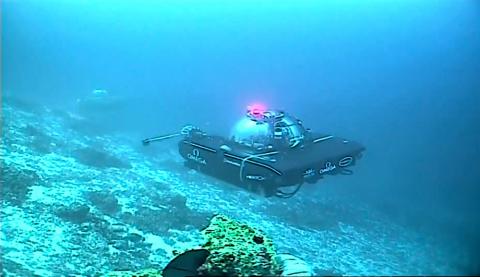
AP uses Sonardyne's tech to stream first live broadcast to global audiences from an underwater submersible
Sonardyne International Ltd. has announced that the Associated Press used its BlueComm wireless through-water optical modem technology to stream the first live broadcast to global audiences from an underwater submersible.
Coming from a two-person submersible operating in waters off the Seychelles, in the Indian Ocean, the live broadcast via YouTube was “the first multi-camera live signal in full broadcast quality from manned submersibles using optical video transmission techniques, in which the pictures transmit through the waves using the electromagnetic spectrum,” according to the AP.
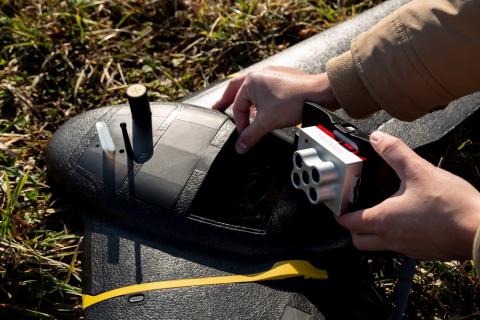
SenseFly and MicaSense unveil senseFly eBee X with MicaSense RedEdge-MX
SenseFly and MicaSense have introduced the senseFly eBee X with MicaSense RedEdge-MX, a new dual platform for efficient, in-depth crop analysis.
Described as a “rugged, built-to-last” professional multispectral sensor, the RedEdge-MX captures red, green, blue, near-infrared, and red-edge spectral bands. The data that the RedEdge-MX captures can be used to generate true color composites, basic crop health indexes, and advanced analytical tools like flower identification and weed detection.
SenseFly and MicaSense say that this capability, combined with the sensor’s durable design, makes RedEdge-MX a “multispectral powerhouse.”
NUAIR and Measure partner on efforts to safely integrate UAS into national airspace system
The Northeast UAS Airspace Integration Research Alliance (NUAIR) has signed a collaboration agreement with aerial intelligence company Measure.
In support of NUAIR’s mission to safely integrate UAS into the national airspace system, Measure will work with NUAIR to bring its commercial operations to the region.
NUAIR and Measure say that their partnership will enhance commercial support inspections, public operations and consulting capabilities at the New York UAS Test Site at Griffiss International Airport.

ParaZero releases SafeAir Phantom System to facilitate UAS flights over people
ParaZero Technologies Ltd has announced the release of the SafeAir Phantom System to the market for sale on its website.
Described as a smart parachute system, the SafeAir Phantom System, which is ASTM compliant, monitors UAS flight in real time, identifies critical failures, and autonomously triggers a parachute, a flight termination system and an audio-warning buzzer.
Over the last year and a half, ParaZero has worked with several entities including the FAA and DJI to create a standard for small UAS parachutes that would enable flight over people.
Released in Sept. 2018, the standard (ASTM F3322-18) defines the requirements for the design, manufacturing and testing of small UAS parachute systems.
Intelligent Energy launches Power Path Module for UAS
Intelligent Energy has launched its latest product, the Power Path Module (PPM), which allows customers to double the power output from Intelligent Energy’s UAS Fuel Cell Power Modules (FCPMs).
A small unit designed to facilitate ‘plug and play,’ linking two of Intelligent Energy’s FCPMs in series, the PPM gives customers the ability to fly larger UAS with heavier payloads.
Intelligent Energy says that with the PPM connecting the FCPMs in series, two 650 watt modules will provide 1.3 kilowatts of continuous power, and two 800 watt modules will provide 1.6 kilowatts.