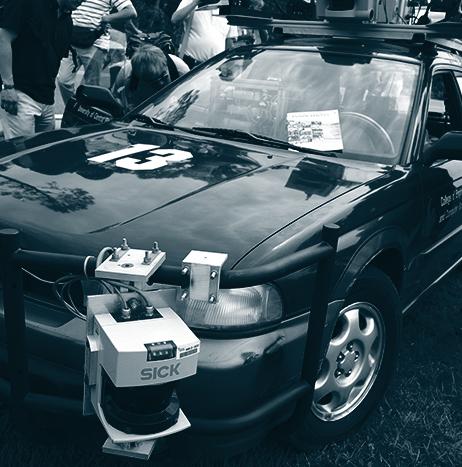
Tampere, Finland-based Robonic Ltd Oy has signed a contract that will result in the company delivering a third-generation KONTIO pneumatic launcher to the Swedish Defence Materiel Administration (FMV), which is expected to happen before the end of 2017.
The “high pressure pneumatic launcher” is designed to launch tactical UAS and target drones, and it is capable of catapulting different types of aerial target UAS. It is designed to launch air vehicles of up to “140 kg with a 70 m/s exit velocity or alternatively 500 kg at 37 m/s.”
Thanks to its large mass and speed envelope, the highly transportable universal launcher is “highly suitable” for various types of “targets or tactical unmanned aerial vehicle,” Robonic says.
Software
Software
Tactical Robotics providing its Cormorant UAV with engine upgrade
Tactical Robotics Ltd. (TRL), which is a wholly owned subsidiary of Urban Aeronautics, has announced that it is in the process of equipping its Cormorant cargo and medical evacuation UAV with the Safran Helicopter Engines Arriel 2 engine, pushing the Cormorant UAV one step closer to its final production configuration.
Described as “one of the most advanced and reliable helicopter engines in the world,” the Arriel 2 engine offers additional power over the currently installed Arriel 1D1 engine, allowing for operation at full load—even during hot summer days—and it will facilitate an increase in cruise speed and load carrying capability.
Nissan tests autonomous driving technology in Tokyo
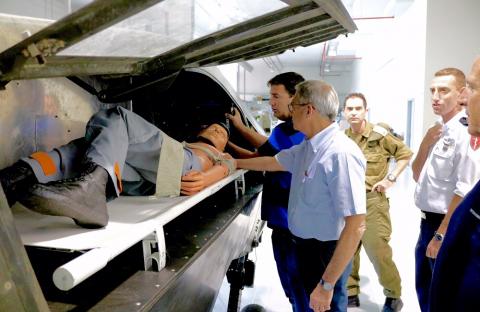
Nissan has demonstrated a prototype of its most advanced autonomous driving technology, known as ProPILOT, on the roads in Tokyo, Japan.
The technology was tested on a modified INFINITI Q50 sports sedan.
A vehicle equipped with Nissan's ProPILOT technology can operate autonomously on urban roads and freeways, starting at the beginning of the vehicle’s journey when a destination is chosen by the driver using the navigation system, until the vehicle arrives at its destination.

HAZON Solutions and PrecisionHawk to integrate technologies through new partnership
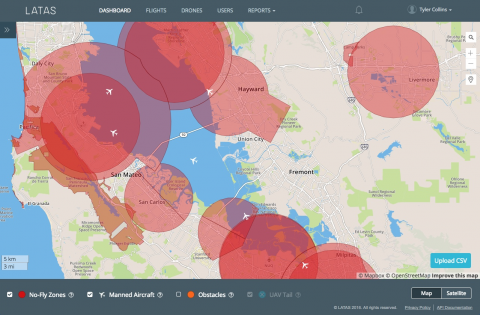
Through a new partnership announced on Oct. 25, HAZON Solutions and PrecisionHawk will look to provide better UAS safety for commercial UAS operations, by integrating their respective technologies.
Beginning in early November, PrecisionHawk’s Low Altitude Traffic and Airspace Safety (LATAS) platform will be accessible within the HAZON Drone Management System (DMS), which is HAZON’s UAS fleet management software.
AVIDRONE Aerospace and PRODRONE announce partnership
Canadian UAS technology company AVIDRONE Aerospace Incorporated has secured an investment and formed a business alliance with a Japanese professional UAS manufacturer called PRODRONE Co. Ltd.
In an effort to revolutionize the commercial and industrial markets with “new ways to gather data, increase security, and deliver goods,” the two companies will combine their decades of UAS research and development to manufacture UAS that are innovative, as well as custom autopilot systems.
The companies say that their products will be able to transport items weighing between 0.5 kilograms to over 250 kilograms at speeds approaching 200 kilometers per hour, thanks to a “specially developed industrial autopilot system and drone designs.”

Delphi signs agreement to acquire nuTonomy
Delphi Automotive has signed an agreement to acquire nuTonomy, Inc. for a total of $450 million.
Through the acquisition, nuTonomy will help accelerate Delphi’s commercialization of autonomous driving (AD) and Automated Mobility on-Demand (AMoD) technologies for automakers and new mobility customers across the globe.
“Our mission has always been to radically improve the safety, efficiency, and accessibility of transportation worldwide,” says nuTonomy co-founder and CEO, Karl Iagnemma.

Built Robotics developing autonomous excavators for construction sites
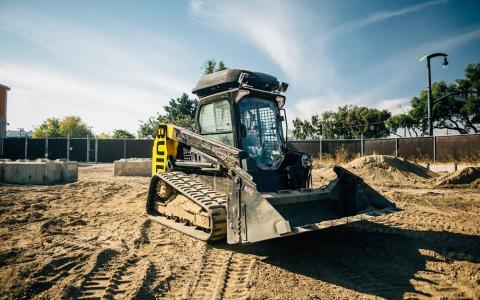
A new company called Built Robotics is developing software and sensors that can transform off-the-shelf excavators into machines that autonomously dig precise holes for hours without a break.
Founded by Noah Ready-Campbell, Built Robotics, which is headquartered in San Francisco and recently went public, has been stealthily operating a retrofitted skid steer, using a computer program to direct it and move it around dirt.
Using Built Robotics’ software, a contractor can geofence a project to ensure that the machine doesn’t go rogue. Following that, a contractor can “program in the exact parameters and where to move the dirt.”
DJI set to open first UAS arena in Japan
On Oct. 21, DJI will open its first UAS arena in Japan called “DJI Arena By JDRONE Tokyo.”
A variety of capabilities and features will be offered at the arena, including a flying area that is equipped with safety nets and an adjustable circuit for those that are interested in testing their flying skills. This area will also give UAS enthusiasts a place to fly year round regardless of weather conditions outside.
The arena also has a retail store, which will showcase the company’s consumer, professional, and enterprise products, giving customers the opportunity to purchase the latest technology released by DJI. Technical support will also be offered at the arena.
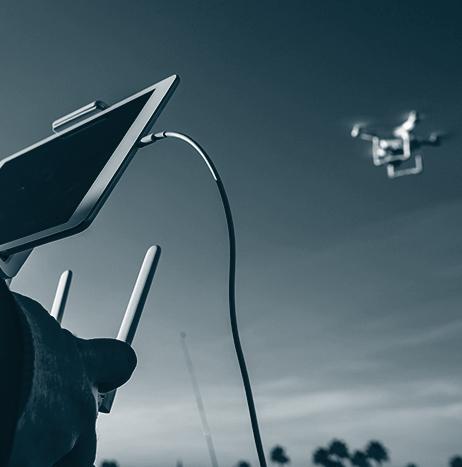
UAVOS improves algorithms of GPS spoofing identification
UAVOS Inc. has announced that it has “improved the algorithms of GPS spoofing identification while jamming with the most advanced EW systems.”
During test flights conducted “under conditions of electronic attacks,” UAS equipped with a UAVOS-manufactured automatic control system managed to regularly resist “attempts to interfere with the operation of the on-board GPS autopilot.”
Thanks to “newly updated technical solutions” for electronic protection equipment and UAVOS’ automated control system, effective countermeasures against the latest GPS spoofing was provided.
This prevented the enemy from re-routing a UAS or destabilizing the operation of its on-board navigation system.
Michigan State University and ZF partner to address potential cybersecurity issues surrounding autonomous vehicles
Michigan State University (MSU) College of Engineering will work with a German auto parts maker called ZF to develop new methods to address potential cybersecurity threats that autonomous vehicles might face in the future.
In an effort to deal with automotive cybersecurity and safety issues, Betty H.C. Cheng, professor of computer science and engineering, will work with ZF to develop a cybersecurity method to help “identify, mitigate and/or prevent threats to automotive systems.”
“We’ll develop a set of reusable design patterns and quality assurance techniques that are amenable to automated analysis,” Cheng says.