
After completing its tender offer for Mobileye, Intel says that it is “poised to accelerate its autonomous driving business from car-to-cloud,” with the announcement that Mobileye will start building a fleet of fully autonomous (level 4 SAE) vehicles.
The initial vehicles will be deployed later on this year, and eventually, the fleet will expand to more than 100 automobiles.
The vehicles will be tested in the United States, Israel and Europe.
Software
Software

Primoco UAV SE announces new engine for unmanned aircraft
Primoco UAV SE, which is a Czech company that develops, manufactures and sells the Primoco UAV One 100/150, has announced its new “self-designed” Primoco 500 piston engine, which is designed for the company's unmanned aircraft, but can also be used by other aircraft manufacturers as well.
Developed by the company in nine months, the Primoco 500 is made of light aluminium alloy, and is an “air-cooled four-cylinder engine with a power output of 50 HP and a weight of 15 kg.”
According to Primoco UAV SE CEO Ladislav Semetkovský, the idea behind the development of the engine was largely born out of necessity, as the company’s newest aircraft, the Primoco UAV One 150, required a more powerful engine than the one that the Primoco UAV One 100 uses, which is a 20 HP engine.

RPM Aerial Services uses UAS to place GPS tracker on iceberg
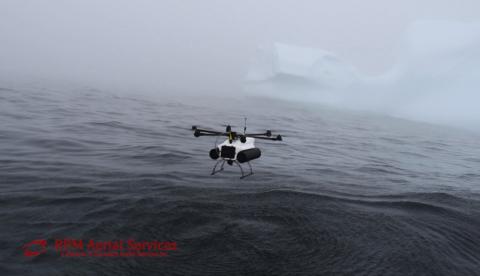
In an effort to find a way to safely place a tracker on an iceberg without getting too close to what can often be “unpredictable masses of floating ice,” Holyrood, Newfoundland and Labrador-based RPM Aerial Services, along with a GPS manufacturer in Nova Scotia, recently used a UAS to place a GPS tracker on an iceberg.
The iceberg was about two kilometers outside Petty Harbour, which is another town in Newfoundland and Labrador, Canada.
According to Brian Lundrigan, who started RPM Aerial Services, which is a remotely piloted aerial service company, this pilot project was far from easy.
“It was fairly challenging,” Lundrigan says via CBC News.
Overwatch Imaging upgrades autonomous image processing capabilities of airborne multi-camera payloads
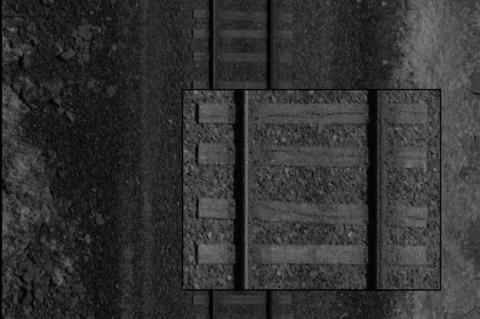
In collaboration with SOAR Oregon, Hood River, Oregon-based Overwatch Imaging, which specializes in customized large-scale aerial imagery intelligence systems, has successfully completed a year-long program to upgrade the TK-X family of airborne multi-camera payloads’ autonomous image processing capabilities.
The TK-X family of Overwatch payloads include multiple cameras in “an actively stabilized, nadir-oriented mount with automated step-stare camera pointing controls,” which allows for the quick collection of high-resolution multi-spectral imagery.
Also included in the payloads are “embedded GPU-based onboard image processing, with customized software performing real-time multi-image registration, image-based object detection, and image mapping.”
Measure acquires Pilatus Unmanned
Measure, which is a U.S. provider of UAS technologies for enterprise customers, has announced that it has acquired Pilatus Unmanned, a company that specialized in UAS customization for commercial customers, and was one of the first Enterprise value-added resellers for DJI.
The acquisition of Pilatus Unmanned is another indication of the rapid growth taking place at Measure, which recently introduced new technologies and toolkits for the solar and broadcast news industries.
Volaero Drones using UAS and thermal technology to track pythons in the Florida Everglades
Volaero Drones, which is a professional UAS services company based in Miami, Florida, has teamed up with Bill Booth Outdoors and Bruni Infrared to track pythons in the Florida Everglades, using UAS and thermal technology.
More than 100,000 Burmese pythons are estimated to be living in the Everglades, and they are reportedly “ravaging the wildlife.”
The state’s small mammal population is being decimated as a result of the python population multiplying exponentially, thanks in large part to the fact that female python can lay up to 80 eggs per clutch.
3DR integrates Site Scan with DJI’s UAS, also launches Enterprise Atlas platform
3D Robotics (3DR) has announced that its Site Scan software platform is integrating with DJI’s UAS.
Through this partnership, Site Scan customers will now be able to use DJI's UAS for their jobs while maintaining the same workflow as before, as they continue to use 3DR’s mobile app, Site Scan Field, to collect data.
DJI’s UAS will work seamlessly with Site Scan and all of its capabilities, including autonomous flight modes, multi-engine cloud processing, and its suite of tools designed for construction, which includes those used for performing topographic surveys, measuring stockpiles, and exporting native Autodesk file formats.
Evans Incorporated launches PropelUAS for UAS program implementation
Evans Incorporated, which is a “human-centered solutions consulting firm,” has launched PropelUAS, which is a new division that the company says is “changing the game and forging the future of UAS Program implementation process and technology.”
PropelUAS will form “an innovative, full-spectrum experience, from ‘Idea’ to ‘Operations’ (IDEA-OPS),” using its team of unmanned systems, air traffic control, aviation training, human factors, airports, and aviation strategy experts.
Lyft setting up unit to develop autonomous vehicle technology
According to the Associated Press, San Francisco-based ride-hailing service Lyft is setting up its own unit, called “Level Five,” to develop autonomous vehicle technology. The unit is named after the industry term for fully autonomous vehicles.
Lyft says that it will open its network, and invite automakers and tech companies to use the network to transport passengers in their self-driving vehicles and gather data along the way.
Initially, the network will be open to Lyft’s current partners, which includes companies such as Google's Waymo autonomous vehicle operation and General Motors.
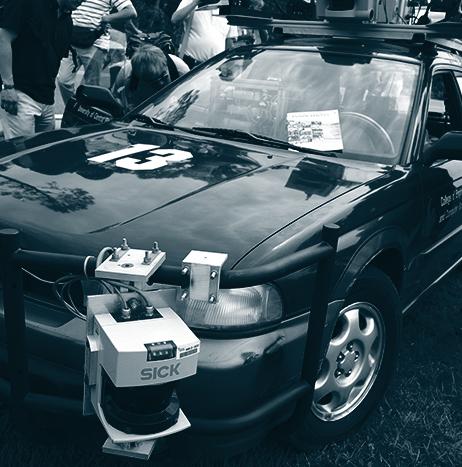
Hawaii teachers learning how to code driverless cars
In Hawaii, some teachers are taking a six-day class to learn how to code driverless cars, in a first of its kind program that could become a part of the curriculum in Hawaii.
Teachers are learning the basics of coding, but the language is the same as what’s being used to program the same driverless cars that are currently on, or one day will be on, roads across the United States and all over the world.
The course is being taught by Sumil Thapa, who is an engineer for a Hawaii-based engineering consultant called Oceanit. One day, Thapa taught the teachers how to program their cars to “drive into a mini garage, sense the light, back up out of the garage and then give out the light reading.”