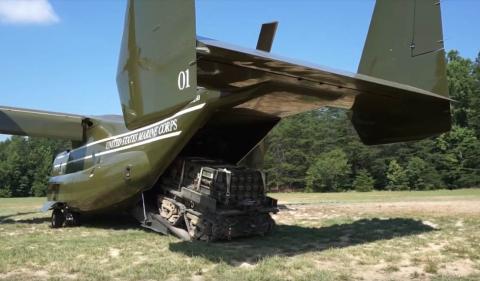
Colorado-based Stratom’s new eXpeditionary Robotic-Platform, or XR-P, was recently demonstrated by the U.S. Marine Corps, which used it to autonomously load and unload supplies from an MV-22 Osprey vertical takeoff and landing aircraft.
Stratom has been working on the XR-P for about three years, in response to a Small Business Innovation Research proposal for resupply systems to work with the MV-22.
The main benefit of the XR-P is that it can autonomously drive in and out of the MV-22 while carrying more than 2,400 pounds of supplies, greatly reducing the manpower needed to unload supplies or ammunition from the aircraft. The XR-P can also tow up to 1,800 pounds with a full load.
Autonomy
Autonomy
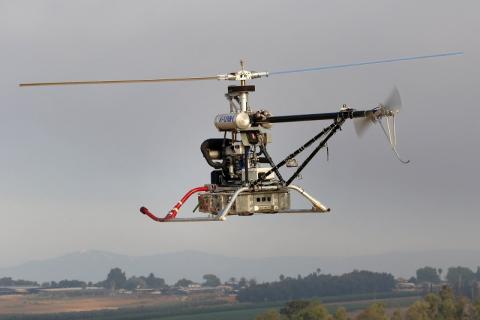
Israel Aerospace Industries demonstrates capabilities of its unmanned and autonomous systems
Unmanned systems from Israel Aerospace Industries (IAI) have successfully completed a “proof of concept” to high officials of the defense industry and the Israel Defense Forces (IDF).
The Air Hopper unmanned helicopter, which was recently developed by IAI and is mainly used for providing “fast logistic supplies to sites where ground access is difficult or dangerous,” took part in a two-scenario demonstration.
One scenario simulated carrying a soldier that was seriously injured to an extraction point for “life-saving treatment, airborne monitoring of vital signs and real-time dispatch to the ground.”
The second scenario simulated “carrying logistic supplies to an isolated force at the front line” which wouldn't be accessible without putting more troops at risk.
Riptide receives North American Product Leadership Award in the UUV market from Frost and Sullivan
Business consulting firm Frost and Sullivan presented its North American Product Leadership Award in the UUV market to Riptide Autonomous Solutions on Sept. 18.
Riptide’s Chief Operating Officer / Chief Financial Officer John Vestri accepted the award during Frost and Sullivan’s Growth, Innovation, and Leadership Awards Gala in Lost Pines, Texas.
“It is a great honor for us to receive such high recognition from an independent market research group as well regarded as Frost & Sullivan,” says Jeff Smith, Riptide’s founder and president.
“Our team and our customers know we are doing things very differently from the established players but it’s a tremendous compliment to receive this public recognition.”

Cultivating Trust in Autonomous Systems. Do we know all we need to know?
This two day experience will highlight issues and pursue answers for questions the industry is facing in the certification, evaluation, and regulation of unmanned systems. Plenary speakers, interactive panels, and demonstrations will feature leaders from industry, government and education. Participants will spend time at the Virginia Tech Transportation Institute, the largest state transportation research group in the US, and visit with the Mid-Atlantic Aviation Partnership, one of seven federally-approved test ranges for unmanned aerial systems in the US.
UTA researcher looking to reduce risks of operating UAS over populated areas
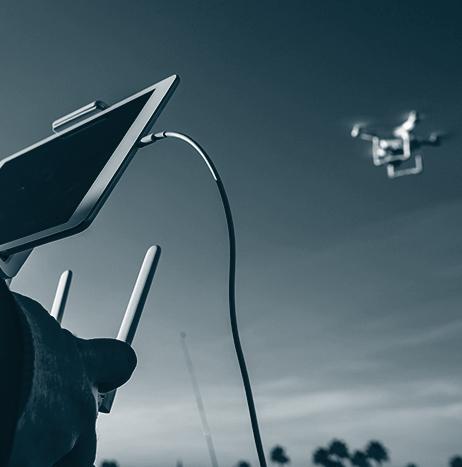
Atilla Dogan, an associate professor of aerospace engineering at The University of Texas at Arlington (UTA), is looking to minimize the risk of using UAS over populated areas.
Dogan, along with other UTA researchers, plans on doing this by using a $550,000 National Science Foundation grant to gauge the risks posed by UAS. Following this, Dogan and his team will “create algorithms to reduce those risks while the vehicles perform specific tasks.”
For Erian Armanios, chair of the Mechanical and Engineering Department in UTA’s College of Engineering, the grant is just one example of the university’s “commitment to sustainable urban communities and data-driven discovery within the University’s Strategic Plan 2020: Bold Solutions | Global Impact.”
Torc Robotics’ self-driving car successfully completes cross-country road trip
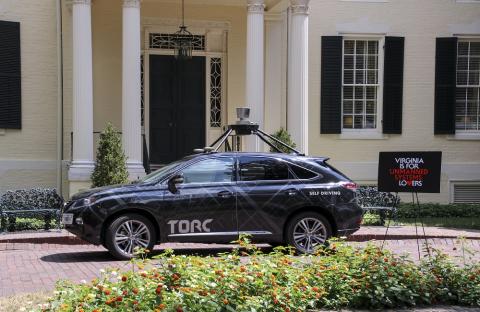
Just a few weeks after unveiling its self-driving car technology, Blacksburg, Virginia-based Torc Robotics has announced that its self-driving car has completed a cross-country road trip, in which the vehicle drove more than 4,300 miles autonomously through 20 states.
According to the Roanoke Times, the vehicle started its journey on July 7 in Washington D.C. with three certified safety drivers and one Torc engineer. During the cross country trip, there was always someone sitting in the driver’s seat just in case of an emergency, and the safety drivers rotated time behind the wheel.
NIAS and SkyOp partner to provide West Coast with UAS training programs and courseware
The Nevada UAS Test Site and the Nevada Institute for Autonomous Systems (NIAS) are partnering with a New York based training and education provider called SkyOp LLC, to offer UAS training programs and courseware to the West Coast.
Las Vegas will serve as the West Coast affiliate training center, where the next generation of the workforce will be prepared and trained so that it can answer “future demand for highly specialized drone-enabled employment opportunities.”
“UAS workforce development is the engine that will grow the Nevada UAS Industry,” says Dr. Chris Walach, Director of the FAA-designated Nevada UAS Test Site.
Torc Robotics unveils self-driving initiative
Blacksburg, Virginia-based Torc Robotics has officially announced that it is developing a “complete self-driving system for consumer automobiles.”
The autonomous vehicle technology company, which is a level 4 company in terms of the Society of Automotive Engineers’ (SAE) levels of automated driving, says that vehicles equipped with its self-driving technology, including its end-to-end software stack, can make complex decisions in real life scenarios on the road.
“We’re offering automotive companies a fully autonomous solution that can be implemented in real consumer cars,” says Torc co-founder and Chief Executive Officer Michael Fleming.
U.S. Coast Guard looking for small UAS to launch from its Legend-class national security cutters
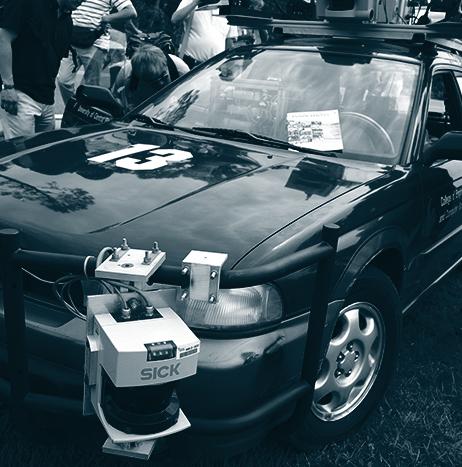
The United States Coast Guard is looking for a small UAS to use on its Legend-class national security cutters, to enhance the performance of these already versatile systems.
Among many missions, the cutters are used to intercept suspect vessels, patrol coastal waters, and undertake homeland security and counterterrorism missions.
“As long as we have been talking about this class of ship, there has always been the expectation that there would be an unmanned system involved,” says Cmdr. Dan Broadhurst, unmanned aircraft systems division chief in the Coast Guard's aviation capabilities office, via C4ISRNET.com.
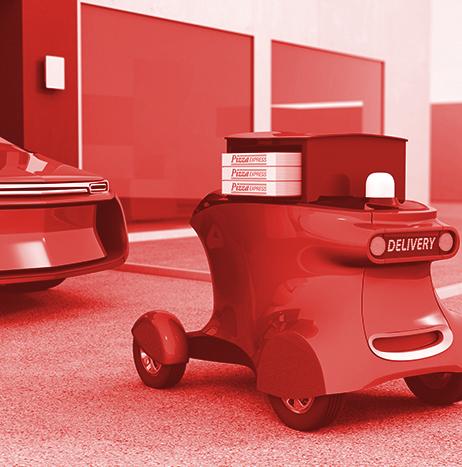
Virginia preparing to welcome autonomous delivery robots
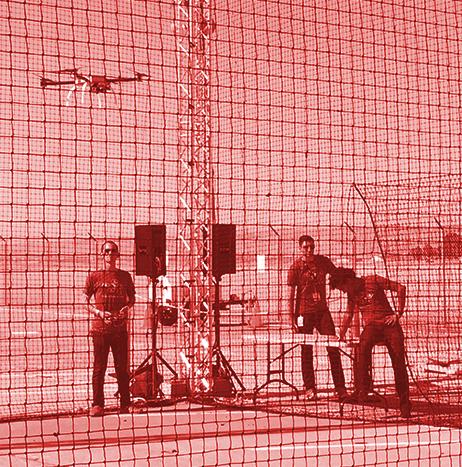
With approval from local city councils, autonomous delivery robots will be legal in Virginia starting on July 1, after Virginia Gov. Terry McAuliffe signed legislation that will allow the robots to roam sidewalks to deliver things such as groceries, lunch or medicine to the doors of customers.
With the passing of this law, Virginia becomes the first state to pass a law that allows “personal delivery devices” on sidewalks and crosswalks.