
According to WTVR.com, self-driving and wireless connected cars are headed to the roads in Virginia, after the Commonwealth Transportation Board approved the testing of these vehicles in High Occupancy Toll (HOT) lanes on Interstate 95 and Interstate 495 in Northern Virginia.
Initially, the cars will be tested on closed roads, but eventually, they will be tested during “light traffic” times.
According to Virginia Department of Transportation Research Director Cathy McGhee, fellow occupants on the road should not notice anything unusual once these self-driving vehicles begin testing.
Policy
Policy

Draft regulations for UAS operations released by Government of Canada
According to Vertical Magazine, Unmanned Systems Canada has announced that the Government of Canada has released draft regulations for UAS operations for public comment in Canada Gazette Part One.
Described as a milestone, the announcement will reportedly “establish a regulatory environment for UAS operations within visual line-of-sight (VLOS),” which will build off procedures developed and refined over the last decade.
Speaking about the draft regulations, an Unmanned Systems Canada representative says, “the announcement lays the groundwork for continuing to open up Canada’s industry through our regulatory process.”

Autonomous robots approved for operation in Concord, California
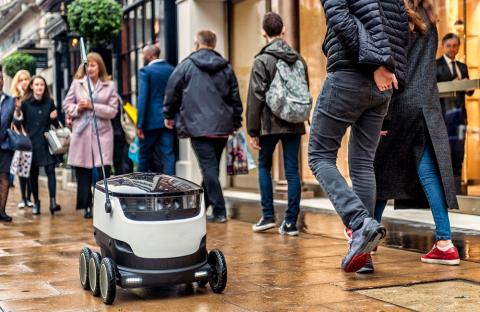
The city of Concord, California is preparing to welcome Starship Technologies’ autonomous delivery robots to its sidewalks and streets, after the city’s leaders agreed to make Concord a testing ground for the technology.
This announcement comes after Starship Technologies approached the city of Concord last month and asked for permission to conduct a 12-month pilot program.
“Concord, as a city, is a great candidate for robot deliveries with the layout, pedestrian density and number of potential partners,” says Starship Technologies spokesman Henry Harris-Burland, via the East Bay Times.
AUVSI Hill Day
The core of AUVSI’s mission is to build, grow and foster a viable and sustainable uncrewed and autonomous systems industry. Critical to achieving that goal is establishing policy which enables the development and expanded operation of uncrewed systems.
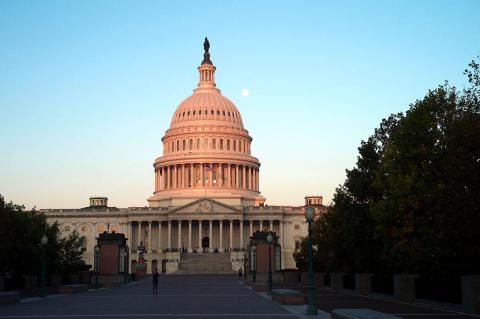
Through Hill Day, AUVSI's Advocacy members can engage face-to-face in our work with policymakers to support laws and regulations that allow and encourage the deployment of uncrewed and autonomous systems to better serve business and society. Members of AUVSI's Defense, Air, Maritime, Ground, and Cyber Committees will meet with lawmakers to discuss the current state of their industries, upcoming legislation, and shared priorities.
Airspace Integration: How Commercial Drone Operators Can Play a Role and Effect Change
One year after the Small UAS Rule (Part 107) took effect lawmakers and commercial drone operators are still learning to share the National Airspace and integrate drones to their fullest potential. AUVSI's advocacy team strives to educate lawmakers about issues important to the drone community and works in conjunction with the FAA to promote safe flying.
This webinar will highlight important aspects of FAA regulations governing commercial drone use and provide insights into how drone operators can affect regulatory change to support the growth of the industry.
SAIC Motor receives permit to test autonomous vehicles in California
The SAIC Innovation Center in Silicon Valley, which in 2015 was established as a subsidiary of China’s state-owned automaker SAIC Motor, has received a permit to test its autonomous vehicles on the roads in California.
SAIC Motor is the 35th organization to receive a permit from the California Department of Motor Vehicles to test its autonomous vehicles in the state.
The permit covers two vehicles and one driver, according to an email that was sent to CNBC from a DMV spokesman.

UAS policy expanded in congressional FAA reauthorization bills
Before leaving for the Independence Day recess, congressional committees with oversight of the Federal Aviation Administration approved separate pieces of legislation in the U.S. House and Senate to reauthorize the agency and provide it with funding. The bills included many provisions advocated by AUVSI to expand policy for the operation of unmanned aircraft systems.
Virginia preparing to welcome autonomous delivery robots
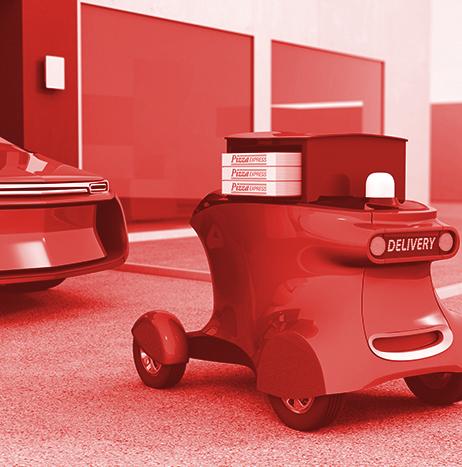
With approval from local city councils, autonomous delivery robots will be legal in Virginia starting on July 1, after Virginia Gov. Terry McAuliffe signed legislation that will allow the robots to roam sidewalks to deliver things such as groceries, lunch or medicine to the doors of customers.
With the passing of this law, Virginia becomes the first state to pass a law that allows “personal delivery devices” on sidewalks and crosswalks.
Weekend Roundup
This Week in the Unmanned Systems and Robotics World
Colorado Governor John Hickenlooper has signed a bill that mandates the creation of a study on how UAS can help public safety agencies with their missions, and in turn, lower their dependence on manned aircraft. Through H.B.1070, a UAS pilot program will be established, and the Department of Labor and Employment will receive authorization “to provide resources for the training and development of eligible pilot program members.” The results of the program (which will be funded through gifts, grants and donations) and the study will be submitted to General Assembly committees. (Unmanned Aerial)