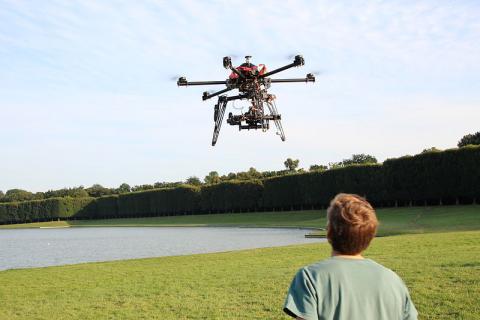
ProSky Studio, which is a full-service aerial UAS provider, has achieved ARGUS International's ARGUS Unmanned Gold Rating, which is one of three achievable ARGUS Ratings for unmanned operators.
In order to earn the ARGUS Unmanned Gold Rating, unmanned operators must meet several criteria, including having at least one UAS in operation, they must have pilot backgrounds checked, and they must be a legal entity with applicable insurance.
“More than ever, creating a culture of safety is paramount within the rapidly expanding Unmanned Aerial Systems industry,” says Joe Moeggenberg, ARGUS CEO and Founder.
Technology
Technology
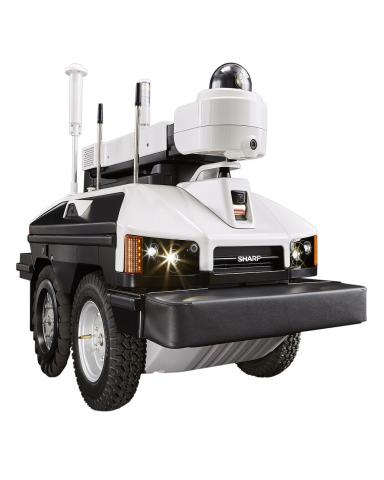
Sharp Electronics' Sharp INTELLOS A-UGV receives two industries awards
During ASIS 2017, Sharp Electronics' Sharp INTELLOS Automated Unmanned Ground Vehicle (A-UGV) was named “New Product of the Year for Outdoor Perimeter Protection” by Security Today magazine, and the A-UGV also received the “Security Solutions Award for Security Monitoring” by Security Sales & Integration.
These industry honors come a year after the Sharp INTELLOS A-UGV officially launched during ASIS International 2016.
“It is one thing for a manufacturer to claim it can satisfy security and safety needs,” says Mike Kobelin, National Sales Director for the Sharp Robotics Business Division.
Built Robotics developing autonomous excavators for construction sites
A new company called Built Robotics is developing software and sensors that can transform off-the-shelf excavators into machines that autonomously dig precise holes for hours without a break.
Founded by Noah Ready-Campbell, Built Robotics, which is headquartered in San Francisco and recently went public, has been stealthily operating a retrofitted skid steer, using a computer program to direct it and move it around dirt.
Using Built Robotics’ software, a contractor can geofence a project to ensure that the machine doesn’t go rogue. Following that, a contractor can “program in the exact parameters and where to move the dirt.”

Weekend Roundup
This Week in the Unmanned Systems and Robotics World
The Airborne Law Enforcement Association (ALEA) has announced the adoption and release of the Standards for Public Safety Small Unmanned Aircraft System (sUAS) Programs, which were developed by the Public Safety Aviation Accreditation Commission (PSAAC), “under contract to ALEA for use by the public safety aviation community.” Public safety agencies considering using small UAS as a part of their operations are encouraged to use these standards as a guiding document. Public safety agencies already using small UAS as a part of their operations are encouraged to “review these standards and perform an internal gap analysis to determine their compliance with industry best practices.” (ALEA)

Unmanned Systems: Security Without Compromise
With increasing deployment of autonomous vehicles and unmanned systems, security and data safety are key priorities for both manufacturers and consumers.
Networks are inherently vulnerable to cyber related threats and systems failures. Reliance on unverified or open channel communications and external input sources can open the door for false (or falsified) data, invalid mission throughput or other critical operational command failures. Whether these threats come via erroneous component failures or intentional malicious activities, building up your system's ability to defend against these threats is crucial.
DJI set to open first UAS arena in Japan
On Oct. 21, DJI will open its first UAS arena in Japan called “DJI Arena By JDRONE Tokyo.”
A variety of capabilities and features will be offered at the arena, including a flying area that is equipped with safety nets and an adjustable circuit for those that are interested in testing their flying skills. This area will also give UAS enthusiasts a place to fly year round regardless of weather conditions outside.
The arena also has a retail store, which will showcase the company’s consumer, professional, and enterprise products, giving customers the opportunity to purchase the latest technology released by DJI. Technical support will also be offered at the arena.
CNN granted Part 107 waiver to fly small UAS over people
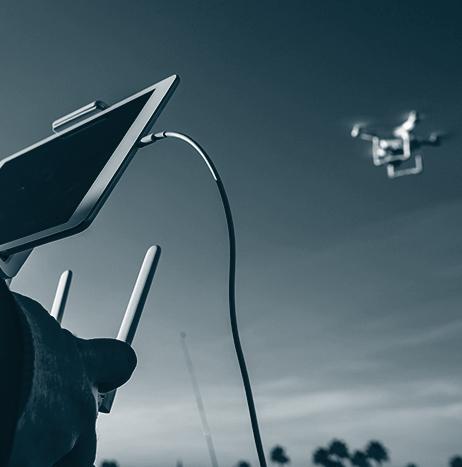
The FAA has granted CNN a “first-of-its-kind Part 107 waiver” that allows the media organization to fly a small UAS over people.
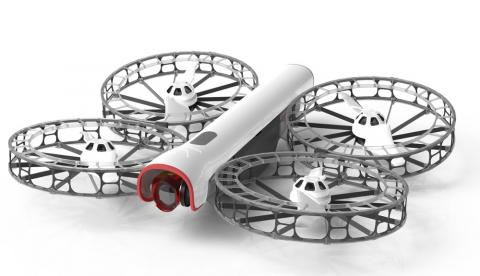
Considered an industry milestone, this waiver, for the first time, permits real-world UAS operations over people, giving CNN the ability to fly its 1.37-pound Snap UAS in a variety of environments, up to an altitude of 150 feet above ground level (AGL).
“We are delighted that the FAA has granted CNN a waiver that has a meaningful and practical application to our newsgathering operations,” says Greg Agvent, Senior Director of National Newsgathering Technology and CNN AIR.
UAVOS improves algorithms of GPS spoofing identification
UAVOS Inc. has announced that it has “improved the algorithms of GPS spoofing identification while jamming with the most advanced EW systems.”
During test flights conducted “under conditions of electronic attacks,” UAS equipped with a UAVOS-manufactured automatic control system managed to regularly resist “attempts to interfere with the operation of the on-board GPS autopilot.”
Thanks to “newly updated technical solutions” for electronic protection equipment and UAVOS’ automated control system, effective countermeasures against the latest GPS spoofing was provided.
This prevented the enemy from re-routing a UAS or destabilizing the operation of its on-board navigation system.
WiBotic unveils its autonomous wireless charging pad for UAS
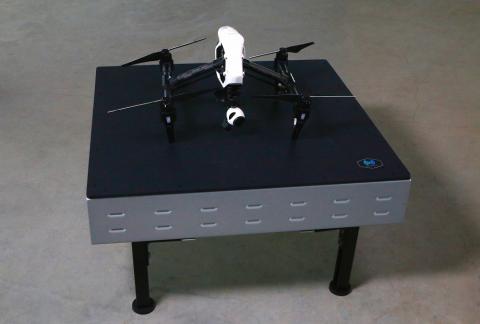
WiBotic has unveiled its “completely integrated wireless charging pad” for UAS, WiBotic PowerPad, which is designed for UAS operators who don’t want to develop their own wireless charging pad.
In one ready-to-go unit, the wireless charging pad includes the WiBotic transmitter circuit, transmitter antenna and power supply. The current version of the charging pad, which is three feet by three feet, can support a wide variety of today’s UAS, from smaller commercial and enterprise UAS, to large industrial UAS.
WiBotic PowerPad can be easily mounted on a variety of things, including rooftops and inside warehouses and factories. Those that use UAS for security, oil and gas, and in warehouses, could find WiBotic PowerPad extremely beneficial.
University of California, Riverside receives grant to develop AI for UAS
The University of California, Riverside (UC Riverside) will develop artificial intelligence (AI) for UAS, using a $1 million grant from the National Science Foundation.
AI in UAS would one day allow the robots to conduct “far-reaching reconnaissance missions”— such as search and rescue missions, and environmental and security monitoring—without direct human control.
Amit Roy-Chowdhury, professor of electrical and computer engineering, and the principal investigator in the grant, would like to create programs that allow UAS to act on their own, such as by zooming in on a certain object.