
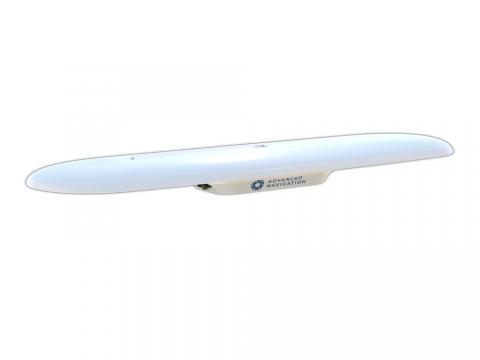
Australia’s Advanced Navigation has announced the release of its GNSS Compass product, which is an “all in one dual antenna GNSS/INS” that provides accurate heading, position and velocity.
With applications for the automotive, antenna targeting, and marine surveying realms, the GNSS Compass has several unique features, including fully integrated navigation, performance and interface options, and high accuracy 8mm positioning.
Advanced Navigation says that even during GNSS outages (for up to 20 minutes), the GNSS Compass can provide accurate heading, thanks to the INS integration embedded into it.
The GNSS Compass is also not subject to magnetic interference, which gives it more application uses.
Technology
Technology
Sharper Shape and SkySkopes use UAS for construction project
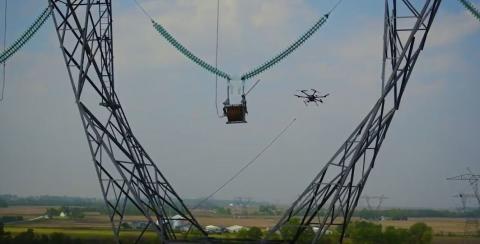
In cooperation with an investor owned utility, Sharper Shape and SkySkopes recently used a Sharper A6 UAS to “string sock lines for a 675 kV line construction project.”
Sock pulling, which is the “act of flying a strong and lightweight rope and attaching it to the towers,” is usually performed by the way of helicopters, or by workers climbing the towers, but these methods are dangerous for helicopter pilots and ground crews alike.
Using UAS, the previously complicated process that involves several steps of reattaching the rope is eliminated, which ultimately lowers the risk of injury for all parties involved.
Virginia Tech's Mark Blanks provides optimistic outlook on UAS
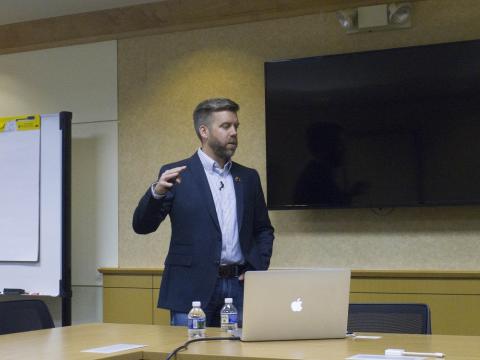
“Drones are going to change our daily experience.”
That was the opening statement of Mark Blanks, director of the Virginia Tech Mid-Atlantic Aviation Partnership (MAAP), during a media briefing in Washington, D.C. on Sept. 13.
There are a number of ways that UAS could change our daily experience, according to Blanks, with UAS package delivery, insurance claims, traffic management and air transportation being just the tip of the iceberg.
But before we can get to the point where UAS have a daily impact our lives, Blanks — who serves on the Board of Directors for AUVSI, and on the Advocacy Committee of AUVSI — says there are a number of hurdles that the industry has to surpass. Chief among these are security concerns, safety assurance and technology maturity.
Self-driving shuttles being tested in Japan to help rural elderly population
According to Reuters.com, self-driving buses are being tested in rural communities in Japan, in an effort to provide elderly residents with additional transportation options.
In these communities, elderly residents don’t have access to many bus and taxi services. These communities are also home to populations that are aging and shrinking.
With this in mind, mobile gaming software maker DeNA Co (2432.T), which has branched into automotive software, is testing its driverless six-seater Robot Shuttle in these towns to see if this technology is a realistic form of transportation for the elderly.

Government representatives discuss impact of UAS during AUVSI’s Hill Day Luncheon
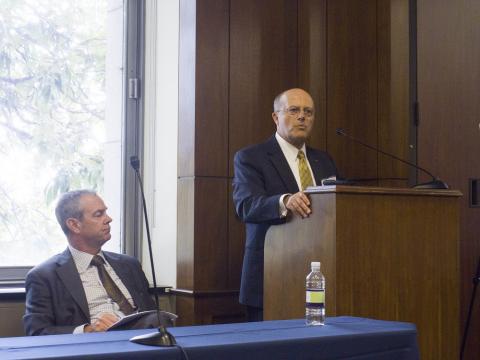
During AUVSI’s Hill Day luncheon on Sept. 12, Mark Bathrick of the U.S. Dept. of Interior (DOI) and Marke “Hoot” Gibson of the Federal Aviation Administration (FAA) spoke about how their respective departments are using UAS for “mission-critical operations,” and also spoke about some of the latest policy developments to integrate the technology into the country’s airspace.
The discussion was led by AUVSI President & CEO, Brian Wynne.
For Bathrick, attending his first Hill Day, the reasoning for the DOI’s use of unmanned technology was quite simple from the start.
University of Colorado engineers develop new UAS swarming technology
A team of University of Colorado (CU) engineers has developed a new UAS swarming technology that allows multiple UAS to be controlled at the same time by a single operator.
In collaboration with the Korean Advanced Institute of Science and Technology, the CU team tested this new technology at the Pawnee National Grassland in Weld County, Colorado for three weeks in August.
According to the DailyCamera.com, this project was granted the “first-ever approval by the Federal Aviation Administration to allow multiple aircraft to be manned by a single pilot.”
University of Arkansas UAS experts provide seminar on technology to state’s public agencies
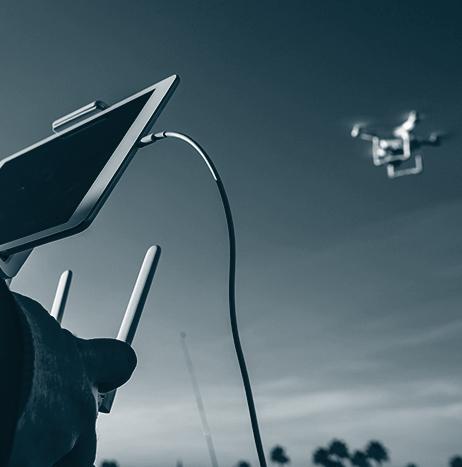
On August 31, experts in UAS at the University of Arkansas provided a four-hour seminar to public agencies in the state that are considering starting UAS programs.
Members of law enforcement, first responders, inspectors, the highway department and various state engineers attended the seminar.
During the seminar, some of the topics discussed included complying with FAA laws, selection of UAS, and sensors for different types of operations.
Topics presented during the seminar included management of risk and safety management systems, as well as how to develop effective policy and guidance.
Jerry Chism, director of the Arkansas Department of Aeronautics, says that UAS are very beneficial to the state of Arkansas.
Weekend Roundup
This Week in the Unmanned Systems and Robotics World
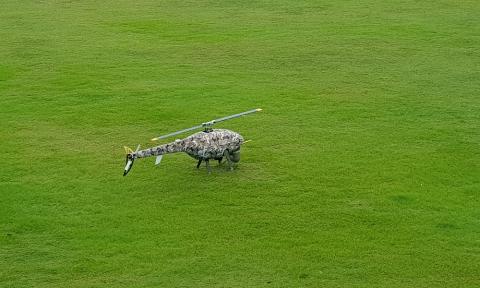
In front of representatives of the Army and the special operation forces of Indonesia, UAVOS Inc. recently demonstrated an “unmanned aerial complex” with a gasoline-powered helicopter UVH-29E. The robotized helicopter demonstrated its biggest strength—being able to operate in a tropical and humid maritime climate—as it successfully completed all of its tasks. UAVOS investor and Board member Vadim Tarasov says that the UAV helicopter has a number of potential use cases, including anti-terrorist operations, law enforcement and intelligence operations, and search and rescue operations.
Hurricane relief efforts being powered by UAS
With hurricane season in full effect, unmanned aircraft have been pushed to the forefront as an innovative technology that can be used during relief efforts.
Just a few weeks ago, Hurricane Harvey throttled Texas and Louisiana, leaving billions of dollars’ worth of damage in its wake.
With mass flooding and other factors leaving areas difficult, or in some cases impossible, to navigate, UAS have become invaluable during the recovery efforts in Texas, especially in the Houston area which was hit the hardest.
This has been possible thanks to swift action from the Federal Aviation Administration (FAA), which has been actively cooperating with UAS operators to get these systems into the sky quickly and effectively where they are most needed.

May Mobility to test autonomous vehicles in Detroit in October
From October 9 to 13, Ann Arbor, Michigan-based May Mobility Inc., which is a startup that became incorporated in January of this year, will operate a pilot program using autonomous vehicles to shuttle Bedrock LLC employees in downtown Detroit to and from a parking structure.
A total of 15 hours of testing will be conducted, as the service will be provided to staff from 7 to 10 p.m.
Two Polaris Industries Inc.-manufactured electric vehicles, which will be manned during testing, will be used during the program, and according to May Mobility CEO Edwin Olson, the vehicles have six doors for six seats.
This pilot program will be the sixth major autonomous vehicle project for the May Mobility team, which currently stands at 15 members.