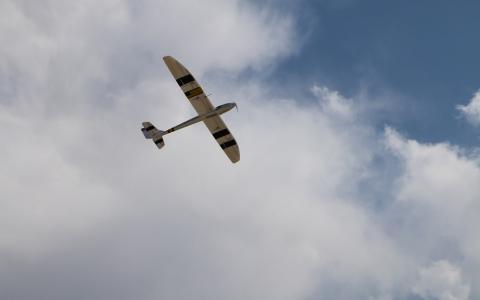
Working alongside engineering, consulting and construction company Black & Veatch, Rockwell Collins successfully completed a beyond visual line of sight (BVLOS) UAS flight along nearly 10 miles of power line infrastructure owned by Ameren Corp., located near Newton, Illinois.
“Monitoring critical infrastructure, particularly those in rural areas beyond line of sight, can be done much more efficiently and effectively through the use of UAS technology,” says Ken Schreder, vice president, Strategic Programs, Information Management Services at Rockwell Collins.
Technology
Technology
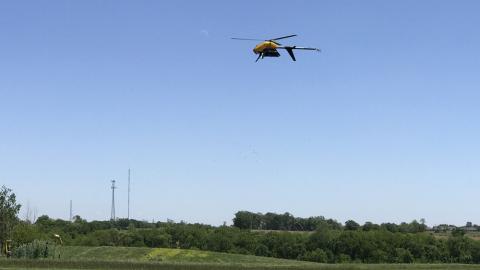
SolAero Technologies completes and delivers first solar wing for Bye Aerospace's StratoAirNet UAV
SolAero Technologies Corp (SolAero) has completed and delivered the first solar wing for Bye Aerospace’s solar-electric UAV, the “StratoAirNet.”
Using “proprietary methods to maintain the critical laminar flow surface on the wing,” SolAero is integrating its “advanced high-efficiency solar cell technologies” on the graphite composite StratoAirNet wing.
This initial wing-solar cell combination will provide ample power— approximately 2,000 Watts— under ideal daylight conditions at altitude, resulting in sustained flight of the StratoAirNet UAV being achieved.
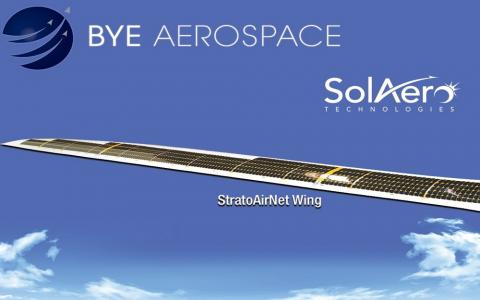
UAS being used to monitor weekend traffic conditions at 2017 Great New York State Fair
Thanks to a joint effort between the New York State Department of Transportation (NYSDOT), the New York State Department of Environmental Conservation (DEC), and the New York State Police, for the first time, state-owned UAS will be used to monitor weekend traffic conditions at the 2017 Great New York State Fair, which takes place from August 23 through September 4.
The UAS will be used to help the New York State Police and the State Department of Transportation monitor traffic and parking lot capacity during the weekends, which tend to be the highest attended days of the 13-day extravaganza.
All parties are involved are excited about the use of this technology.

EPFL student uses UAS to rescue fawns in danger
Upon reading an article about baby deer—also known as fawns—being accidentally killed by farm machinery during the harvest season, École Polytechnique Fédérale de Lausanne (EPFL) student Simon Jobin decided to use his UAS to save the animals from these dangerous situations.
According to Jobin, when fawns hear tractors approaching, they lie down in the tall grass instead of running away, which makes them virtually invisible.
With this in mind, the UAS is used to scan the field following a set course, as it covers every part of the land. It is crucial that Jobin is up early enough in the morning to conduct these scans, because once the sun warms up the ground, the UAS’ thermal camera can't effectively detect the animals' body heat.
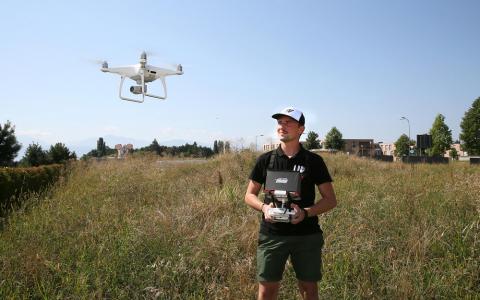
UAS equipped with shark detection system to patrol Australian beaches starting in September
In an effort to improve safety in regards to shark attacks, UAS equipped with a shark detection system that is powered by artificial intelligence will be used to patrol some beaches in Australia starting in September.
After being provided a live-video feed via the battery-powered UAS, the UAS operator will use “shark-spotting software” to identify sharks in real time, with more accuracy than the human eye.
Studies have shown that when interpreting data from aerial images to detect shark activity, people have an accuracy rate between 20 and 30 percent.
According to Dr Nabin Sharma, a research associate at the University of Technology Sydney’s School of Software, that rate can be raised to 90 percent when using detection software.
Weekend Roundup
This Week in the Unmanned Systems and Robotics World
A startup company called May Mobility that is looking to offer its autonomous driving technology to companies with commercial fleets made its official debut on August 21 at Y Combinator’s demo day. May Mobility wants to focus on customers that have vehicle needs in areas where routes can be easily mapped and conditions are fairly predictable. This includes areas such as closed residential communities, business districts and campuses (school and corporate). (TechCrunch)
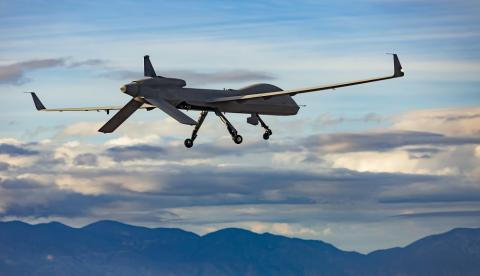
General Atomics’ MQ-1C Gray Eagle Extended Range UAS completes 41.9-hour endurance flight
General Atomics Aeronautical Systems, Inc. (GA-ASI) has announced that on August 6, its MQ-1C Gray Eagle Extended Range (MQ-1C ER) UAS completed a 41.9-hour endurance flight, which surpassed the 40 hour flight test goal.
The UAS flew out of El Mirage, California in a “representative U.S. Army mission configuration.”
“This is an important milestone for the MQ-1C ER program,” says David R. Alexander, president, Aircraft Systems, GA-ASI.
“The MQ-1C ER represents a significant enhancement in capability over the currently fielded MQ-1C and will be a game changer on the battlefield in support of our Army customer.”
This month, the MQ-1C ER production aircraft will begin flight testing for evaluation of the Army's First Article Test (FAT).
U.S. Marine develops low-cost 3D-printed UAS
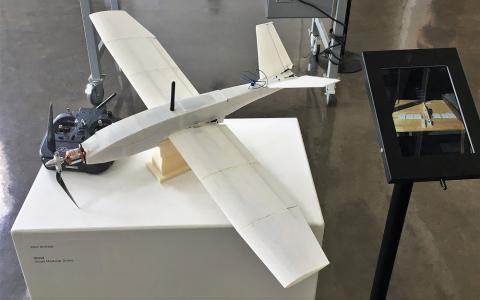
In 2015, the U.S. Marine Corps’ Next Generation Logistics innovation group, known as NexLog, was established to “advocate for the future of emerging technologies on the front lines and for equipping Marines with the ability to make solutions for their own environment.”
With this in mind, Rhet McNeal, a 26 year-old Corporal from Griffin, Georgia, developed a 3D-printed UAS nicknamed “Scout” that is a cheaper alternative to the hand-launched, fixed-wing RQ-11 Raven and RQ-12 Wasp III UAS that the Marines currently use.
Decorah Fire Department in Iowa uses UAS to find six people stranded along the Yellow River
In Eastern Iowa, the Allamakee County Sheriff's office enlisted the help of the Decorah Fire Department and its UAS to help locate six people who were stranded along the Yellow River near Effigy Mounds, after they got lost while tubing.
It took just 10 minutes for the UAS to locate the first three of the six stranded, after they were spotted using a heat seeking camera that was attached to the UAS.
Decorah Firefighter Zack Kerndt, who was at home when he got the call to put his UAS skills to work, says that a foot-search for the missing people would have been very difficult, which made the UAS that much more valuable.
Nevada UAS Test Site and Microsoft test artificial intelligence in Microsoft’s UAS
The Nevada Governor’s Office of Economic Development (GOED) and the Nevada Institute for Autonomous Systems (NIAS) have teamed up with Microsoft's UAS research team to test Artificial Intelligence (AI) in Microsoft’s sailplane.
The sailplane being tested, which is 16.5 feet and weighs 12.5 pounds, relies on a battery to “run onboard computational equipment and controls,” including the rudder, and radios to communicate with the ground.
The UAS also has a motor, which allows a pilot to take over manual operation if and when necessary.
During this set of tests though, the UAS demonstrated its ability to operate on its own, as it found and used thermals to travel without the help of the motor or a person.