
This Week in the Unmanned Systems and Robotics World
Simlat, which is a provider of training and simulation systems for UAS, has announced that it will provide its existing and new customers with a high-fidelity maritime simulation, which includes an enhanced dynamic wave model that takes into account the sea state and the weather conditions, along with the characteristics of simulated vessels such as length, weight, drought and center of mass. Applications such as search and rescue operations, security and marine life exploration will benefit from the improved visuals.
Technology
Technology

Gryphon Sensors develops mobile UTM system called Mobile Skylight
Central New York-based Gryphon Sensors has developed a mobile Unmanned Traffic Management (UTM) system called Mobile Skylight.
Among its many capabilities, the Mobile Skylight system, which is equipped with a variety of self-contained multispectral sensors, provides “accurate three dimensional detection of low-flying, small UAS at a distance of out to 10 kilometers.”
Mobile Skylight is contained in a “sleek, rugged van,” and is described as a “complete mobile command center” that features 4x4 off-road capability, and can be transported anywhere without a commercial driver's license.
The system is designed for quick deployment for a number of different tasks, including search and rescue operations, special event security, and utility inspection, to name a few.

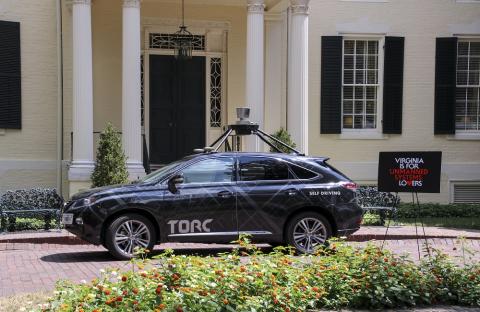
Torc Robotics’ self-driving car successfully completes cross-country road trip
Just a few weeks after unveiling its self-driving car technology, Blacksburg, Virginia-based Torc Robotics has announced that its self-driving car has completed a cross-country road trip, in which the vehicle drove more than 4,300 miles autonomously through 20 states.
According to the Roanoke Times, the vehicle started its journey on July 7 in Washington D.C. with three certified safety drivers and one Torc engineer. During the cross country trip, there was always someone sitting in the driver’s seat just in case of an emergency, and the safety drivers rotated time behind the wheel.
Queensland University of Technology to use UAS to track and save koalas in Australia
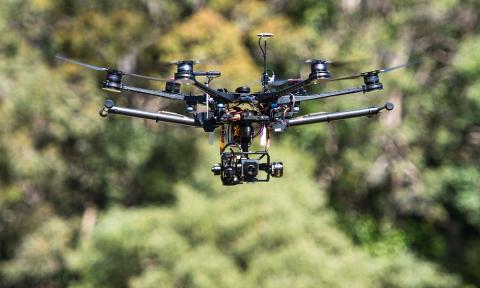
Queensland University of Technology (QUT) in Australia will use UAS to find and protect koalas in South East Queensland.
Through a two-year project, QUT will provide rapid estimates of koala abundance, using UAS and high resolution imagery.
The project is being led by Dr. Grant Hamilton from QUT’s Science and Engineering Faculty, who says that the technology would “provide a robust survey method for detecting koalas and estimating their numbers.”
“The primary emphasis of this project is on the ecology of koala conservation, and we are using drones and automated imaging technology as tools to assist,” Hamilton says through the school's website.
ZTO Express completes first trial delivery using a UAS
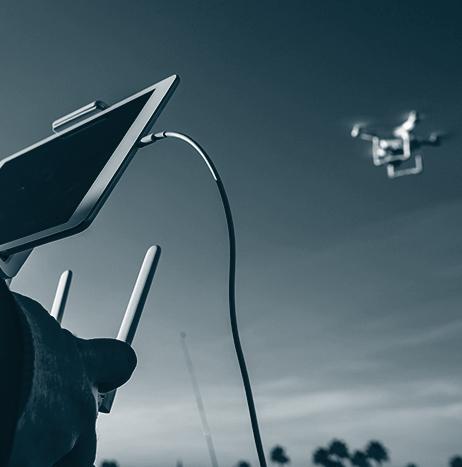
An express delivery company in China called ZTO Express has announced that it has successfully completed its first trial delivery using a UAS.
The UAS, which was developed by a domestic UAS producer and custom designed for ZTO, flew nearly nine miles, as it traveled from ZTO's sorting facility in Le Qing county, Zhejiang Province to the office building of an enterprise customer in the same county.
According to Meisong Lai, Founder and Chief Executive Officer of ZTO, this delivery would have taken about 50 minutes using traditional ground transportation. That time estimate takes into account traffic conditions, gate checks, wait times for elevators and other factors.
Using the UAS though, this delivery took less than 20 minutes.
Madison police department actively using UAS
Since June, the Madison Police Department in Wisconsin has deployed its new UAS team five times.
One of the times, the policed launched a UAS to help officers locate a suicidal man who was on the loose, and another time, a UAS was used to help officers map out the scene at a restaurant where a homicide and armed robbery had occurred.
These are just a few examples of how the department plans on using its UAS, and according to Madison Police Lt. Mike Hanson, who commands the 11-member team, this is just the beginning for this technology.
“They’re here to stay,” Hanson says via the Wisconsin State Journal.
Hawaii teachers learning how to code driverless cars
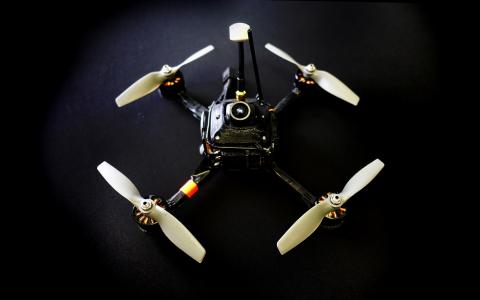
In Hawaii, some teachers are taking a six-day class to learn how to code driverless cars, in a first of its kind program that could become a part of the curriculum in Hawaii.
Teachers are learning the basics of coding, but the language is the same as what’s being used to program the same driverless cars that are currently on, or one day will be on, roads across the United States and all over the world.
The course is being taught by Sumil Thapa, who is an engineer for a Hawaii-based engineering consultant called Oceanit. One day, Thapa taught the teachers how to program their cars to “drive into a mini garage, sense the light, back up out of the garage and then give out the light reading.”
Harvey County Sheriff’s Office uses UAS to locate missing elderly man
On Wednesday, July 19, the Harvey County Sheriff’s Office in Kansas used a UAS to locate a missing elderly man who had been reported missing by his family.
The UAS located the 91-year-old man approximately 12 hours after he had been reported missing. The man was found dehydrated with possible injuries, but he was alive and is receiving treatment at a local medical facility.
According to Harvey County Sheriff Chad Gay, the UAS was integral to saving this man’s life.
“It was critical to saving that guy’s life last night. No doubt about it,” Gay says via the Hutchinson News.
VStar Systems and Martin UAV complete flight demonstration of MA-C2E/Lite SIGINT Sensor
VStar Systems, which is a privately held aerospace and defense systems company, and Martin UAV, which specializes in research and development, manufacturing, and operator training for complete UAS, have announced the successful completion of a demonstration of the new COMINT capabilities onboard the Martin UAV V-Bat aircraft.
VStar Systems was invited overseas to demonstrate the capabilities of its MA-C2E/Lite, which is a modular Signal Intelligence Sensor that weighs approximately two pounds, and provides COMINT capabilities to Martin UAV’s line of V-Bat drones.
The MA-C2E/Lite system is designed to “function as a highly modular, scalable, flexible tactical COMINT sensor,” with special emphasis on addressing design challenges created by Class 2 or 3 UAS.