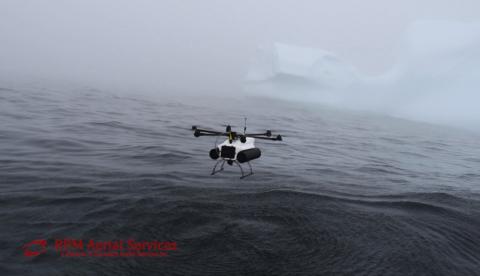
In an effort to find a way to safely place a tracker on an iceberg without getting too close to what can often be “unpredictable masses of floating ice,” Holyrood, Newfoundland and Labrador-based RPM Aerial Services, along with a GPS manufacturer in Nova Scotia, recently used a UAS to place a GPS tracker on an iceberg.
The iceberg was about two kilometers outside Petty Harbour, which is another town in Newfoundland and Labrador, Canada.
According to Brian Lundrigan, who started RPM Aerial Services, which is a remotely piloted aerial service company, this pilot project was far from easy.
“It was fairly challenging,” Lundrigan says via CBC News.
Technology
Technology
DNV GL conducts first offshore UAS survey
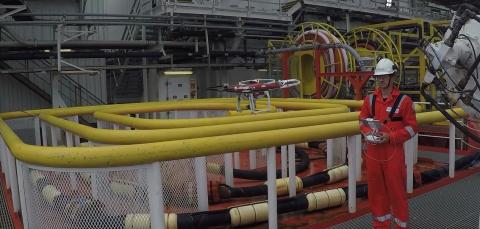
DNV GL surveyors have conducted the classification society’s first offshore UAS survey.
The survey was conducted in the North Sea, on the semisubmersible vessel Safe Scandinavia, which supports Statoil’s drilling operations off the coast of Norway.
As a part of the intermediate survey, DNV GL’s UAS pilots checked Safe Scandinavia’s fairleads and their connection with the vessel’s two columns.
“This was a great opportunity for us to demonstrate our drones’ abilities to check the condition of remote external components in challenging offshore conditions,” says Cezary Galinski, Project Manager Classification Poland at DNV GL.
Weekend Roundup
This Week in the Unmanned Systems and Robotics World
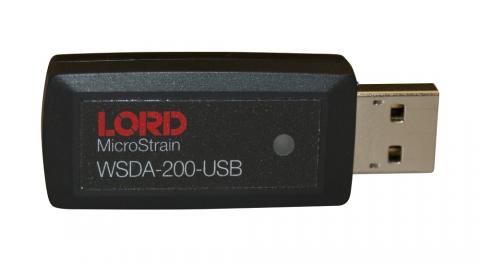
LORD Corporation, which develops wireless and embedded sensing systems, has introduced its LXRS+ wireless networking protocol, which features a bandwidth of 16,000 samples per second per channel, and an aggregate system bandwidth of 256,000 samples per second over 16 channels. According to LORD, “the wireless sensor nodes that operate using LXRS+ protocol are designed to operate at incredibly low-power,” which allows battery powered networks to operate for long periods of time, and “makes the use of energy harvesting systems a viable option for permanent installations.”
Self-driving car to be tested in Atlanta in September
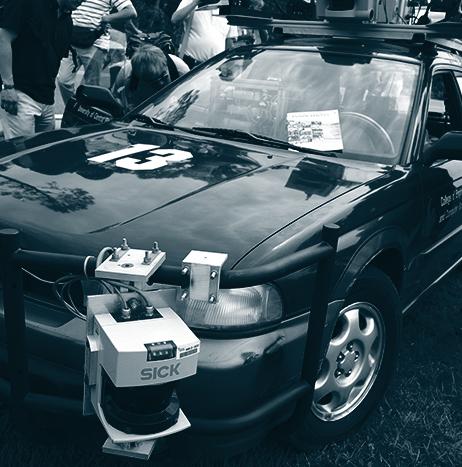
According to Atlanta Magazine, a self-driving car will hit the streets of Atlanta on September 14, just a few months after Georgia Governor Nathan Deal approved a law that allows self-driving cars on public streets.
The car, which is a part of a joint pilot project by Georgia Tech, City Hall and others, will drive itself from the campus of Georgia Tech to the Ponce City Market. It will follow the rules of the road and avoid obstacles during its journey using a combination of technologies, including a network of sensors, transmitters, Wi-Fi hotspots, and GPS receivers, to name a few.
Duluth Fire Department in Minnesota considering purchasing EMILY USV
The Duluth Fire Department in Duluth, Minnesota is considering purchasing the Emergency Integrated Lifesaving LanYard (EMILY) drone, which is a 24-pound unmanned water rescue drone that was created by Tucson, Arizona-based Hydronalix.
Equipped with a two-way radio that allows first responders to communicate with the person needing assistance, the unmanned surface vehicle (USV) carries a detachable lifejacket and helmet, and can float with six to eight people holding on to it.
Duluth Fire Capt. Brent Consie says that the city has an extensive amount of shoreline, and is one of the worst spots in the Great Lakes for rip currents.

Driverless bus trial launching in Sydney, Australia
The New South Wales (NSW) state government will officially launch a two-year trial of autonomous vehicles when the first stage of the trial begins later this month.
During the first stage of the trial, a driverless shuttle bus, which will run autonomously on a pre-programmed route, will undergo tests and safety checks in an off-road environment at Newington Armoury, which is located near the former Olympic village.
Next year, the trial will be extended to roads at Sydney Olympic Park, giving office workers and other members of the public the opportunity to ride in the vehicle.
For Transport Minister Andrew Constance, this trial is all about finding out how this technology can benefit NSW.
Bossier Sheriff’s Office utilizes UAS to help bring suspect into custody
In Bossier Parish, Louisiana, the sheriff’s office is crediting a UAS equipped with an infrared camera in helping to locate a suspect in a burglary on July 26.
The UAS was deployed in response to “low moon visibility,” and within two minutes, the UAS’ thermal camera spotted the suspect “walking in the tree line.”
The K-9 team then went to the suspect's exact location, and the 51-year old man was taken into custody.
For Bossier Sheriff Julian C. Whittington, this technology is extremely beneficial, and can be used for a number of different tasks.
Microdrones conducts BVLOS test flights in Quebec
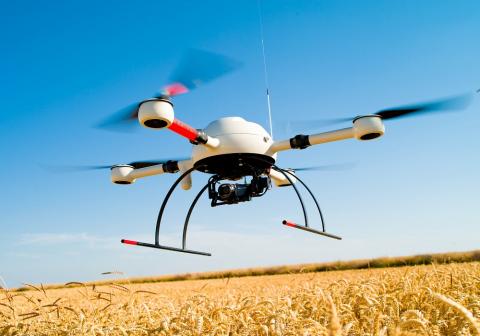
Via Unmanned Aerial, it has been announced that Microdrones completed a series of beyond visual line of sight (BVLOS) test flights on July 13 and 14 in Alma, Quebec, using the company’s md4-1000 UAV.
Using the md4-1000 UAV with a variety of payloads attached to it, Microdrones conducted a total of 10 flights, which were flown by Microdrones’ Jocelyne Bois, flight operations manager; Jeremy Jung, research and development engineer; and Yannick Savey, UAS pilot.
“We are very excited about the results,” Bois says.
World’s first crewless, autonomously operated ship expected to launch in 2018
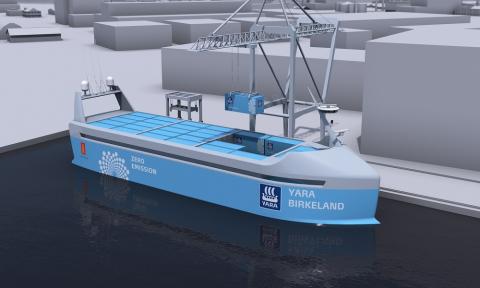
According to the Wall Street Journal, the world’s first crewless, autonomously operated ship is scheduled to launch in late 2018.
Known as the Yara Birkeland, the 100-container, electric ship is designed to “navigate itself around other boat traffic and to dock on its own,” using the Global Positioning System, radar, cameras and sensors.
The ship is being jointly developed by two Norwegian companies, Yara International ASA and Kongsberg Gruppen ASA. Yara International ASA is an agriculture firm, while Kongsberg Gruppen ASA builds guidance systems for civilian and military uses.
University of Colorado Boulder team to use UAS to measure water moisture as a part of “Project Drought”
University of Colorado Boulder (CU) students, engineers and scientists are partnering with Boulder, Colorado-based Black Swift Technologies to use UAS to measure water moisture at a research and demonstration farm called the Irrigation Research Foundation (IRF) in Yuma, Colorado.
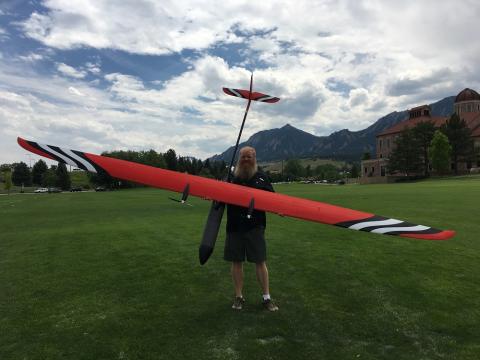
With the help of a NASA Small Business Innovative Research Grant, Black Swift Technologies was launched out of CU Boulder in 2011 by aerospace PhD graduates Jack Elston, Maciej Stachura and Cory Dixon, and the company developed the UAS that will fly over the test farm, the SuperSwift UAS, which is fixed-wing and has a removable nose cone.