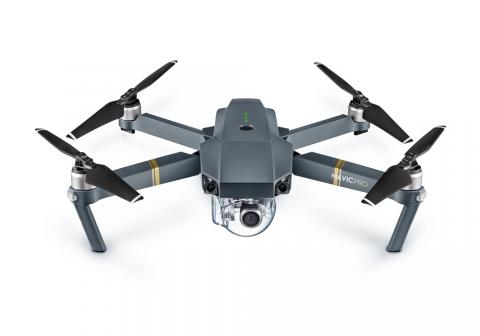
In partnership with National Geographic, DJI has launched an aerial photography contest that is open to amateur and professional photographers, as well as first time UAS users.
The contest, which will take place from September 5 to October 31, will run on the photo-sharing platform Instagram, and is open to residents of the United States and Canada.
Those that are interested in participating in the contest can upload their best aerial images to their Instagram account, and hashtag their entry with #MyMavicContest and #NatGeoTravel.
Technology
Technology
Earth Networks introduces predictive weather offering for commercial UAS market
Ahead of the InterDrone conference in Las Vegas, Nevada, Earth Networks, which provides weather intelligence platforms, announced the launch of Sferic DroneFlight, which is an “advanced predictive weather offering specifically designed for rapidly growing commercial drone markets” within public safety, oil and gas, and construction, to name a few.
According to Earth Networks, Sferic DroneFlight delivers “hyperlocal wind forecasts for any latitude and longitude in the world.” This is significant for commercial UAS operations, as this platform answers the need for advanced weather data and helps with various aspects of UAS flights.

Washington state's Spokane Fire Department to add fourth UAS to its fleet
According to The Drive, the Spokane Fire Department (SFD) in Washington state is preparing to welcome a fourth UAS to its fleet of unmanned aerial systems, as a part of the SFD’s UAS program.
Currently, the SFD has three UAS that cost approximately $1,150 each, but the latest UAS will cost more than those three UAS combined, with a price tag of $9,000.
Including the costs of the actual UAS themselves, the SFD has spent approximately $28,000 so far on various UAS-related items such as cameras, batteries, and accessories, according to City spokesman Brian Coddington.
FlightWave introduces hydrogen-powered Jupiter-H2 UAS
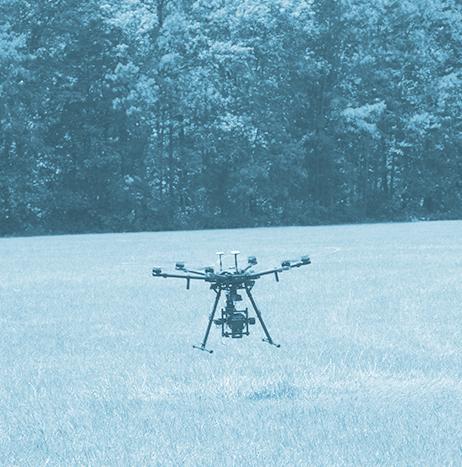
A few weeks after introducing its FlightWave Edge UAS, FlightWave Aerospace Systems, Inc. has now introduced its hydrogen-powered Jupiter-H2 UAS, which is the company’s second offering to the UAS community.
Thanks to a partnership with a UK-based fuel cell company called Intelligent Energy, FlightWave was able to equip the Jupiter-H2 UAS with the hydrogen fuel cell technology that powers the aircraft.
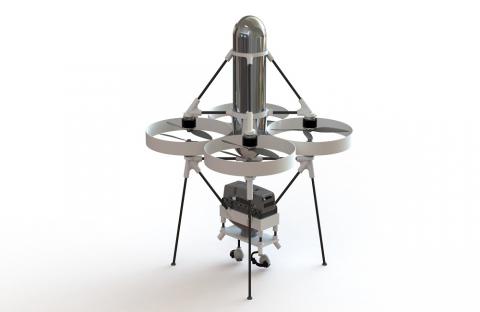
The hydrogen fuel cell technology gives the UAS, which uses a “narrow-profile 70 cm airframe, with a high-thrust power plant consisting of eight motors driving cross-flowing fan blades,” several distinct features, such as its heavy-lifting capability. FlightWave notes that extra energy and lighter energy means more power to lift and carry the respective sensors of a user.
Quinsigamond Community College to offer UAS certificate program
Quinsigamond Community College in Worcester, Massachusetts has become the first community college in the state to offer a UAS certificate program.
The certificate program will feature a “series of online and in-person courses” designed to give students a comprehensive education on UAS, while helping them prepare to take and ultimately pass the FAA Drone Pilot Exam.

Washington state patrol hoping to use UAS to investigate traffic accidents
In an effort to “improve safety for troopers on the ground and cut down the time roads are closed for crash scene investigations,” a handful of members of the Washington state patrol is learning to fly UAS so that they can investigate traffic accidents from the sky.
While some law enforcement agencies in Washington already use UAS, this is the first time that this technology has been used by state troopers.
According to Q13 Fox News, the UAS, which are manufactured by Lockheed Martin, will give detectives a “bird’s eye view of crash scenes,” and once the data is uploaded into a laptop, it will provide investigators with precise measurements.
Weekend Roundup
This Week in the Unmanned Systems and Robotics World
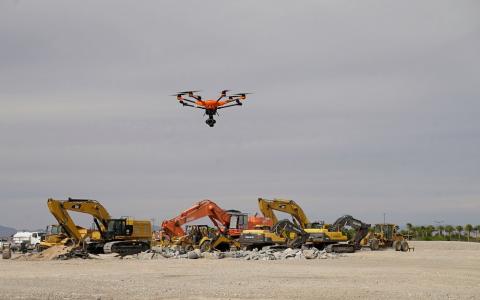
Yuneec International has announced that its “first product offering dedicated to commercial use,” the H520 sUAS, is now available. The H520 sUAS, which uses Yuneec’s six-rotor platform, includes enterprise-grade cameras and mission planning software, making it useful commercially across a variety of verticals such as construction, inspection and public safety. Some of the offerings of the sUAS include an assortment of payload options, reliable and stable flight, and an integrated ground controller. (Yuneec)
North Carolina Guardsmen complete training with newest version of RQ-7BV2 Shadow UAS
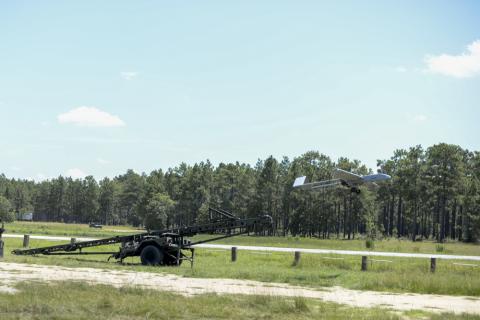
After receiving the latest version of the RQ-7BV2 Shadow UAS, the North Carolina National Guard’s Detachment 1, D Co. 236th Brigade Engineer Battalion has completed New Equipment Training (NET) near Fort Bragg, North Carolina, which took place from July 17 to August 25.
Without the limitation of time that they typically face on most drill weekends, where it takes most of a day to set up the airfield, the soldiers were able to use the NET to learn about the newest version of the UAS, which looks similar to the previous model, but has a number of upgrades including longer flight durations.
Aeroprobe adds two new micro air data computers to its product line
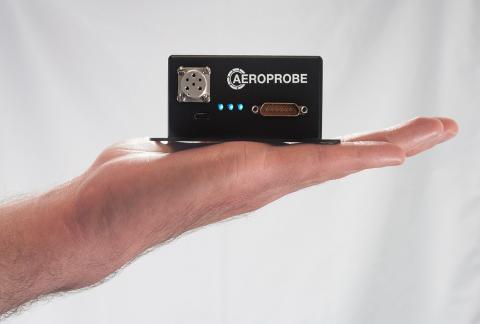
Aeroprobe Corporation, which is a global producer of air data measurement tools to aerospace, automotive, turbomachinery, wind turbine, and wind tunnel industries around the world, has added two new Micro Air Data Computers (μADC), the Pegasus and Destiny models, to its product line.
These models offer the accuracy and economical size of Aeroprobe’s current models, while introducing new and streamlined features.
Used to collect and process air flow data across a variety of applications and industries, μADCs offer a “complete system for air flow data acquisition and analysis” when used in combination with an air data probe like those from Aeroprobe’s extensive product line.
General Dynamics showcases ‘advanced mission command and control’ among UUV, UAS and on-shore assets at ANTX 2017
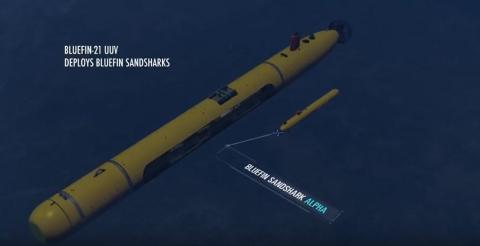
General Dynamics Mission Systems and General Dynamics Electric Boat have successfully showcased “multiple mission command, control and communication capabilities” connecting a UUV from Bluefin Robotics and a Blackwing model UAS from AeroVironment with a simulated AN/BYG-1 submarine combat control center ashore.
A Stackable Air-powered Launch System (STAPLS) intended for use aboard submarines was also used during the demonstrations.
The goal of the demonstrations, which were a part of the Advanced Naval Technology Exercise (ANTX) 2017 that took place at the U.S. Naval Undersea Warfare Center (NUWC) in Newport, Rhode Island, was to provide “available solutions to the communications challenges of operating in a contested, undersea environment.”